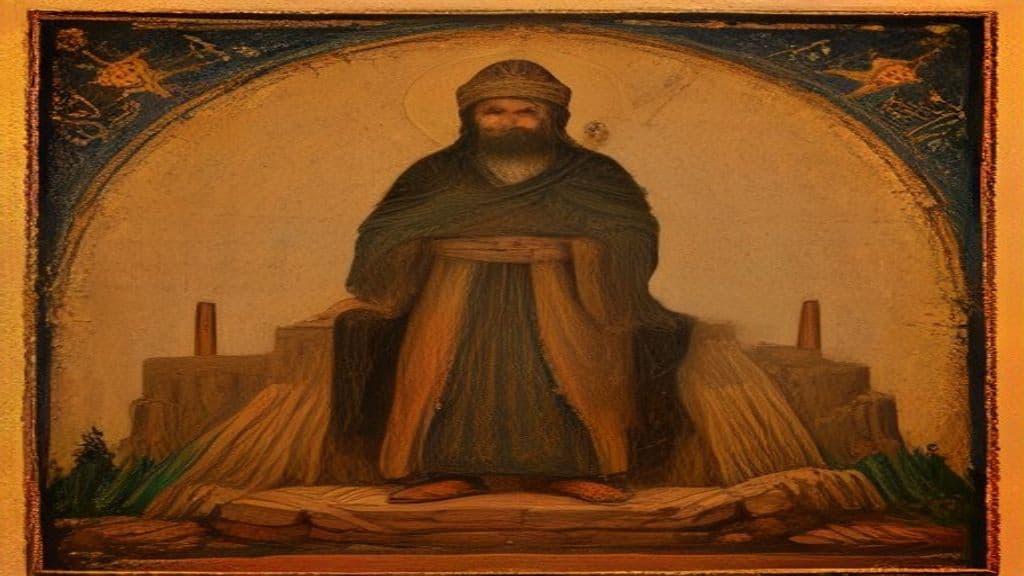
The narrative cycle centered on Abram/Abraham (Genesis 11:27–Genesis 25:11) presents him as the son of Terah who departs Haran at age 75 in response to God's call to go to a land that will be given to his descendants. Over a series of episodes the text relates God's promises of progeny, land, and blessing to Abram and traces the formation of a covenantal lineage through his family (including Sarah/Sarai, Lot, Ishmael, and Isaac). Modern scholarly summaries in the sources describe these patriarchal narratives as literary constructions used to organize promissory theology and communal identity.
The supplied sources do not provide physical description or iconographic detail of Abraham. The biblical accounts emphasized in the sources concentrate on his actions, age at key moments (for example, departing Haran at 75), family relations, ritual acts (such as building altars), and legal-ritual deeds (such as purchasing a burial site) rather than on bodily or visual features.
The sources portray Abraham not as a supernatural being but as a human patriarch whose significance is covenantal and exemplary. Scriptural episodes summarized in the sources record that he responds to a divine summons (leaves his father's house), establishes rites of worship by building altars at Shechem, between Bethel and Ai, and at Mamre, manages a large household and herds, negotiates amicably with Lot to separate their camps, sojourns in Egypt during famine (including an episode where he instructs Sarai to present herself as his sister and God intervenes), and purchases the Cave of the Patriarchs in Hebron to bury Sarah, thereby establishing a lawful ancestral burial place.

Community Record
- [1]Abraham — Wikipedia. Wikipedia contributors, 'Abraham', Wikipedia, The Free Encyclopedia.wiki
- [2]Wikidata: Abraham. Wikidata entry Q17997608 'Abraham'.other
- [3]Sermon archive: 7.23.17.sermondone. Archive sermon referencing Isaac as 'the promised child of Abraham'.other
- [4]Podcast archive: Episode 20: Beyond Wynn. Podcast episode containing incidental modern cultural reference to the name Abraham.other