Aegimius is presented in Greek sources as the ancestral king and lawgiver of the Dorians while they inhabited northern Thessaly. As a founder-figure he fathered Dymas and Pamphylus and adopted Hyllas, son of Heracles; these familial ties are used to explain internal Dorian divisions (the Dymanes, Pamphylians, and Hylleans) and to connect Dorian claims to territory with the broader Heraclid genealogies. In accounts of his life he fought a war against the Lapiths, sought and received the aid of Heracles, and in gratitude offered one-third of his kingdom to Heracles — a portion he later held in trust for the Heracleidae. An archaic epic poem entitled Aegimius existed in antiquity (surviving only in fragments and sometimes ascribed to Hesiod or Cercops of Miletus), and remnants of that epic corpus link Aegimius-material to other mythic episodes (for example, fragments concerning Io and Argus Panoptes), situating the figure in the heroic-age cycle of Greek epic.
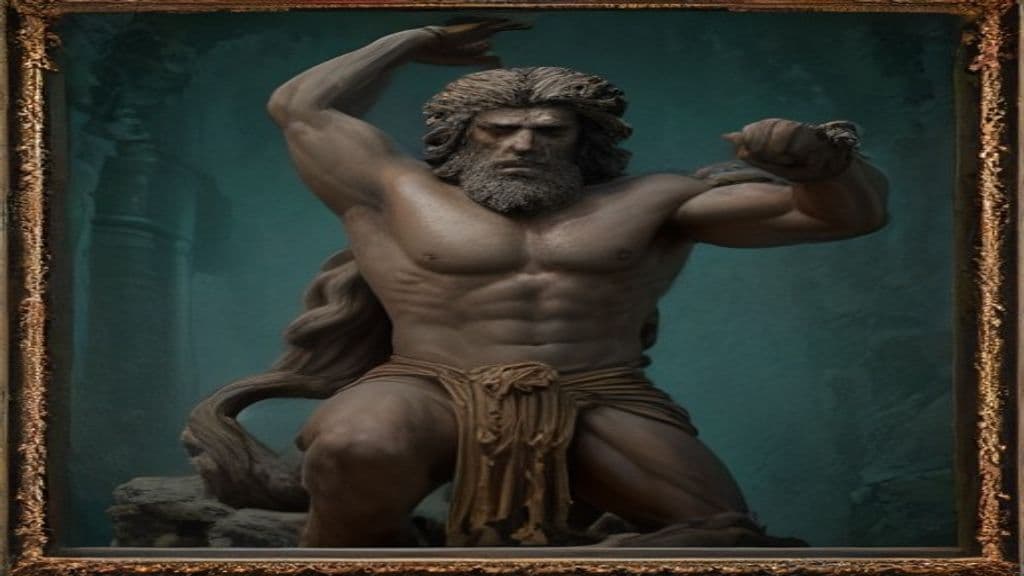
Ancient accounts and the assembled sources provide no consistent physical description or iconography for Aegimius. Literary references focus on his genealogical, legal, and political functions rather than bodily details; surviving fragments and summaries emphasize his role as king, lawgiver, and ancestor of named Dorian lineages, and do not supply sustained descriptions of his appearance. Consequently, extant evidence records Aegimius primarily as a named historic-heroic figure within genealogical and epic narratives rather than as a visually depicted or iconographically fixed character.
Sources attribute no supernatural powers to Aegimius; his significance is political, legal, and genealogical. He functions as a king and lawgiver of the Dorians in Thessaly, a military leader who engaged in conflict with the Lapiths and sought Heracles' assistance, and a familial figure whose biological sons (Dymas and Pamphylus) and adopted son (Hyllas) serve as eponymous ancestors for Dorian subdivisions. Politically, he rewarded Heracles by offering a third of his kingdom and later held that territory in trust for the Heracleidae, a narrative move used to legitimize later Dorian claims and link them to pan-Hellenic heroic prestige. The surviving epic fragments associated with Aegimius place him within the archaic epic tradition, reinforcing his role as a focal node in genealogical and migration narratives rather than as a source of magical action.
Weaknesses
- otherNo supernatural weaknesses attested
Wards
None recorded.
Heracles
Heracles is the greatest hero of Greek myth whose career bridges mortal hero-cult and full divinization. Celebrated for his Twelve Labours, martial prowess, and travels between the mortal world, the underworld, and Olympus, he functioned as a civic patron, ancestor of royal lines (the Heracleidae), and object of cult that treated him both as chthonic hero and as god.
Heracles
Heracles is the greatest hero of Greek myth whose career bridges mortal hero-cult and full divinization. Celebrated for his Twelve Labours, martial prowess, and travels between the mortal world, the underworld, and Olympus, he functioned as a civic patron, ancestor of royal lines (the Heracleidae), and object of cult that treated him both as chthonic hero and as god.
Community Record
- [1]Aegimius. Wikipedia, entry 'Aegimius' (summarizing ancient and modern discussions of Aegimius)wiki
- [2]Wikidata: Aegimius. Wikidata item Q404326 for Aegimiusother
- [3]The Aegimius (Hesiodic fragments discussion). Scholarly discussion citing Hesiodic fragments connected with the epic Aegimius (e.g., Hes. fr.230 Most, fr.294 M.-W.)academic
- [4]Who Were the Heracleidae? Discover Heracles’s Many Children. Popular summary discussing Heracleidae connections that reference traditions linking Heracles and Aegimiusother
- [5]The Aegimius (Mythagora summary). Summary of the epic poem Aegimius and its fragmentary survivalliterary