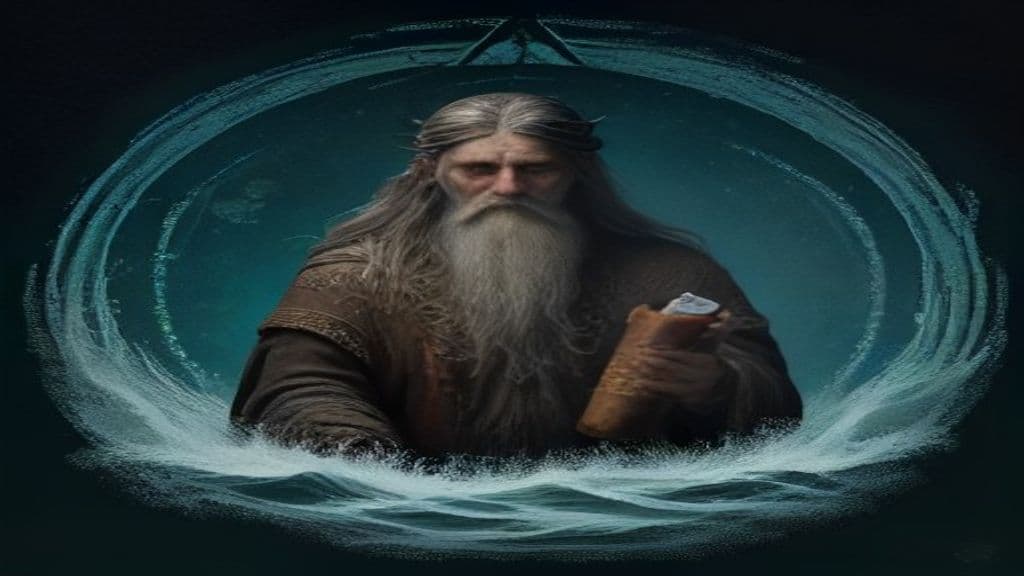
In the Old Norse record Ægir (also attested as Hlér or Gymir) appears as a sea-personification cast among the jötnar. The sources present him as an elemental figure integrated into genealogies: husband of the sea-goddess Rán and father of nine daughters who personify the waves and of a son, Snær, who personifies snow. Some texts or later summaries show variant traditions or name-overlap in which Gymir/Hlér/Ægir names occur in related genealogies (for example in a variant linking him to Gerðr), and the record thus preserves overlapping or variant usages rather than a single unified origin tale.
Primary Old Norse materials consulted do not supply a systematic physical description of Ægir. Instead, literary emphasis rests on his social and domestic imagery: a hall at the sea where the gods are hosted and his role as brewer and provider of ale. Thus iconography and description in the surviving record stress hall, hospitality, and brewing as identifying markers rather than detailed bodily features.
Ægir functions as the personified agency of the sea and as a mythic host: he is associated with the ocean and with social practices of hospitality and feasting (brewing ale for the gods). He is presented as progenitor of natural personifications — his nine daughters embody waves and his son Snær embodies snow — situating him within kin networks that map natural phenomena into familial relations. The sources portray him as a sea-being integral to the gods' social world rather than as an explicitly invincible cosmic ruler.
Community Record
- [1]Ægir. Wikipedia, article "Ægir"wiki
- [2]Unraveling the Myth: Why Do Gods Have a Grudge Against Loki? #loki #norsemythology #shorts. Archive.org video summary referencing Ægir hosting the godsother
- [3]Wikidata: Ægir. Wikidata entry for Ægirwiki