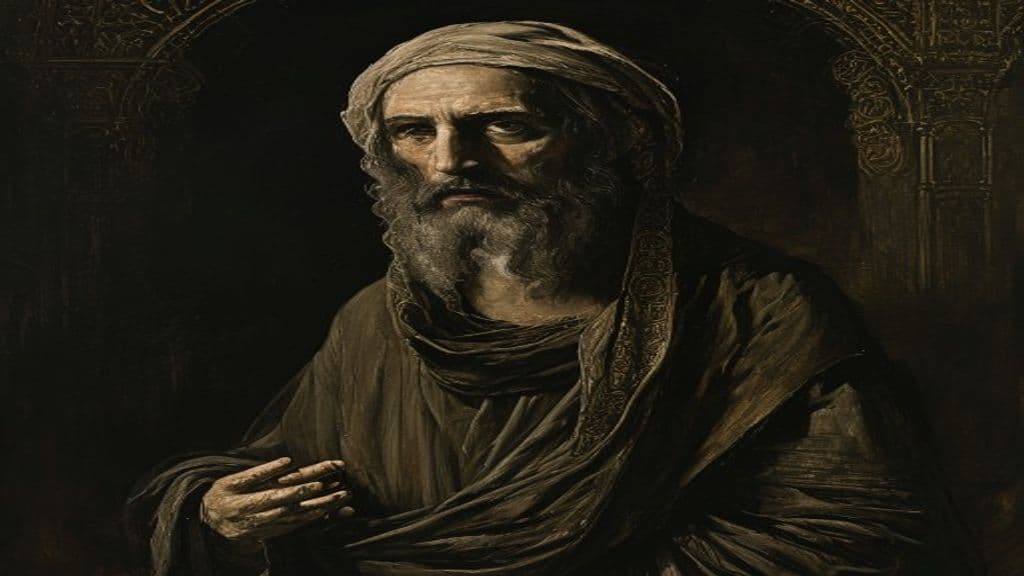
Within the sources provided, Al‑Yasa is treated as a scriptural prophetic figure whose origins are located in the Israelite prophetic tradition of the Hebrew Bible. He is presented as the successor to an earlier prophet (as indicated by his Hebrew Bible placement) and is incorporated into the continuous line of prophets acknowledged across Judaism, Christianity and Islam. The supplied materials do not include a narrative birth story, local cult origin, or folkloric founding legend beyond this scriptural positioning.
The provided sources do not supply any physical description or iconographic detail for Al‑Yasa. Scriptural and interreligious reference works cited note his identity and role but remain silent on bodily appearance; this absence is consistent with the sources at hand, which emphasize prophetic office and actions over physical depiction.
Sources describe Al‑Yasa, in the Hebrew Bible, as a prophet and a 'wonder‑worker,' indicating that he is associated with prophetic speech, divine commission, and the performance of miracles in scriptural tradition. The excerpts supplied do not enumerate or describe specific miraculous acts or powers; Islamic metadata likewise lists him among recognized prophets, implying the functions of receiving and transmitting divine guidance, but without providing further particulars in the excerpts available.
Abel
Abel is the second son of Adam and Eve in the Genesis narrative, a shepherd whose accepted offering and subsequent murder by his brother Cain form the biblical account of the first death. Later interpretive traditions expand his role, treating him as an archetypal righteous victim, a postmortem avenging or adjudicating figure, and in some systems (notably Mandaean) identifying him with an angelic lightbeing.
Abraham
Abraham (originally Abram) is the foundational patriarchal ancestor in the Hebrew Bible whose life establishes a covenantal relationship between his family/people and God. He functions as an exemplar of faith, the progenitor of promised descendants, and a narrative anchor for claims of land, blessing, and communal identity in later religious traditions.
Abraham (Ibrāhīm) in Islam
Ibrāhīm (Abraham) in Islam is a human prophet and messenger chosen by God, a paradigm of pure monotheism (hanīf), patriarchal ancestor to later peoples and prophets, and traditionally regarded as having helped establish the Kaʿbah with his son Ismāʿīl. He is called Khalīl Allāh ('Friend of God') and is central to rites commemorated in Hajj and Eid al‑Adha.
Adam (ʾĀdam)
In Islamic theology Adam (Arabic: آدم, ʾĀdam) is presented as the first human being and the first prophet (nabī), created by God from earth/clay, granted life by God's spirit, placed in a paradisal Garden, taught knowledge (the "Names"), tested by divine command, tempted by Iblīs, and ultimately sent to live and die on Earth while remaining eligible for repentance and forgiveness.
Adam and Eve
Adam and Eve are the primordial human pair in the Abrahamic creation narratives who function as the first man and woman, placed in the Garden of Eden to steward creation. Their eating of the forbidden fruit produces a changed human condition—knowledge of good and evil, shame, pain, labor, mortality—and their story underpins later doctrines such as the Christian doctrine of original sin while being read differently across Jewish and Islamic traditions.
Adonai
Adonai (אֲדֹנָי) is one of the sacred Hebrew names used in Judaism to refer reverently to the singular God. It functions as a liturgical and devotional substitute or form for the divine Name and is treated with linguistic and ritual care in Jewish practice; it also appears in Christian liturgy (e.g., the Advent antiphon “O Adonai”).
Adonay
Adonay (אֲדֹנָי, often transcribed Adonai or Adonay) is a sacred Hebrew appellation meaning roughly "Lord" or "Master," used in Jewish liturgical and scriptural language as a reverent name for the divine. In the provided sources it functions as a theological title within Judaism rather than a personified folkloric being; discussions around it center on reverent usage and the communal care taken with divine names.
Allah
Allah is the Arabic-language term for the singular monotheistic God of the Abrahamic tradition as used in Islamic theology and by Arabic-speaking Jews and Christians. Linguistically related to other West Semitic divine names, the term in Islamic usage functions as God's unique proper name (Lafẓ al-Jalālah) and denotes the transcendent creator and sovereign of the universe.
Alpha and Omega
A titulary formula and visual symbol formed from the first and last letters of the Greek alphabet (Α/α and Ω/ω), used in Christian scripture and art to denote God's or Christ's totality — 'the beginning and the end.' It functions as a theological appellation rather than an independent supernatural being.
Angel
A spiritual or heavenly being functioning primarily as a messenger and intermediary between a transcendent deity and humanity; angels also act as protectors, guides, and executors of divine will across several Abrahamic and adjacent traditions.
Angel of the Lord
A recurring divine messenger in the Hebrew Bible and New Testament who appears on behalf of the God of Israel, acting as God's representative in speech and deed. The figure—Hebrew מַלְאַךְ יְהוָה (mal’ākh YHWH)—functions as intermediary, guide, protector, judge, and announcer at decisive narrative moments.
Aram (Nahapet)
Legendary leader and patriarch in Armenian tradition who united Armenians into one state. (Note: - Power tier: Primordial (given cosmic/unifying abilities) - Summary: Expand to include "unification of Armenians" as a key aspect of his leadership - Abilities: More specific and detailed description)
Community Record
- [1]Elisha — Wikipedia. Wikipedia, 'Elisha' (summary noting Elisha as an Israelite prophet and wonder‑worker; mentions across New Testament and Qur'an; transliterations in multiple languages)wiki
- [2]Wikidata: Elisha (prophet of Islam). Wikidata entry labeling Elisha/Alyasa as 'prophet of Islam'.other
- [3]Islam - The Only Accepted Religion الإسلام - دين الوحيد المقبول. Archive excerpt using Qur'anic verses to discuss the continuity of prophets (citing Qur'an 5:3 and 42:13) and situating earlier prophets within Islamic interpretive context.other