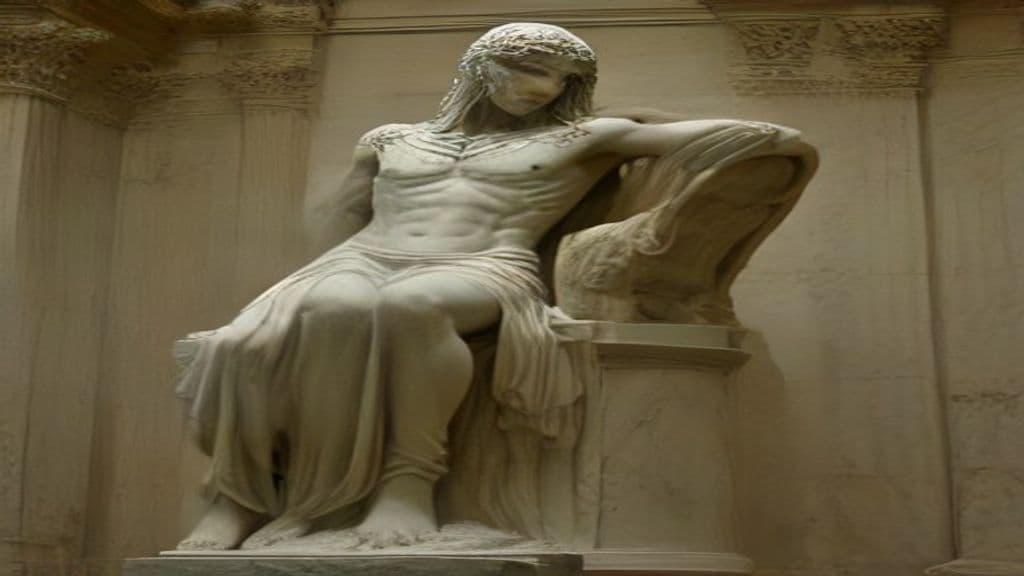
Rather than one origin tale, Alector appears independently in several localized Greek genealogies as a mortal prince or eponymous ancestor. In one tradition he is the son of Magnes and Meliboea and linked to Magnesia and the town Meliboea; in Boeotian accounts he is named father of Leitus (called Alectryon in Homer and Electryon in Diodorus) and counted among the sons of Itonus; in Elis he is an Elean prince, son of King Epeius, who succeeded his father and later summoned Phorbas from Olenus and shared the kingdom with him; another tradition makes him the Argive son of Anaxagoras and father of King Iphis of Argos; a Spartan Alector is recorded as son of Argeus and Hegesandra and father to figures connected to the Spartan royal house. These instances function as separate local founding and dynastic placements rather than as episodes of a single life.
The sources record Alector figures as human princes and ancestors without a shared or distinctive physical description. Attestations identify them by filiations and titles (e.g., son of Magnes; Elean prince; son of Anaxagoras; Spartan noble) and situate them in kinship and political contexts (father, son, king) rather than by bodily traits.
The recorded actions of the various Alectors are those of mortal aristocrats in myth: fathering named offspring, giving eponymous identity to places, succeeding to thrones, forming political alliances (for example, the Elean Alector who summoned Phorbas from Olenus and shared rule). No supernatural powers, magical functions, or spirit-like behaviors are attributed to Alector in the supplied sources; his role is genealogical and political within heroic-age narratives.
Community Record
- [1]Alector (Wikipedia). Wikipedia, entry 'Alector' (Ancient Greek: Ἀλέκτωρ), listing multiple personages in classical mythology and history; summary of regional genealogies and variants (Homer/Diodorus/Tzetzes references).wiki
- [2]Alectoria (Wikidata). Wikidata entry 'Alectoria' (modern taxonomic name reuse noted in research notes).other
- [3]Crax alector (archive item). Archive.org item referencing the species name Crax alector; modern reuse of the classical name documented in research notes.other
- [4]Intro to the Argonauts (archive). Archive.org 'Intro to the Argonauts' — overview of Apollodorus and related heroic-age narratives cited in research notes as contextual material for genealogical placements.other
- [5]Elusa alector (Wikipedia). Wikipedia entry for the moth species 'Elusa alector' — example of modern taxonomic reuse of the name mentioned in research notes.wiki
- [6]Miscellaneous modern usages referenced in research notes. Contemporary corporate and media uses of 'Alector' (Alector Inc., Alector Airways timetable image, hobbyist pages) are noted in the supplied material as modern reuses of the classical name.other