
In the mythic sequence of the heavenly deities' pacification of Ashihara‑no‑Naka‑tsu‑kuni recorded in the Nihon Shoki, the star‑deity appears in divergent accounts: one passage names the Star‑God Kagaseo as the sole deity who "refused submission" and who was sent for and subdued by the Weaver‑God Takehazuchi‑no‑Mikoto at the request of Takemikazuchi and Futsunushi; another passage describes a deity identified with Amatsu‑Mikaboshi as an "Evil Deity (悪しき神, Ashiki‑gami)" whom the heavenly deities requested be executed before their descent. These conflicting placements leave his exact classificatory origin (heavenly amatsukami vs. local kunitsukami) ambiguous in the chronicles.
Classical chronicle passages cited do not provide a corporeal description. The deity is identified by name and role (star‑god, rebellious or malefic deity) rather than physical attributes. Later etymological and kokugaku commentary (e.g., Hirata Atsutane) connects name elements to star imagery and to interpretations linking Mikaboshi with the planet Venus, but bodily form is not specified in the provided sources.
The Nihon Shoki passages record behavioral features rather than explicit supernatural powers: Mikaboshi (Kagaseo) resisted the authority of the conquering amatsukami and had to be subdued by an agent of those deities; in an alternate account he is termed an "Evil Deity" whom the heavenly gods sought to have executed. Beyond these narrative actions, the supplied material does not list specific powers; later summaries characterize him as "malevolent," and kokugaku commentary identifies him with Venus, but such attributions are interpretive or modern.
Weaknesses
- conditionsubjugation or execution by heavenly warrior deities
Wards
- ritualenshrinement and spirit‑housing stone (宿魂石, Shukukonseki)
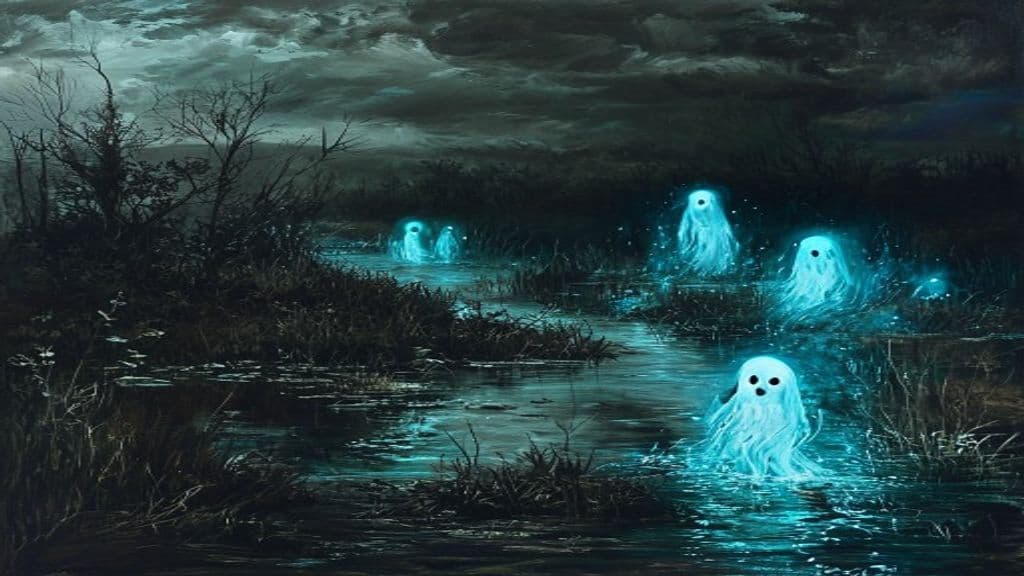
Amarynceus
Amarynceus is a mortal chieftain of Elis in the Greek mythic-historical tradition, presented as a regional leader of the Eleans connected to the heroic age. He appears in variant genealogies and in narratives linking Elis to the Trojan expedition, funeral games, and the dynastic politics involving Augeas and Heracles.
Amasagnudi
Amasagnudi is a late-attested Mesopotamian divine attendant (nin-sukkal) associated with the sky-god Anu. She appears primarily in lexical and god-list texts and was integrated into the Seleucid-period reorganization of Uruk's pantheon, where she is paired with the male attendant Papsukkal.
Amata
Amata is a legendary early-Roman queen in Virgil's Aeneid: wife of Latinus and mother of Lavinia. In the epic she opposes Aeneas' claim on Lavinia, hides her daughter, rallies Latin women against the Trojans, and ultimately commits suicide when she believes Turnus has died. Dante later cites her in Purgatorio (Canto 17) as an exemplum of the vice of wrath.
Amaterasu Ōmikami
Amaterasu Ōmikami is the sun deity and a principal kami in Shinto tradition, presented in classical Japanese sources as ruler of Takamagahara (the High Celestial Plain) and the mythic ancestress of the Imperial House through her grandson Ninigi. She is central to shrine cult at Ise and to ritual nomenclature and practice within institutional Shinto.
Amatheia
Amatheia is a minor sea-nymph (Nereid) in Greek mythology, named among the fifty daughters of the sea-god Nereus and the Oceanid Doris. She is attested in name-lists and brief mythographic summaries and is described chiefly by aesthetic epithets (not by individual myths or deeds).
Amathes
Amathes (Ancient Greek: Ἀμάθης) is a mythic eponymic ancestor in Greek tradition, described as a son of Heracles from whom the Cypriot town Amathus was said to derive its name. Some traditions alternatively attribute the town-name to a female eponym, Amathusa, mother of Cinyras.
Amatsuhikone
Amatsuhikone (天津日子根命 / 天津彥根命) is a kami in Japanese mythology described as a son of the sun goddess Amaterasu. He functions primarily as a member of the heavenly genealogy used to legitimize clan lineages and is later identified as the shintai (sacred body) of Mount Mikami, where Mikami Shrine stands to venerate him.
Amatsumara
Amatsumara (天津麻羅), also called Amenomahitotsu, is a Shinto kami presented in sources as the divine smith of Takamagahara who is said to have aided in making the mirror used in the Amaterasu cave episode and who serves as a patron of earthly blacksmiths.
Amaunet (Amunet)
Amaunet (also spelled Amunet, Amonet) is a primordial female deity of ancient Egyptian religion, attested from early religious texts and represented as the feminine counterpart and consort of the god Amun. She is presented in sources as a pre-creation or primeval principle associated with hiddenness; Thebes is recorded as a principal center of her cult into the late dynastic and Ptolemaic periods.
Amautalik
Amautalik is a child‑stealing ogress from Inuit folktale collections and modern retellings. Presented in story collections, illustrated books, graphic novels, and short films, she functions as a monstrous threat who carries away children and haunts communities, and whom protagonists overcome through luck, courage, and ancestral knowledge.
Amaymon
Amaymon is a high-ranking infernal spirit—called a prince or king—named in Renaissance and later European grimoires as a cardinal or territorial ruler who exercises authority over other demons. Sources disagree whether he is king of the east (Pseudomonarchia Daemonum, Lesser Key of Solomon) or king of the south (Liber Officiorum Spirituum, Clavis Inferni, Book of Abramelin); he is credited with a deadly/poisonous breath, the capacity to deceive lax exorcists, and figures in ritual schemes that restrain or regulate spirits.
Amazake-babaa
Amazake-babaa (甘酒婆, 'amazake old woman') is a Japanese yōkai figure from northern Honshū traditions associated with contagious illness. She is said to call at house doors at night asking for amazake and, if answered, brings smallpox or the common cold; local variants include a door-to-door seller (amazake-banbā/banbaa) and a Kohinata, Bunkyō account that treats her as a deified former amazake seller.
Community Record
- [1]Amatsu-Mikaboshi — Wikipedia. Wikipedia, entry 'Amatsu-Mikaboshi' (sections summarizing Nihon Shoki passages, shrine practices, and etymology)wiki
- [2]Wikidata: Amatsu-Mikaboshi. Wikidata short description and identifier for Amatsu‑Mikaboshiwiki
- [3]Ōmika Shrine practice (as cited in Wikipedia). Wikipedia note reporting Ōmika Shrine enshrines Mikaboshi‑Kagaseo and records a 'spirit‑housing stone' (宿魂石, Shukukonseki) believed to contain his ara‑mitama.wiki
- [4]Amatsu‑Mikaboshi (character) — Wikipedia (modern/pop‑culture reference). Wikipedia entry on the Marvel character 'Amatsu‑Mikaboshi' cited in the dataset as a modern fictional reinterpretation distinct from classical sources.wiki