Amphoterus is named in mythic genealogies as the son of Alcmaeon by Callirrhoe, daughter of the river-god Achelous. His narrative role arises after the murder of Alcmaeon: in several accounts Amphoterus and his brother Acarnan unexpectedly attain adult stature at the same moment, enabling them to pursue vengeance for their father's death. Sources place these events within the wider cycle of the Epigoni and link them to locales such as the burial of Alcmaeon at Psophis and episodes involving the robe and necklace associated with Harmonia and Delphi.
Primary source summaries emphasize a striking motif rather than a detailed physical portrait: Amphoterus (with his brother Acarnan) is said to have 'suddenly become grown-up' — an abrupt maturation from childhood to adult form noted in multiple accounts. Beyond the sudden maturation and their subsequent presence among avengers/warriors in the narrative (for example meeting others while bearing the robe/necklace episode), no consistent descriptive details (clothing, weapons, features) are supplied in the cited materials.
Amphoterus is characterized by his role and actions rather than by sustained supernatural powers: he participates with Acarnan in avenging their father Alcmaeon. The sudden maturation that enables their actions is consistently reported; one secondary source explicitly attributes the transformation to Zeus, but this specific agency is not uniformly attested across the cited texts, so the core attested ability is limited to the extraordinary coming-of-age and the filial vengeance they enact. No other magical or divine powers are recorded in the provided sources.
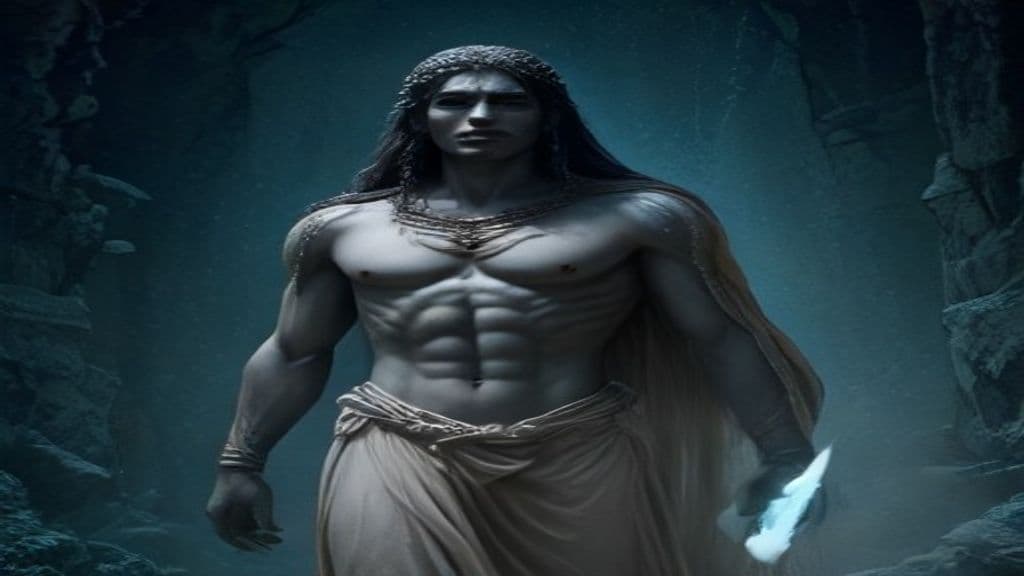
Acarnan
Acarnan (Ancient Greek: Ἀκαρνάν) is an anthroponym attested in Greek mythic and epic tradition as the name of at least two distinct mortal figures: a son of Alcmaeon and Callirrhoe, and a human suitor of Penelope from Dulichium. The lexical form also appears adjectivally/ethnically (Acarnanian), linking the word to the region Acarnania; etymologically the name is reported as derived from a Greek fish-name (akarnan).
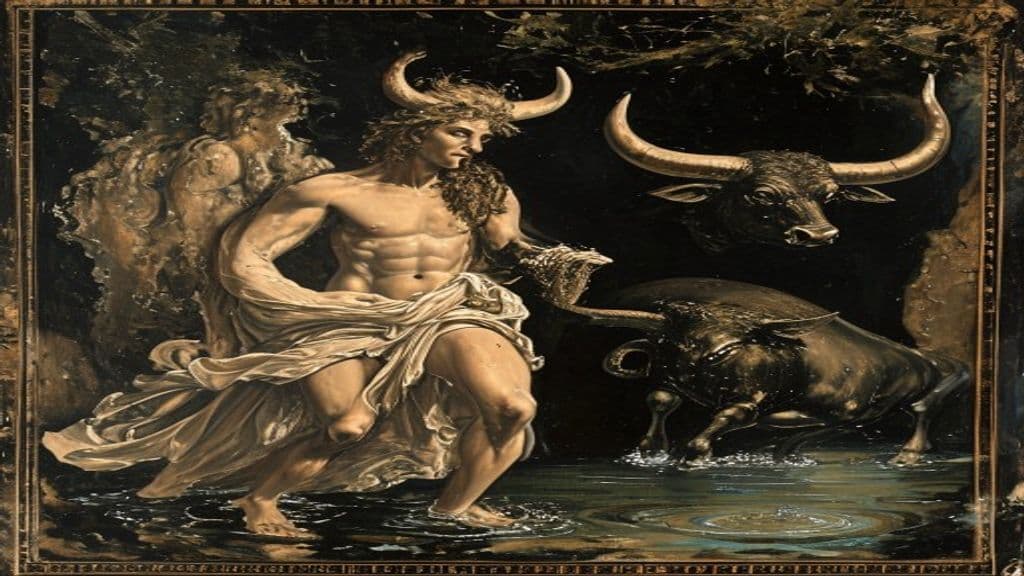
Achelous
Achelous is the personified river-divinity of the Achelous River in ancient Greek religion and mythology. Regarded among the potamoi (river-gods), he is portrayed as a shape-changing elemental deity associated with springs, naiads, and the production of abundance (the horn/cornucopia motif); he appears in myths chiefly as suitor to Deianeira and as Heracles' opponent.

Epigoni
A mythic generation in Greek tradition comprising the sons (progeny) of the Argive heroes who fought in the first war against Thebes; they mount a second expedition against Thebes ten years after their fathers and function in the Theban epic cycle as heirs who avenge and continue their fathers' deeds.
Community Record
- [1]Amphoterus (son of Alcmaeon) — Wikipedia. Wikipedia, 'Amphoterus (son of Alcmaeon)'wiki
- [2]Amphoterus — Wikipedia (general). Wikipedia, 'Amphoterus'wiki
- [3]EPIGONI - Greek Mythology Link. Greek Mythology Link, 'EPIGONI' (maicar.com)folk
- [4]Robe and Necklace of Harmonia - Greek Mythology Link. Greek Mythology Link, 'Robe and Necklace of Harmonia' (maicar.com)folk
- [5]Amphoterus entry — Myths UVic. Myths.uvic.ca, 'Amphoterus' (notes transformation attribution to Zeus in that entry)other
- [6]Pausanias, Description of Greece 8.17-35 (on Alcmaeon, Psophis). Pausanias, Description of Greece 8.17-35 (as cited on Theoi Classical Texts Library)literary
- [7]Apollodorus, The Library (Book 3). Apollodorus, The Library, Book 3 (summary editions consulted via Theoi)literary