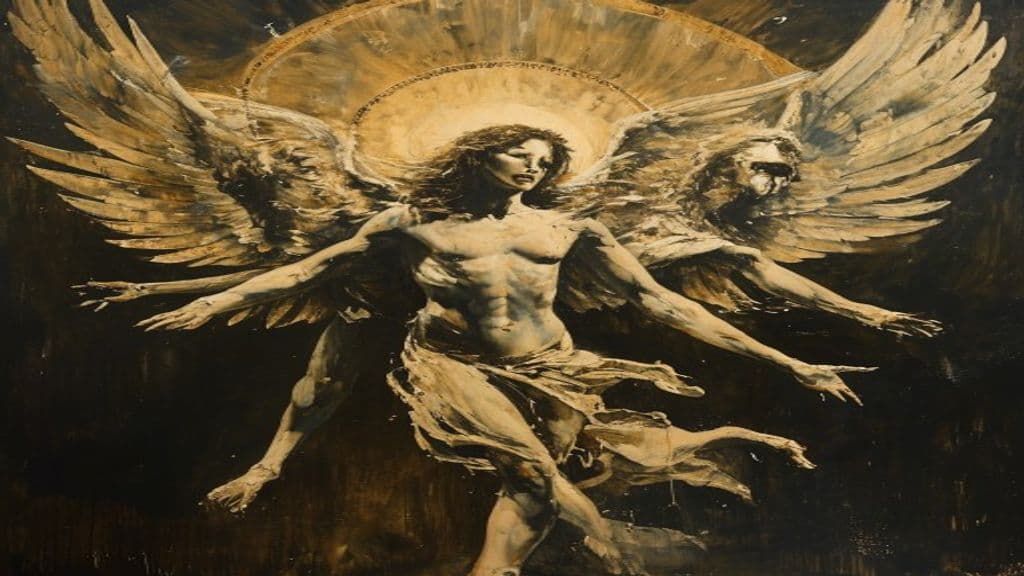
Angelic concepts developed within revelation-based, monotheistic frameworks as intermediary ministerial beings that mediate between a distant supreme deity and the profane world. Historically, some features of angelology emerged or were elaborated in post-exilic Jewish thought and through comparative contact with neighboring religious systems (for example, parallels and mutual influences with Zoroastrian figures such as the Amesha Spentas and Fravashi). Earlier autonomous or local supernatural powers were sometimes reinterpreted as subordinate, ministerial angels in a monotheistic schema.
Angels are commonly depicted as humanoid figures, often extraordinarily beautiful, and frequently shown with bird-like wings, halos, or divine radiance. Artistic and textual traditions also present angels as terrifying or inhuman in certain scriptural contexts; the term in religious texts can denote beings that range from apparently human messengers to more otherworldly manifestations.
Their primary role is to convey divine revelation or instruction to humans and to act as intermediaries executing divine commands. Angels serve as protectors and guides (for example, the notion of guardian angels) and as servants of God; in some Jewish readings angels lack independent will and execute only the single divine command given them. Scriptural and theological sources describe angels performing benevolent actions (guidance, protection, revelation) and, in other contexts, carrying out severe or punitive acts as instruments of divine justice. Traditions also contain the idea of fallen or malevolent angels expelled from heaven.
Weaknesses
- conditionlack of independent will (Jewish interpretive tradition)
Wards
None recorded.
Community Record
- [1]Angel (Wikipedia). Wikipedia, 'Angel' article (overview of angelology, etymology, iconography, and comparative context).wiki