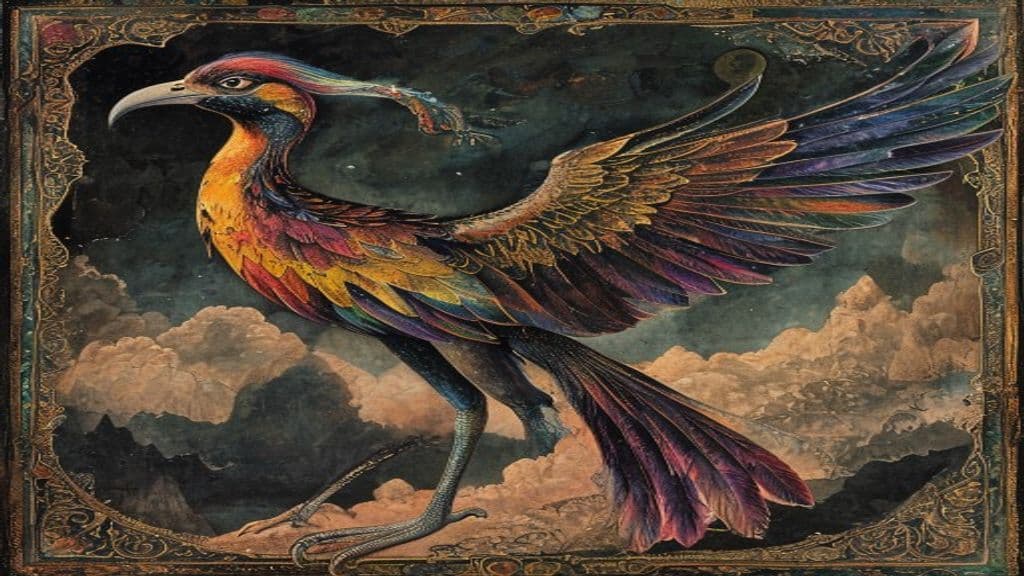
Medieval Arabic compendia present the Anqa as a singular, marvelous female bird occupying the far limits of the world. Etymologically the name ʿanqāʾ is the feminine of ʾaʿnaq meaning "long-necked," and compounds such as ʿanqāʾ al-muḡrib (Anqa al-Mughrib) emphasize remoteness and strangeness (muḡrib: west/setting of sun, strange/distant). Some lexical and narrative strands recorded by medieval authors also associate the word with calamity: later usage recorded the Anqa as originally created with perfections but becoming a scourge and thus linked to misfortune in certain traditions.
Medieval descriptions portray the Anqa as a very beautiful, colorful, composite bird with a prominent long neck (etymologically stressed) and features said to resemble many living beings. Sources report a humanlike face and multiple wings (described in some accounts as four pairs, i.e., eight wings) and note a whiteness in the neck in some reports. These attributes are recorded descriptions from medieval compendia rather than literal biological claims.
Medieval cosmographers attribute extraordinary longevity and prodigious life‑cycle details to the Anqa: Qazwini's summary reports a life‑span of 1,700 years, mating at about 500 years, and a chick that after the egg breaks remains inside and only emerges after 125 years. It is said to feed only on very large prey (reports say elephants and large fish). The bird is presented as wise and experienced — in Qazwini it is described as giving admonitions and moral advice — and figures in narrative material (e.g., an early tale in Dala'il al-Nubwah records the Anqa speaking in a discussion about fate with Solomon). The Anqa is extremely rare and remote in accounts, said to fly far away and appear only once in ages at liminal locations such as the place of sunset or Mount Qaf. Some traditions also preserve an ambivalent moral profile in which the perfect creature becomes harmful in certain tales.
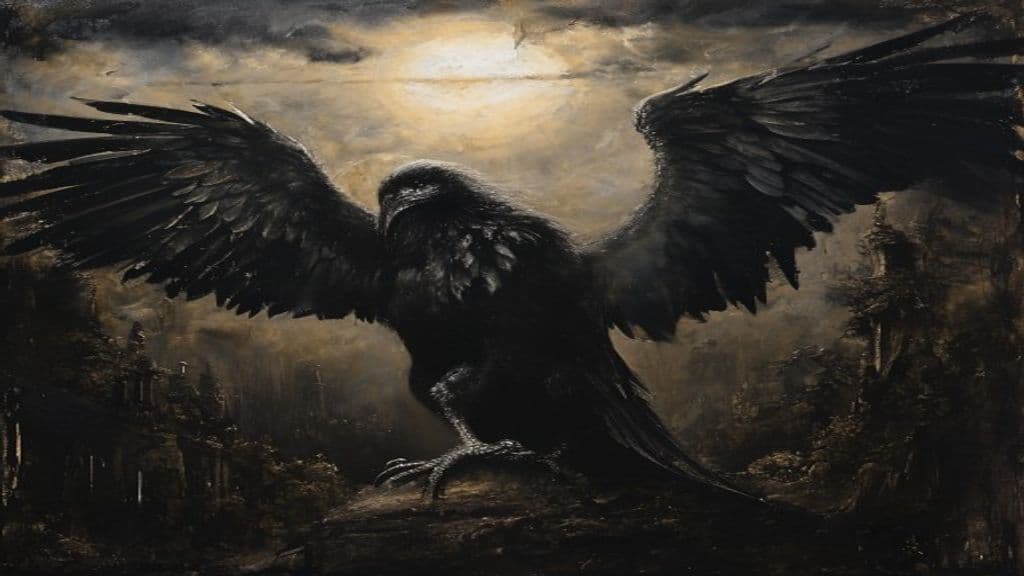
Ziz
A giant, bird-like creature with griffin characteristics in Jewish tradition. (Note: * Power tier: Primordial is too high; based on the source material, it's more accurate to place the Ziz as Greater (powerful regional) given its ability to block out the sun. * Abilities: Add a note s)
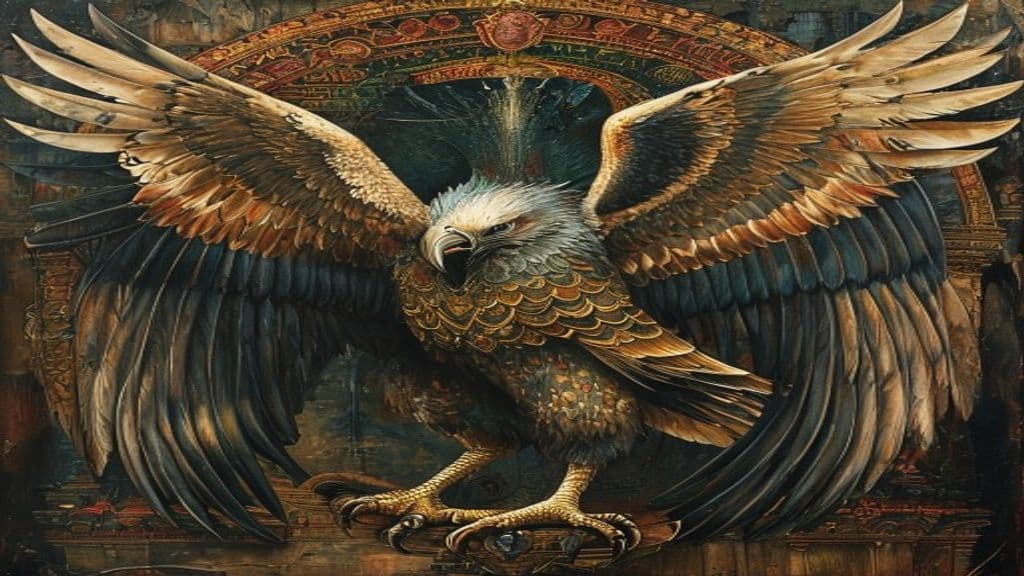
Garuda
Garuda is a divine, eagle-like being in South Asian traditions best known as the vahana (mount) of the god Vishnu. In Vedic, Purānic and later texts he appears as a powerful, solar-associated bird-personage who is both an individual mythic personality (son of the sage Kaśyapa and Vinatā) and an archetype invoked in temple iconography and theological metaphor.
Annihilation Wave
A vast, organized invading force in Marvel Comics introduced in the 2006 Annihilation crossover, portrayed as fleets of insectoid starships and monstrous combatants led by the villain Annihilus. It operates as a cosmic-scale military campaign that invades and devastates planets and forces disparate factions to form coalitions in response.
Annihilus
Annihilus is a sentient warlord and sovereign of the Negative Zone within Marvel Comics continuity. Portrayed as a tyrant commanding the Annihilation Wave and wielding the Cosmic Control Rod, he repeatedly mounts cross-dimensional invasions and serves as a recurring cosmic antagonist in multiple storylines, including the Annihilation event.
Annona
Annona is a botanical genus of tropical trees and shrubs in the family Annonaceae, known for edible syncarp fruits (custard-apple, soursop, cherimoya, pawpaw) and for containing neurotoxic acetogenins in some species. The supplied sources document Annona as a plant genus and do not support treatment of Annona as a mythological or supernatural being.
Annowre (Elergia)
Annowre (also rendered Anouwre; Elergia in Italian La Tavola Ritonda) is a malignant enchantress in medieval Arthurian romance who attempts to seduce and bewitch King Arthur, typically through an enchanted ring and an entrapping tower or castle; she is ultimately overthrown and beheaded, her head displayed as proof of victory.
Anog Ite
In Lakota mythology, Anog Ite is a complex entity associated with emotional pain and chaos. She is punished for attempting to disrupt balance. (Note: 1. Power tier should be revised based on the entity's abilities described in the source material (Primordial=cosmic, Ancient=deity-level, Greater=powerful regional, Lesser=local spirit, Minor Spirit=w)
Anput
Anput (jnpwt) is an ancient Egyptian goddess associated with funerary rites, mummification, and protection of the dead. She is attested in the Pyramid Texts and in Egyptian onomastics as the feminine counterpart/consort of Anubis and as a local goddess of the seventeenth nome of Upper Egypt.
Anshar
Anshar is a Mesopotamian primordial deity whose name (Cuneiform AN.ŠÁR) literally means "whole sky" or "the whole heaven." He functions as an abstract ancestral figure in theogonic genealogies (not actively worshiped as a regular cult deity) and appears in literary contexts—most notably the Enūma Eliš—and in god lists where he legitimizes later supreme gods.
Ant-Man (Scott Lang)
Scott Lang is a human who assumed the Ant-Man mantle in Marvel Comics and related media. As Ant-Man he uses technology—most notably a size-changing method (historically shrinking gas/pills, later Pym Particles) and a helmet that permits control or coordination of ants—to act as a crimefighter and team member in Marvel narratives.
Antaboga
Antaboga is a primordial serpent deity in Javanese and Sundanese traditional beliefs, later incorporated into Balinese Hinduism. Portrayed as an original creative being, Antaboga meditates and brings forth the world turtle Bedawang and other divine figures; its image appears widely in Javanese and Balinese ritual ornament and iconography.
Antaeus
Antaeus (Greek: Ἀνταῖος; Berber: Anti) is a mythic giant of Greek and Berber narrative worlds, son of Poseidon and Gaia, whose invulnerability derives from direct contact with the earth. Found in accounts placing him in the interior of Libya or in local North African memory, he challenges travelers to wrestling matches and is defeated by Heracles when lifted off the ground and crushed.
Antaios / Antaeus (tradition)
Antaios (Greek Antaeus; Berber Anti) is a polyvalent name attested as (a) a mythic Berber/Greek figure famed for his wrestling encounter and defeat by Heracles, (b) a Hellenized rendering of an obscure archaic Egyptian deity called Antiwy/Antwey often depicted as paired falcons in early iconography, and (c) a modern German cultural magazine and publisher imprint; the provided sources treat these as distinct referents that share a common name rather than a single coherent supernatural being.
Anteater (tradition)
In the provided sources, 'Anteater' refers to the real-world mammals of the suborder Vermilingua and to modern cultural/technical items named after that animal (games, software, student media). There is no documentation in these materials of an anteater as a supernatural entity within a traditional cosmology.
Community Record
- [1]Anqa — Wikipedia. Wikipedia, entry 'Anqa' (summary of medieval Arabic sources, including Zakariya al-Qazwini and references to Dala'il al-Nubwah).wiki
- [2]Anqa — Wikidata Q4066454. Wikidata entry summarizing descriptive attributes (human face, long neck, multiple wings) associated with Anqa in existing summaries.wiki
- [3]Az Zulal ul Anqa min Bahri Sabqat ul Atqa (Archive metadata). Archive.org item metadata — title using the word 'Anqa' in a later Arabic/Urdu devotional context; bibliographic evidence of lexical/cultural continuities rather than mythic description.other