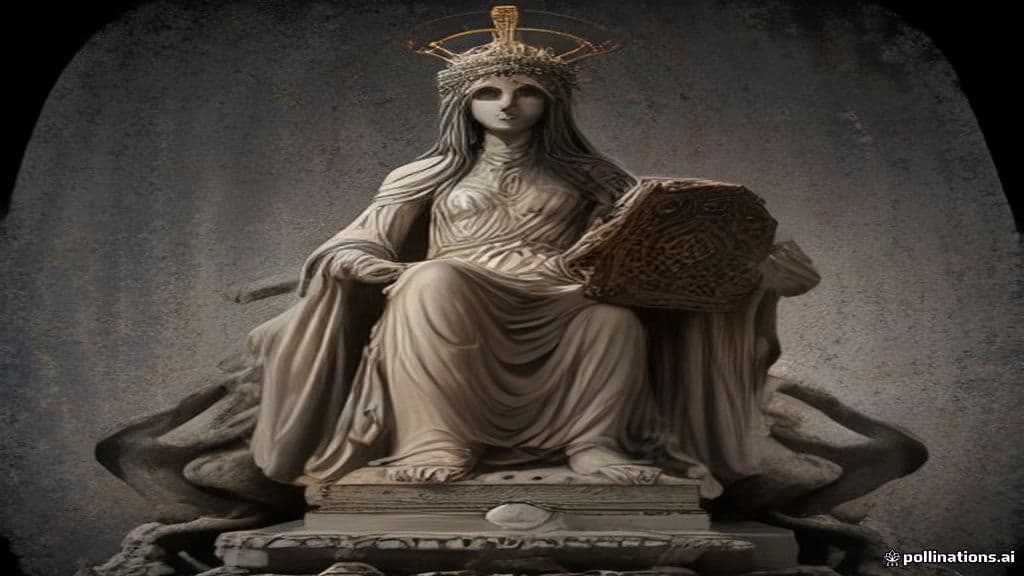
Classical authors present Antevorta as part of the Carmentae complex, either as a distinct minor goddess or as an aspect/companion of the prophetic mother-goddess Carmenta. Ancient commentary (as preserved in later compilations) records that altars were dedicated in Rome to Antevorta and her paired deity Postverta (also named Prorsa/Porrima in some sources) so that pregnant women might avert the risk of difficult childbirth. Ovid and other Roman writers describe these figures collectively as goddesses of prophecy, and later antiquarian authors (via Varro as cited by Aulus Gellius) note their cultic role in labor.
No surviving classical source in the provided material supplies an iconographic or physical description of Antevorta. The available texts record only her names (Antevorta, Porrima, Prorsa/Proversa) and cultic role; the association with Carmenta and with prophetic functions is what informs modern reconstructions rather than any described visual motif. (Sources do not provide attributes, garments, or common artistic representations.)
In the literary and religious record Antevorta is described as a prophetic and protective figure: she is said to be a goddess of the future and one of the Carmentae, goddesses of prophecy. In cult belief she was invoked to protect mothers in childbirth and was "said to be present" at births in which the infant came head-first (vertex presentation), while her sister Postverta was said to be present at feet-first (breech) births. Sources frame these roles as cultic attributions and protective invocations rather than as detailed accounts of supernatural mechanisms.
Weaknesses
- otherNo recorded weaknesses in provided sources
Wards
- ritualInvocation at altars to Antevorta and Postverta
Community Record
- [1]Antevorta — Wikipedia. Antevorta. Wikipedia. Accessed via provided research notes summarizing classical sources (Ovid; Aulus Gellius citing Varro).wiki
- [2]Antevorta — Wikidata entry Q1250207. Wikidata entry summarizing the Roman goddess of the future; cited in research notes.other
- [3]Aulus Gellius (citing Varro) as summarized in secondary sources. Summary in modern reference: altars were constructed to Postverta and Prorsa so as to avert the risk of difficult childbirth (Aulus Gellius citing Varro), as recorded in the provided research notes.literary
- [4]Ovid — descriptions of prophetic deities (as summarized). Ovid described the Carmentae/Porrima/Postverta as goddesses of prophecy; summary quotation in research notes indicates Porrima 'sung' of the past ('porro') while Postverta sang of the future, a point noted as variably attested in sources.literary