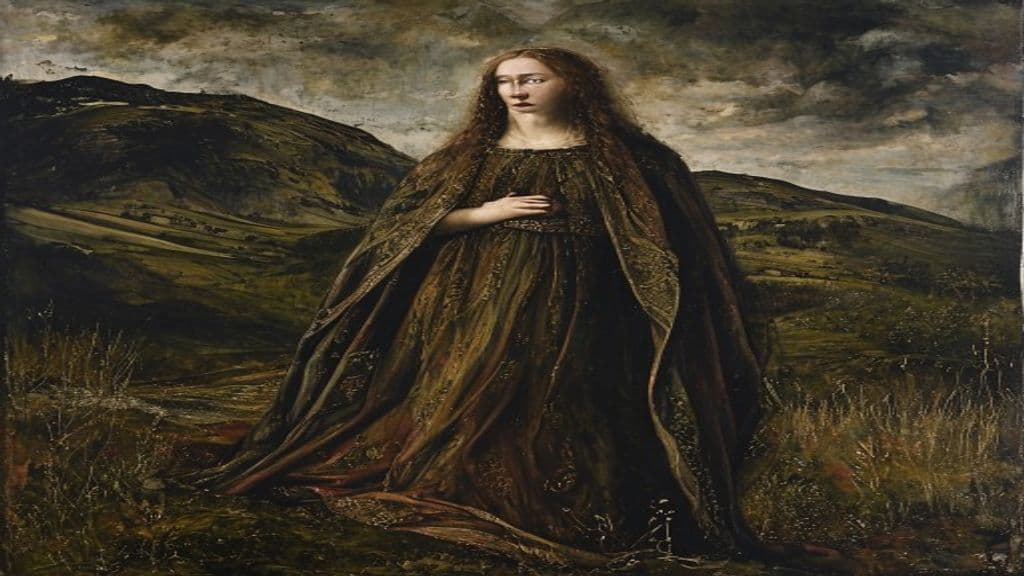
Surviving medieval glosses present Anu as a primordial mother-goddess and ancestral source of the Irish gods. Sanas Cormaic records Ana as 'mother of the gods of Ireland', a genealogical/ancestral role that places her at the root of divine lineage in Irish cosmology. Later compilations and folkloric reworkings (modern popular accounts) expand her identity through conflation with other female divinities but do not provide a single cohesive origin narrative.
Medieval and early glossing sources do not provide a consistent physical description for Anu. Place-name evidence (the Paps of Anu/Dá Chích Anann in County Kerry) implies a symbolic 'land-mother' embodiment tied to breast-shaped hills. Later popular and folkloric texts sometimes portray her in generalized Great‑Mother imagery or align her with triadic feminine figures (maiden/crone/war-woman), but these are modern or derivative interpretations rather than uniform medieval attestations.
Primary attested functions in the sources are maternal nourishment and provision—Sanas Cormaic says she 'well did she feed the gods'—and a territorial role conferring wealth, riches and prosperity, particularly in Munster (the name is glossed with meanings of wealth/prosperity). Some later folkloric and popular materials ascribe broader and ambivalent functions (giver of gifts and inspiration; bringer of sleep and darkness), but those attributes are presented in the modern compilation as syncretic extensions rather than core medieval attestations.
Weaknesses
- otherNo explicit weaknesses attested in the cited sources
Wards
- conditionEuphemistic naming (avoidance by respectful or diminutive names such as 'Gentle Annie' in later Scottish vernacular parallels)
Albiorix
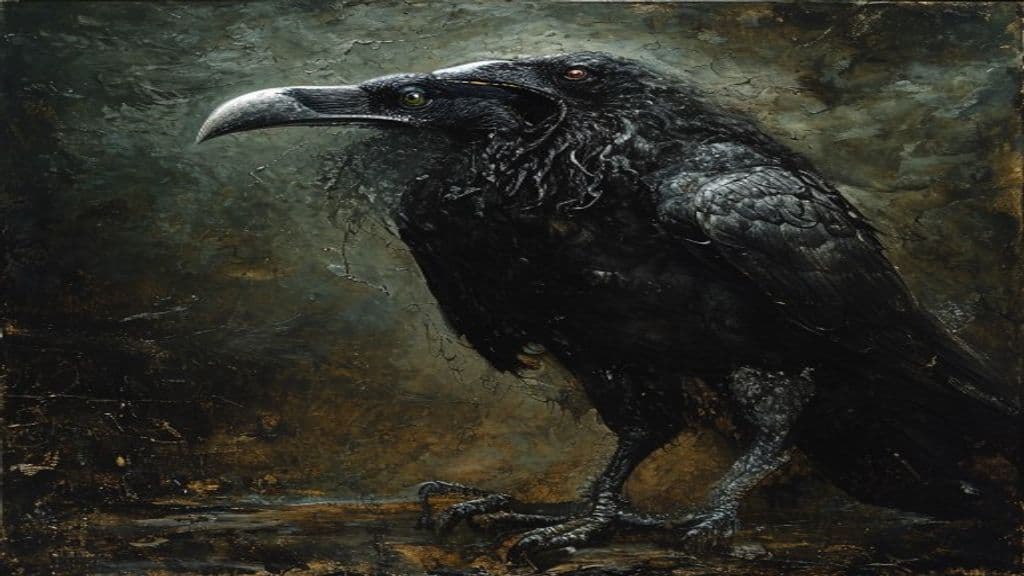
Albiorix is a Celtic theonym attested in modern reference works as a Gaulish divine name that, in available summaries, is presented as an epithet or local identification of the Roman god Mars. The surviving remarks in the supplied sources are limited to name listings and disambiguation entries rather than narrative myth or cult detail.
Ankou
The Breton personification of death — the last person to die in a parish each year who drives a creaking cart collecting the dead, whose appearance or sound presages death.
Banshee
A female spirit of Irish and Scottish folklore whose wail heralds an impending death in a family of Gaelic descent. Not a cause of death — a witness to it.
Breton Mythology
A collection of explanatory and heroic tales forming part of the Celtic mythos, rooted in ancient Celtic tradition. (Note: 1. Power tier: Primordial is incorrect; it should be Ancient (deity-level) as Breton mythology is rooted in ancient Celtic tradition but doesn't match the primordial level of cosmic entities. 2. Origi)
Cat Sídhe
A large black fairy cat of Irish and Scottish tradition with a white spot on its chest, who could steal a corpse's soul before burial if allowed to leap over it.
Cú Chulainn
A legendary Irish warrior-hero and demigod of the Ulster Cycle, Cú Chulainn is the central martial protagonist of the Táin Bó Cúailnge and a culture-constituting figure whose stories were preserved in multiple medieval manuscripts and continue to appear in modern memorial and institutional contexts.
Cú Sídhe
The supernatural fairy hound of Celtic tradition — enormous, dark green or white, who hunts in eerie silence and whose triple bark is a death omen.
Daolghas
Member of the Fianna, a band of warriors in Irish mythology, with supernatural abilities. (Note: * Power tier: Inconsistent with abilities described; should be Primordial or Ancient due to its cosmic/deity-level powers. * Abilities: Not entirely accurate; it's specifically stated that Daolghas ca)
Dobhar-chú
The 'water hound' of Irish folklore — a ferocious hybrid creature, part otter and part dog, lurking in Irish lakes, known to have killed people and capable of pursuing its hunters at terrifying speed.
Dullahan
The headless horseman of Irish legend who carries his own rotting head under one arm, stops at the door of those about to die, and cannot be kept out by any lock.
Echtra Cormaic
A tale in Irish mythology recounting the journey of high-king Cormac mac Airt to the Land of Promise, a realm associated with Manannán mac Lir. (Note: 1. The source does not mention Echtra Cormaic's power tier, so it should be removed or marked as unknown. 2. Add an appearance description based on Irish mythological descriptions of high-king Cormac )
Ecne
Ecne is the personification of wisdom in Irish/Celtic mythic tradition, attested in modern summaries as a member of the Tuatha Dé Danann and glossed in Old Irish as 'wisdom' (ecna, ecne). Sources present Ecne genealogically as the offspring of three brothers and as connected to the goddess Anu/Ananna, with variant accounts assigning ambiguous gender and, in one later report, an association with poetry.
Community Record
- [1]Anu (Irish goddess) — Wikipedia. Wikipedia: 'Anu (Irish goddess)' article (sections citing Sanas Cormaic, Lebor Gabála Érenn, and place-name associations).wiki
- [2]Morrigan Ancient Celtic Goddess (computer art) — Archive.org. Archive file: popular/modern/folkloric compilation describing Anu/Danu as Mother, giver of gifts and inspiration, and as encompassing light and dark; notes on triadic female figures and later folkloric conflation.folk