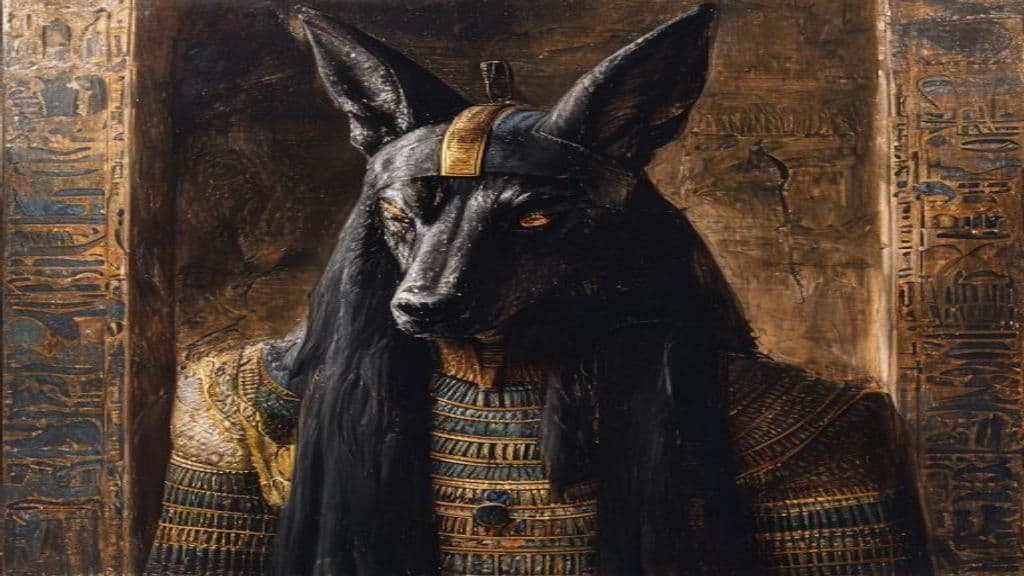
Sources record multiple and variable genealogies for Anubis across Egyptian texts and periods rather than a single fixed origin narrative. Different traditions make him son of deities such as Ra, Nephthys, Isis, or pairings like Osiris–Isis in some later accounts; the Coffin Texts and other funerary sources present variant filiations. Over time Anubis’s independent mortuary functions were integrated into the larger Osirian afterlife framework, and in the Ptolemaic period he was syncretized with the Greek Hermes as Hermanubis.
Anubis is typically shown as a canine (jackal) or as a human figure with a canine head; in early (Predynastic and First Dynasty) contexts he appears fully in animal form, while anthropoid depictions appear in later periods. He is conventionally depicted in black, a color symbolic of regeneration, life, the Nile silt, and the discoloration of the corpse after embalming. He is sometimes visually and conceptually linked with other canine gods such as Wepwawet.
Anubis functions as protector of graves, master of the embalming place, guide of souls into the afterlife, and attendant at postmortem judgment — notably present at the 'Weighing of the Heart.' In Old Kingdom sources he is described as the most important god of the dead; by the Middle Kingdom many lord-of-dead functions had been transferred to Osiris, leaving Anubis with specialized mortuary roles (embalming, guardianship of tombs, guiding the deceased). He appears in tombs, funerary texts, and ritual contexts across Egyptian history and continues in Roman-period funerary imagery as an escort to the underworld.
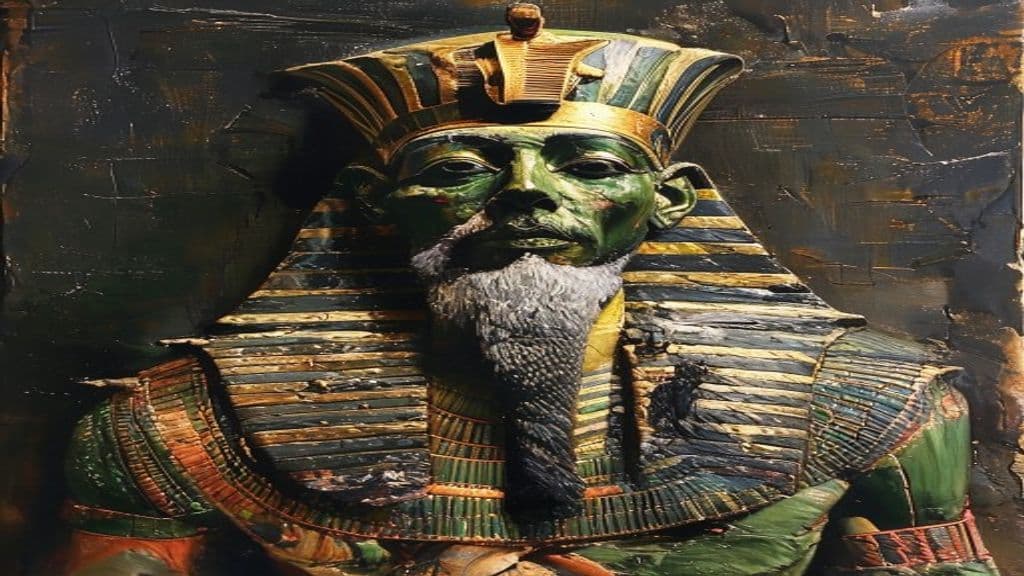
Osiris
Osiris is the major ancient Egyptian god of fertility, vegetation, death, resurrection, and the afterlife. He functions as sovereign of the realm of the dead, a guarantor of postmortem renewal and agricultural fertility, and the archetypal divine figure with whom deceased kings and mortals ritually unite to gain continuity after death.
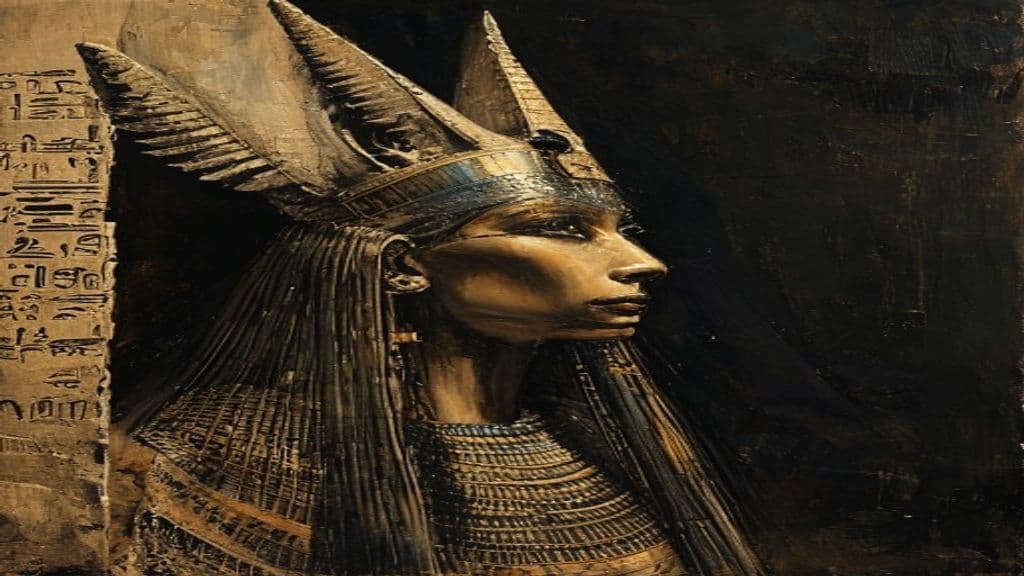
Anput
Anput (jnpwt) is an ancient Egyptian goddess associated with funerary rites, mummification, and protection of the dead. She is attested in the Pyramid Texts and in Egyptian onomastics as the feminine counterpart/consort of Anubis and as a local goddess of the seventeenth nome of Upper Egypt.
Community Record
- [1]Anubis — Wikipedia. Wikipedia contributors. "Anubis." Wikipedia, The Free Encyclopedia.wiki
- [2]Anubis — Wikidata. Wikidata entry Q14896497.other