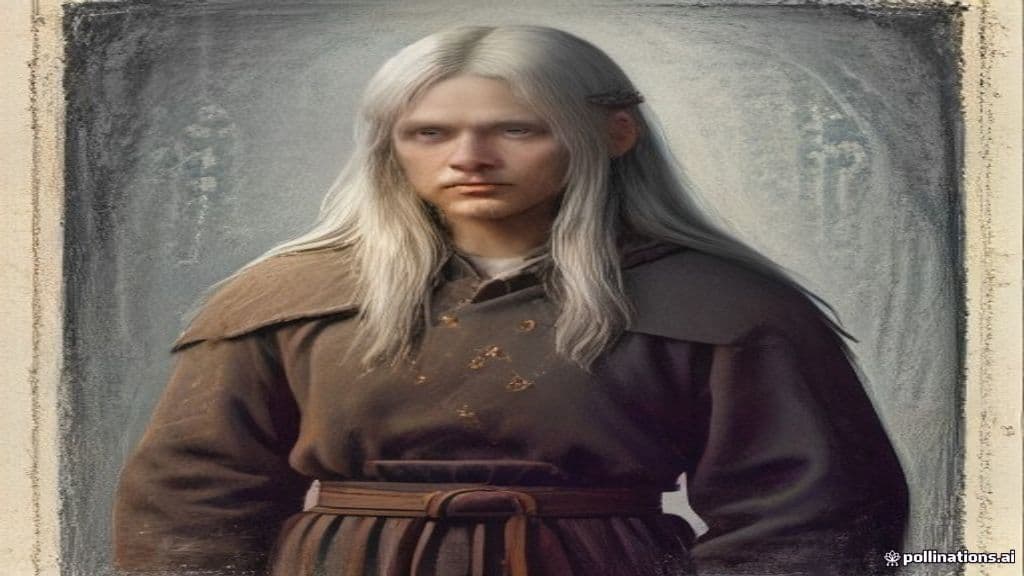
Anund appears in Old Norse source tradition as a member of the Yngling royal genealogy. In the terse skaldic poem Ynglingatal (quoted by later authors) he is listed among ancestral kings; the saga prose of Snorri Sturluson (Ynglinga saga, part of Heimskringla) expands those lines into narrative, presenting him as son and successor of Yngvar who avenged his father's death and then promoted settlement by clearing land and making roads. The Latin summary Historia Norwegiæ preserves a parallel, older recension of the Ynglingatal material with some divergent details (notably concerning his death). Thorsteins saga Víkingssonar offers an alternate genealogy in which parentage differs. These sources represent poem (Ynglingatal), saga prose (Ynglinga saga), and Latin summary (Historia Norwegiæ) traditions that together form the textual basis for the figure known as Anund.
Primary sources do not provide a physical description of Anund; no details of height, clothing, facial features, or supernatural marks are recorded. The attestations (Ynglingatal, Ynglinga saga, Historia Norwegiæ, and Thorsteins saga Víkingssonar) present him through actions, genealogical placement, and toponymic associations rather than embodied description, so his persona is known from deeds (revenge in Estonia, road‑making, rule from multiple halls) and lineage rather than bodily detail.
The sources attribute no supernatural powers to Anund; he is presented as a human ruler whose notable capacities are political and practical. Ynglinga saga recounts that he avenged his father in Estonia and returned with great riches, that he organised road‑building and land‑clearing which led to large districts being settled (hence the byname Bröt‑Anund), and that he maintained multiple royal farms and moved often between halls (Husbys). The corpus thus portrays him as militarily effective, wealthy, and active in settlement and infrastructure, with no mention of magical abilities.
Weaknesses
- conditionmortality (killed by landslide or by fratricide per sources)
Wards
None recorded.
Community Record
- [1]Ynglinga saga (Heimskringla) — account of Bröt‑Anund. Ynglinga saga, as summarized in modern compendia (see Wikipedia: Anund)literary
- [2]Ynglingatal (skaldic poem) — terse genealogical verses mentioning Anund. Ynglingatal (quoted and summarized in later prose and modern accounts; referenced in Wikipedia: Anund)literary
- [3]Historia Norwegiæ — Latin summary of Ynglingatal with variant on death. Historia Norwegiæ (Latin summary of the Yngling lineage, reported in modern summaries such as Wikipedia: Anund)literary
- [4]Thorsteins saga Víkingssonar — alternative genealogy mentioning Anund. Thorsteins saga Víkingssonar (saga tradition providing an alternate parentage for Anund; summarized in modern sources)literary
- [5]Modern summary and etymology (Wikipedia: Anund). Wikipedia contributors, 'Anund' (entry summarising primary sources and Proto‑Norse form *Anuwinduz meaning 'winning ancestor')wiki