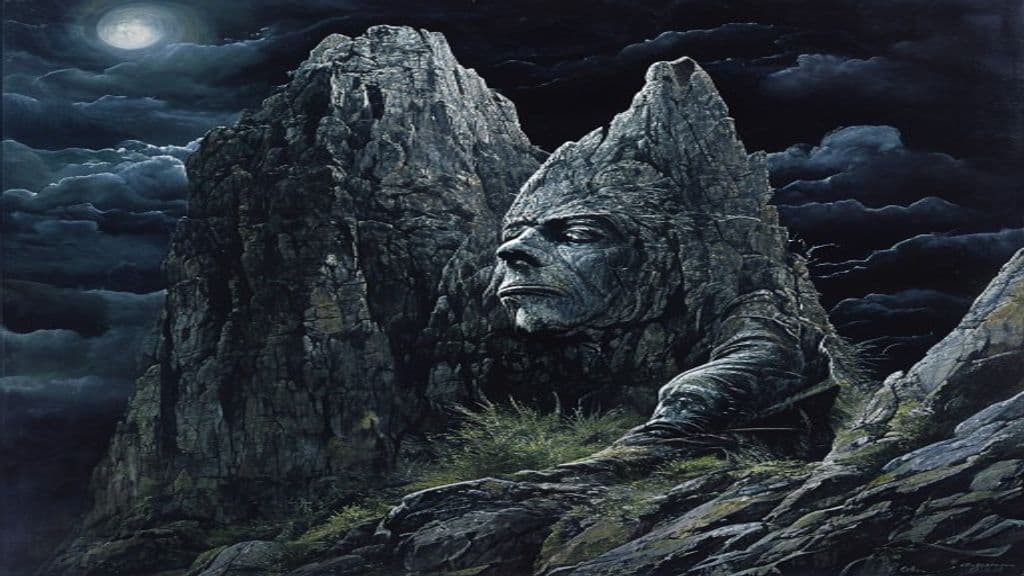
Sources present two closely related models rather than a single origin myth: apu may be conceived as ancestral spirits that inhabit and protect particular mountains or, alternatively, the mountain itself is treated as the sacred, personified presence. Apus form part of the wak'a category (material manifestations of the divine) and were incorporated into state ritual and landscape management during the Inca period, when architecture and shrines were placed at sacred peaks to channel and control land power.
Rather than a fixed human form, apus are experienced as mountains or rocks that display anthropomorphic attributes; researchers note peaks are perceived as beings with personality and agency. They are frequently associated with condors and ancestral identity. Sources emphasize that specific humanoid portraits are not consistent across accounts—some scholars stress the spirit-as-inhabitant model while others treat the mountain-as-being model.
Apus are regarded as among the most powerful nature spirits in local cosmologies. They are said to protect local communities and can be invoked to assist people at a distance; they are linked to control over water, fertility, agriculture, and the local distribution of resources. Apus form hierarchical relations (higher peaks command lower ones) and are integrated into seasonal ritual cycles (notably reported as most active in August). Cultural accounts also attribute variable personalities (masculine or feminine, protective or malicious) and social ties (familial or romantic) to apus. If neglected or offended, an apu is believed to cause illness, accidents, natural disasters, or other harm and is reported in sources to 'eat' (quoted in sources) people who die near them from illness or accidents.

Inti
Inti is the principal Inca solar deity — a politicized and multilayered sun-power central to Inca state religion, agriculture, and dynastic legitimation. Treated as both the divine Sun and an ancestral source for the ruling lineage, Inti was worshipped in temples (notably Qurikancha), honored in seasonal rites such as the Inti Raymi, and served by an institutional priesthood.

Viracocha
Viracocha (Quechua Wiraqucha, Huiracocha) is the principal creator and civilizing deity in pre-Inca and Inca mythology, portrayed as the originator of the universe, time, and human society who emerges from watery places to bring light, order, and knowledge.
Community Record
- [1]APU (Wikipedia). "In the ancient religion and mythology of Peru, Ecuador, and Bolivia, an apu is the term used to describe the spirits of mountains and sometimes solitary rocks, typically displaying anthropomorphic features, that protect the local people."wiki
- [2]Apu Inka (Wikipedia). "Apu Inka (Quechua apu an Andean deity, Inka Inca) is a folk dance in Peru. The dance re-enacts the capture of the Inca by the Spanish invaders. The representation of Apu Inka is mostly associated with the feast in honor of the Virgen de Navidad..."wiki
- [3]THE SUPREME CREATOR GOD 'VIRACOCHA' OF THE INCA PEOPLE. "Viracocha was one of the most important deities in the Inca pantheon..." (used in sources to show apus listed alongside pan-Andean deities)other
- [4]Apu (Incan Gods) — Marvunapp appendix. Listing of Inca deities and related sacred beings; used as contextual source for pantheon membership and related figures.other
- [5]The Sacred Apus - eco-nnect. Discussion of apus as sacred mountain spirits in Andean contexts (used as supplementary contextual material).other
- [6]Apu (god) — Wikipedia. Wikipedia, 'Apu (god)' entry (summary of Andean concept of apu, roles, rituals, and history).wiki
- [7]Apu (god) — Wikipedia (duplicate fragment used in research). Wikipedia duplicate reference used in research notes for corroboration of claims about apu.wiki