
Mythic accounts place Argus as a great giant and neatherd entrusted by Hera to guard Io, the heifer‑transformed figure she wished to conceal. Genealogical details vary across traditions (different parentages are recorded in the wider corpus), but his role as Hera's appointed watchman and embodiment of Argive custodial order is consistent: Hera 'set a watcher upon her, great and strong Argus' to keep unwearying watch over Io at the sacred olive of the Argive Heraion.
Argus is described as a great and strong giant covered with many eyes; later sources (notably Ovid and subsequent tradition) describe him as having 'a hundred eyes', while an earlier fragmentary version attributes four eyes in a poetic fragment. Accounts emphasize eyes 'in all directions' so that some were always awake. He is sometimes associated with the bull by virtue of slaying a destructive bull and wearing its hide; after death Hera is said in some versions to have set his eyes into the peacock's tail or transformed him into a peacock.
Argus' defining ability is perpetual vigilance: sleep 'never fell upon his eyes' and his many eyes provided multi‑directional, unremitting surveillance. He is also described as physically powerful—'great and strong'—capable of slaying monstrous opponents (a tradition credits him with killing Echidna) and carrying out custodial duties as Hera's watchman. Despite these capacities, mythic narratives record that Hermes used charms, a wand, or a thrown missile to close or lull Argus' eyes and then kill him, showing vulnerability to divine subterfuge.
Weaknesses
- ritualspoken charms to lull the eyes (Hermes' enchantments)
- substancewand or staff used by Hermes to close eyes (variant)
- othertargeted violence (throwing a stone or killing blow by Hermes)
Wards
- otherplacement of Argus as guardian by divine fiat (Hera's appointment as preventative measure)
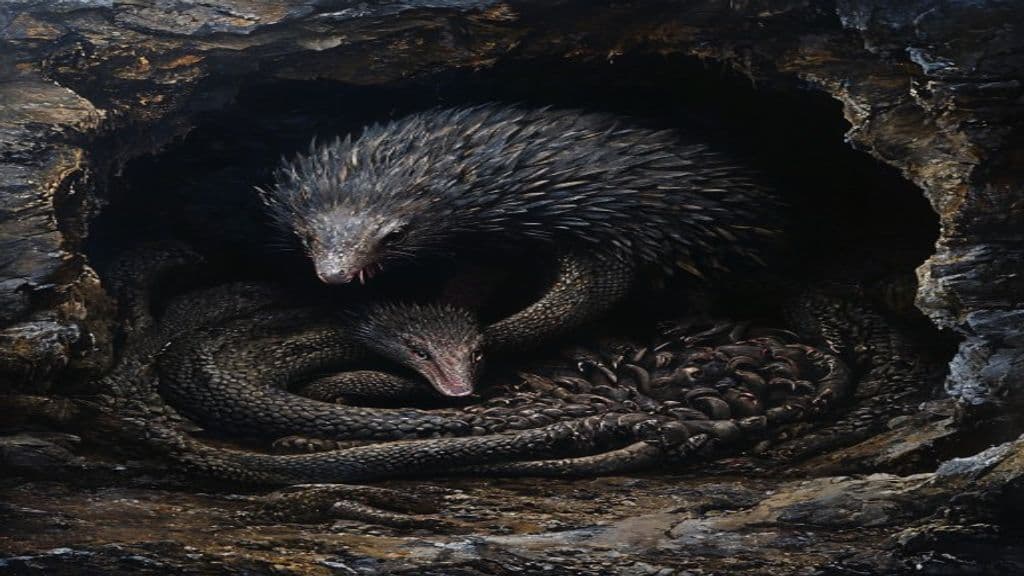
Echidna
The 'Mother of Monsters' — half beautiful woman, half enormous serpent — who with Typhon gave birth to nearly every great monster of Greek mythology.

Äio
No folkloric or mythological entity named "Äio" is attested in the provided source set. The available materials contain unrelated uses of similar letter sequences (e.g., the plant genus Aiouea, the astronomical body Io, software terms "io"), but none describe a being, tradition, or rituals called Äio.
Community Record
- [1]Argus Panoptes — Wikipedia. Wikipedia, 'Argus Panoptes' (summary and cited fragments and classical variants)wiki
- [2]Argus Panoptes — Wikidata. Wikidata entry for Argus Panopteswiki