There is no single mythic origin story for Aristomachus as a distinct supernatural entity. Rather, the name appears as a label applied to several individuals across sources. In mythographic compilations (e.g., the Library of Apollodorus) one bearer is listed among genealogical networks; Wikidata records an Aristomachus as one of the Heracleidae, a great‑grandson of Heracles, situating that particular bearer within the heroic descent tradition. Separately, two Hellenistic rulers known as Aristomachos I (d. 240 BC) and Aristomachos II (d. 223 BC) are recorded as tyrants of Argos; another Aristomachus appears in the political history of Croton around 215 BC. Additional attestations include a Greek writer on agriculture/domestic economy cited by Pliny and a sculptor native to the banks of the Strymon, as well as a Byzantine official in sixth‑century Egypt.
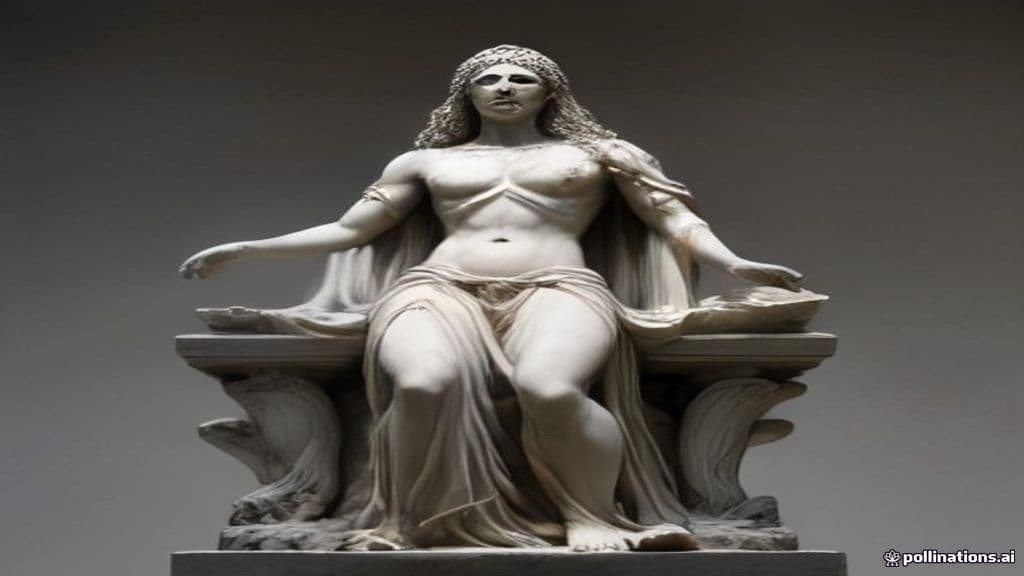
No iconographic or physical description is attested for Aristomachus as a supernatural form. All provided sources treat Aristomachus as a human name borne by individuals; descriptions that exist concern their historical or genealogical roles (e.g., tyrants, author, sculptor) rather than bodily appearance.
No supernatural powers or characteristic behaviors are ascribed to 'Aristomachus' in the sources. The documented capacities are ordinary human activities tied to particular bearers: political rule (the Argive tyrants), political maneuvering (the Crotonian actor), authorship on agriculture/domestic economy (citations in Pliny's Natural History), sculptural craftsmanship (the Strymon sculptor), and civil administration (the Byzantine official in Egypt).
Community Record
- [1]Aristomachus — Wikipedia (disambiguation). Wikipedia: 'Aristomachus (Ancient Greek: Ἀριστόμαχος) may refer to: ...' (disambiguation entry listing mythological figures, tyrants of Argos, Crotonian, writer cited by Pliny, sculptor, Byzantine official).wiki
- [2]Wikidata entry Q311536 — Aristomachus. Wikidata: records an Aristomachus as 'one of the Heracleidae, a great‑grandson of Heracles.'other
- [3]The Library of Apollodorus — selections (Argonauts; Jocasta's children). Apollodorus passages in archive (genealogical compilations) in which Aristomachus appears as one among many named mythic figures; used for contextualizing mythographic attestations.literary
- [4]The Library of Apollodorus — Jocasta's Children (audio archive). Apollodoran genealogical material (audio archive) listing numerous mythic names including Aristomachus.literary
- [5]Pliny the Elder, Natural History — citations of Aristomachus. Pliny, Natural History references (e.g., 13.47; 14.24; 19.26.4) cite a writer named Aristomachus on agriculture/domestic economy as preserved in Pliny's work (attestation via Wikipedia summary).literary