
Asase is the personified Earth in Akan cosmology and is paired cosmologically with the male sky deity Nyankapon. She is described as mother of important river/forest/land deities (Bia / Bea / Tano) and in some traditions is named as mother or stepmother of Anansi. Akan tradition recognizes two linked local identifications: the Asante and many other Akans call her Asase Ya / Asase Yaa (linked to Thursday), while the Fante and some other groups call her Asase Afua / Efua (linked to Friday). Both names denote the same single being with complementary aged and youthful personalities rather than two separate gods.
Akan sources present Asase primarily as two complementary personae of one deity. Asase Yaa (also called Aberewaa by the Asante) is pictured as an old woman associated with barren places and the realm of the dead. Asase Afua is pictured as a youthful, very beautiful woman associated with fertile land, farming, love and procreation. Symbolically Asase Afua is represented by animals such as the antelope and earlier or variably by the goat; descriptions record horn-coil numerology (e.g., ten coils on one horn and eight on the other, or variants with eight coils each) as symbolic elements tied to fertility and astronomical symbolism.
Asase governs the fertility of the land and agricultural abundance, receives human bodily remains (honam) and blood (mogya) at death, and functions as guarantor of truth and social peace—lying is a taboo against her. She must be propitiated before altering or using land (libation consent) and is invoked in naming/outdooring ceremonies, funerary libations (ayie) to permit graves, and other domestic appeasements (for example before house construction). Her dual aspects link her to both cultivation and the ancestral realm (Asamando), and she appears as an authoritative moral and ecological force within Akan society.
Weaknesses
- conditionNone given — Asase is not described as adversarial; vulnerabilities are not specified in the source
Wards
- ritualAbstention from tilling on Asase's day
- ritualPouring libation to Asase before changing or agitating land
- ritualTouching lips or tongue to the soil while reciting the Asase Ya Prayer-Poem (oath/truth ritual)
- ritualKnocking upon the earth before planting (acknowledgement/permission)
- ritualAppeasement sacrifice to Asase before building a house

Tano (Ta Kora)
Tano (also written Tanoɛ), identified in one source as Ta Kora (also Tando in Fante), is an Abosom in Akan/Asante religion associated with war and strife and, in Asante accounts, with thunder and lightning. The supplied materials treat Tano primarily as a named member of the Akan Abosom category rather than providing extended mythic narratives or iconography.
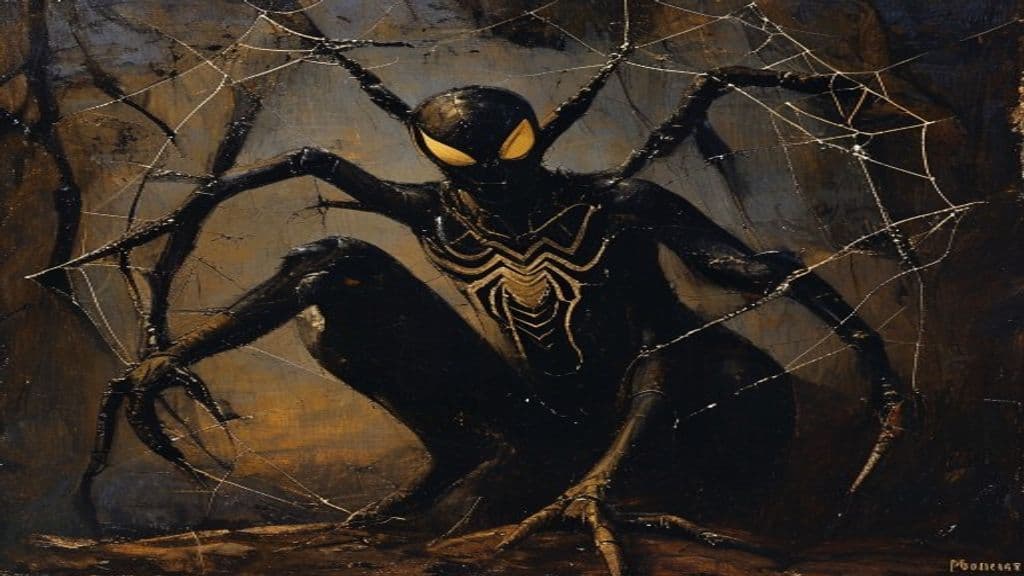
Anansi
The spider trickster god of Akan folklore — cunning, mischievous, and wise. Keeper of stories and teacher of human beings, brought through the slave trade into Caribbean and African-American tradition.
Anansi
The spider trickster god of Akan folklore — cunning, mischievous, and wise. Keeper of stories and teacher of human beings, brought through the slave trade into Caribbean and African-American tradition.
Asanbosam
The Asanbosam (also Sasabonsam, Asasabonsam) is an Akan folkloric humanoid creature that dwells in trees and is described as vampire-like, feeding on people who enter its forest territory and enforcing localized rules of the woodland.
Kwaku Ananse
Kwaku Ananse (Anansi, Ananse) is a central spider-associated trickster and culture-bearing figure from Akan (including Ashanti) folklore of southern Ghana. Presented in oral tale cycles, songs, children’s literature, and modern media, he embodies wisdom, wit, cunning, and mischievousness and functions as a narrative teacher who both questions and ultimately reinforces social norms.
Arzhang Div
Arzhang Div (Aržang Dēw; ارژنگ دیو) is presented in Shahnameh manuscript tradition as the chief or commander of the divs of mythic Mazandaran and an antagonist defeated by the hero Rustam during the episode commonly called Rustam's Sixth Feat (part of the Seven Labours). His defeat is treated by commentators as emblematic of the collapse of a demonic ruling order in the epic.
Asag
A monstrous Sumerian demon king whose ugly face made fish flee and plants wither, whose army of stone warriors nearly defeated the god Ninurta before being crushed.
Asakku
A class of Sumerian disease-demons born from the union of heaven and earth, who lodged themselves in people's bodies and caused wasting fevers and convulsions.
Asalluhi
Asalluhi (also Asarluhi, Asarluhe, Asaralimnuna, Asaralim, Asalim, Asarnuna) is a Mesopotamian deity primarily associated with incantations and exorcism. He is described in some sources as a son of the god Enki and is likely identical with an earlier figure called Asar attested from the third millennium BCE.
Asarluhi
Asarluhi (also Asalluhi, Asarluhe, Asaralimnuna, Asaralim, Asalim, Asarnuna) is a Mesopotamian deity primarily associated with incantations and exorcism who commonly operates alongside his father Enki. He is likely identical with an earlier deity attested from the third millennium BCE called Asar (Asaruludu in some modern datasets).
Asase Yaa
Asase Yaa (also Asase Afua, Asaase Yaa, Asaase Afua, Asase Efua, Asaase Aberewa) is the Akan personification of the earth in Ghana and Ivory Coast, regarded as an earth-mother figure associated with fertility, procreation, love, peace, truth, and the dry and lush earth. She is also described in sources as the 'Mother of the Dead' or Mother Earth, occupying a central moral and material place in Akan thought.
Asbolus
Asbolus is a named centaur in ancient Greek myth attested as an augur who read omens from birds and is said to have foresaw the Centaurs' battle at Pirithous's wedding; later traditions report his role in the episode where Pholus opens a communal wine-jug and Asbolus summons other centaurs, an action that precipitates a deadly confrontation in which several figures (Pholus, Chiron, Nessus) die and in some traditions Asbolus himself is struck by Heracles' arrows. In modern usage the name also designates the Centaur-class minor planet 8405 Asbolus, discovered in 1995 and measured by thermal observations.
Ascalabus
Ascalabus is an etiological figure from Greek myth: a son of Misme who, after mocking the thirsty goddess Demeter as she drank a kykeon, is transformed into a gecko (Greek ἀσκάλαβος). The tale appears in accounts tied to Demeter's wanderings searching for Persephone and has a Roman variant in which he is called Stellio.
Ascalapha odorata (Hawaiian)
A nocturnal moth associated with death or misfortune in Hawaiian tradition, possibly tied to Central and South American folklore. (Note: - Summary should note that Ascalapha odorata's association with death/misfortune is found in Central and South American folklore, not explicitly mentioned in Hawaiian tradition. - Power tier: Primordi)
Community Record
- [1]Asase Ya/Afua. Wikipedia: 'Asase Ya/Afua' entrywiki