In the Rigvedic hymns the twins are repeatedly addressed as divó nápātā ('grandsons/sons of Dyaus'), marking a genealogical link to the Vedic sky god and situating them within an Indo‑European pattern of divine horse twins. Later Vedic and epic traditions present variant parentage, often naming solar/sky figures such as Vivasvat/Surya and Saranyu/Sanjna in origin accounts; the supplied sources emphasize the Rigvedic divó nápātā formula while noting these later filiations.
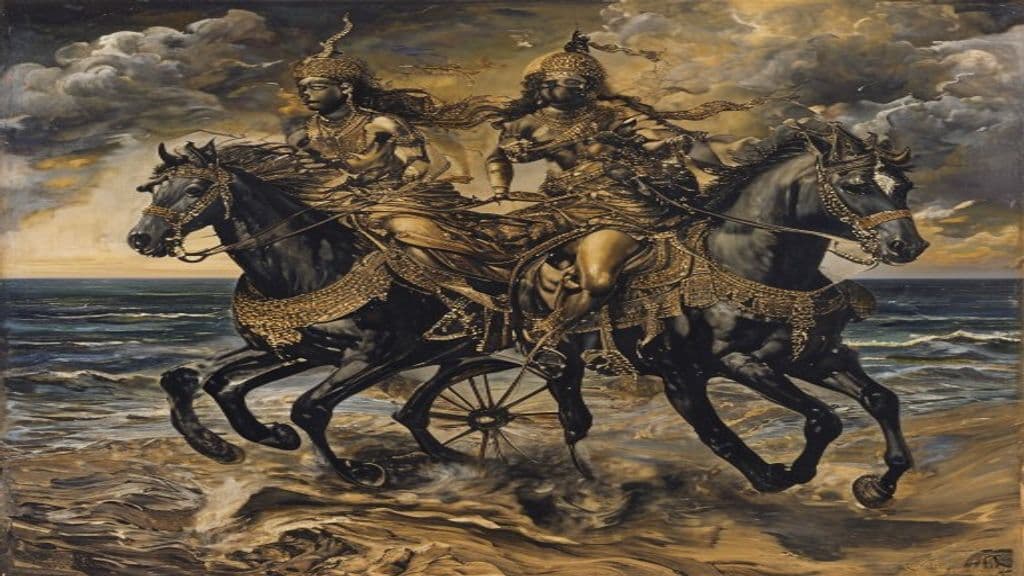
Rigvedic hymn imagery depicts the Ashvins as ever‑youthful twin horsemen who ride together in a chariot drawn by horses that do not tire. Hymns address them with epithets denoting vigor and strength (poetic addresses sometimes liken them to bulls) and emphasize their dazzling speed and swiftness as they come to the home of a ritual performer.
In the Rigvedic corpus the Ashvins function primarily as helpers, rescuers, and restorers: hymns credit them with restoring the seer Rebha (raised from waters described as dead), bringing Bhujyu safely home from the sea/ancestral realm, pouring sweet water from the sky for Atri, restoring youth and eyesight (e.g., Kali, Rijrashva), and crafting a metal foot for the warrior Vishpala. They are associated with medicine, health, and healing sciences and are invoked in ritual hymns to come swiftly to the aid of mortals and to protect good ritual performers.
Community Record
- [1]Ashvins (Wikipedia). Wikipedia, 'Ashvins' article (summary of Rigvedic attestations and attributes)wiki
- [2]Wikidata: Ashvins (Q726593). Wikidata entry for Ashvinsother
- [3]Rigveda (archive volumes cited in notes). Rigveda hymns (primary textual corpus cited in summaries; specific suktas to the Ashvins are listed in the sources)literary
- [4]Rigvedic Ashvins (archive collection). Archive materials relating to Ashvins (collection referenced in research notes)literary