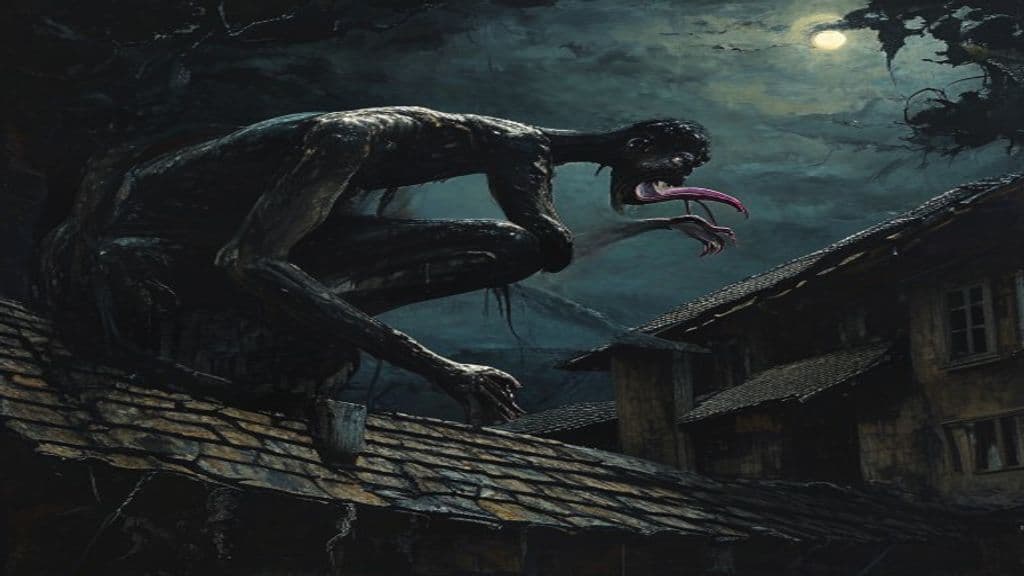
The aswang is arguably the most well-known and feared supernatural entity in the Philippines, documented consistently since the Spanish colonial period (16th century). It is not a single creature type but a class — encompassing vampiric beings, flesh-eaters, entrail-suckers, and viscera-hunters. The aswang appears as an ordinary person by day — often described as shy, avoiding eye contact — and transforms at night. Regional variants exist across all major Philippine island groups.
By day, appears human, often female, often living at the edge of a community. A telltale sign is that the reflection of a person in an aswang's eyes appears upside-down. At night, it transforms — gaining red eyes, black wings in some forms, the ability to fly, or splitting in half at the waist.
Shape-shifting into dogs, cats, pigs, or birds. Could extend a long proboscis tongue to extract a fetus through a pregnant woman's navel without waking her. Its chick-like sound ('tik tik') grew louder as it moved farther away (to confuse direction) and softer as it came close. Aswang saliva could infect victims.
Weaknesses
- substanceGarlic
- substanceVinegar (particularly coconut vinegar)
- symbolSalt
Wards
- substanceGarlic hung around the room
- ritualBuntot-pagi (stingray tail whip) — traditional protective item
Community Record
- [1]Philippine Folk Literature. Eugenio, Damiana. 1994. Philippine Folk Literature: The Legends. University of the Philippines Press.academic
- [2]The Aswang Complex. Ramos, Maximo. 1971. The Aswang Complex in Philippine Folklore. Phoenix Press.academic