Across the cited traditions automata are presented as crafted creations of skilled makers rather than independent supernatural beings. Greek myth locates automata in the workshops of divine smiths (e.g., Hephaestus) and legendary engineers (e.g., Daedalus) and produces named examples such as Talos. Chinese court literature (the Lie Zi account) records the artificer Yan Shi presenting a life‑size mechanical human to King Mu. Hellenistic engineers in Alexandria (Hero, Ktesibios) developed hydraulics and pneumatics to produce moving birds, whistles and clock jacks. These accounts consistently frame automata as engineered demonstrations of craft and technical knowledge.
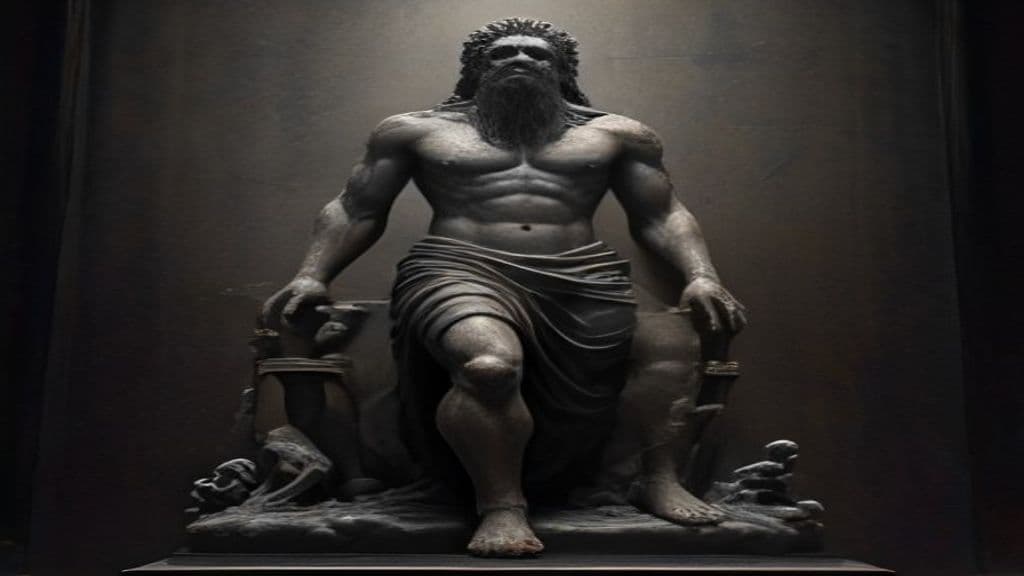
Appearances vary by example: many automata were fashioned to resemble humans or animals. Legendary examples include Talos, described as a bronze man; presumed humanoid attendants in Hephaestus' workshop; and Yan Shi's life‑size figure, externally lifelike (coloured white, black, red and blue) and internally composed of artificial organs, muscles, bones, joints, skin, teeth and hair. Hellenistic devices could be small animal models, water‑driven birds or figures mounted on public clocks (jacks and cuckoo figures). Materials named in the sources include bronze, wood, leather, glue and lacquer in different traditions.
Automata operate by concealed mechanisms, hydraulics, pneumatics, weights or prearranged controls to follow sequences of motion or respond to inputs. In traditional narratives they walk, move heads, sing or posture in time; Hero and Ktesibios used water and air to animate whistles and model birds, and public clock figures performed timed movements. The Lie Zi account stresses contingency on mechanical components: removing the artificial 'heart' silenced the mouth, removing the 'liver' extinguished the eyes' function, and taking away the 'kidneys' stopped locomotion, illustrating that behaviour depended on constructed parts rather than an animating soul. In modern technical contexts the related sense of 'automaton' denotes formal computational models (finite automata, pushdown automata, cellular automata) that process inputs according to fixed transition rules.
Weaknesses
- conditiondisassembly / removal of components
- conditionloss or interruption of power source (water, air, weights)
- conditionmechanical damage to gears, joints, whistles or valves
Wards
None recorded.
Community Record
- [1]Automaton — Wikipedia. Wikipedia, 'Automaton' entry (summary of definitions, etymology, historical examples including Talos, Hephaestus, Ktesibios, Hero, clockwork figures, and modern usages such as animatronics).wiki
- [2]Lie Zi — account of Yan Shi's automaton (summarised in sources). Summary of the Lie Zi account as presented in the Automaton Wikipedia entry (life‑size mechanical human with artificial organs demonstrated before King Mu).literary
- [3]PlanetMath — Automaton. PlanetMath entry defining automaton in formal/mathematical terms and related constructive descriptions (modern computational sense).other
- [4]Pushdown automaton — Wikipedia. Wikipedia entry illustrating automaton as an abstract computational model employing a stack (modern technical usage).wiki
- [5]Archive — Cellular automaton in BabaIsYou (example of modern computational/engineering use). Archive instance demonstrating implementation of cellular automaton Rule 110 in a game; cited as an example of modern technical continuity of the automaton concept.other