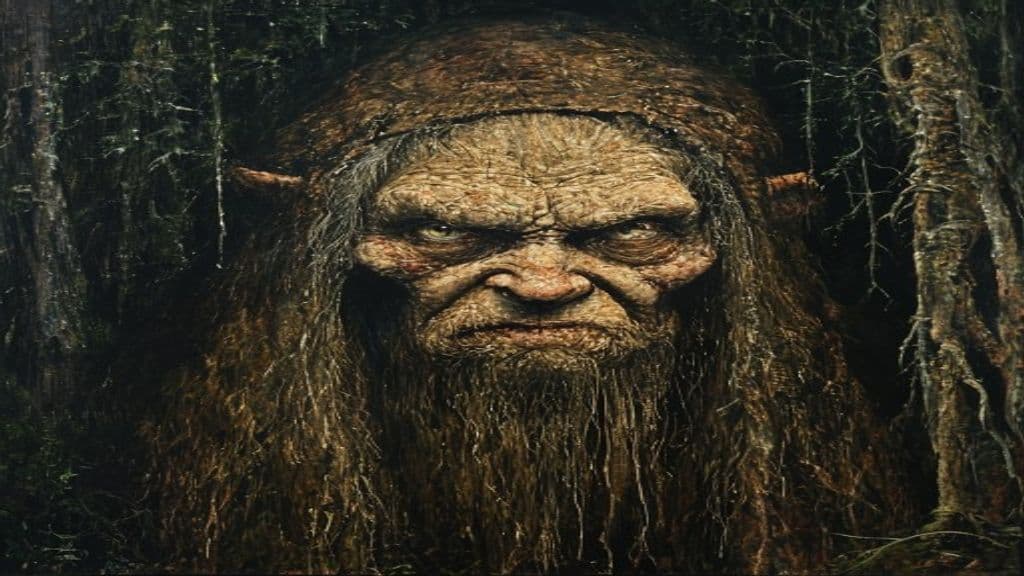
Baba Yaga appears in East Slavic folktales as a singular supernatural woman (and in some tales as one of a trio of sisters of the same name). Scholars such as Vladimir Propp place her within folktale morphology as a figure who commonly functions as donor, villain, or an ambiguous agent testing protagonists; other scholars (for example Andreas Johns in summaries cited by reference works) emphasize her enigmatic and polyvalent symbolic roles in scholarly interpretation.
Folktale descriptions vary: many narratives portray Baba Yaga as a deformed or ferocious-looking old woman, sometimes repulsive and associated with child-eating, while other tales depict her as a kindly or maternal helper. Consistently attested motific features include her travelling in a mortar and wielding a pestle, and dwelling in a hut said to stand on chicken legs located deep in the forest.
In folktales she may help or hinder those who encounter her and thereby functions as donor, villain, or ambiguous initiator. Narrative motifs attribute to her the ability to fly in a mortar (with a pestle) and to inhabit the peculiar chicken-legged hut; textual sources present these as standard tale elements rather than detailed cosmological powers. Some scholarly interpretations read broader symbolic capacities into her (links to death, winter, moon, earth or totemic matriarchs), but such identifications are interpretive.
Community Record
- [1]Baba Yaga. Wikipedia contributors. "Baba Yaga." Wikipedia, The Free Encyclopedia. https://en.wikipedia.org/wiki/Baba_Yagawiki
- [2]Archive copy of Baba Yaga entry (mirror). Archive.org mirror of source materials summarizing Baba Yaga entry and etymology. https://archive.org/details/thingiverse-3892446other