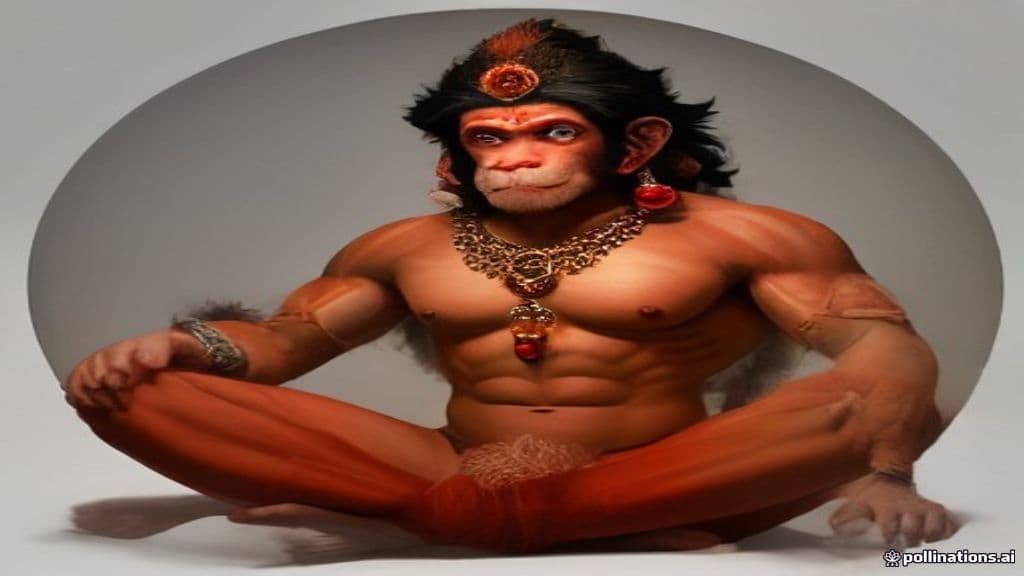
In the epic and Puranic tradition summarized in the supplied sources, Bajrang Bali is Hanuman, the divine vanara who is traditionally believed to be the spiritual offspring of the wind-god Vayu. Shaiva tradition sometimes regards him as an incarnation of Shiva, while many Vaishnava strands identify him with Vayu's offspring or incarnation. He is best known from the Ramayana as the devoted companion of Lord Rama. The supplied sources note that sustained, organized devotional cults and heightened theological significance around Hanuman developed later: roughly a millennium after the Ramayana was composed, during the second millennium CE.
The sources describe Hanuman/Bajrang Bali as a divine vanara — a simian humanoid — and popular media and image collections regularly depict him as large and muscular with the face and tail of a monkey. While precise iconographic details (specific coloration, garments, or attributes) are not exhaustively specified in the supplied excerpts, modern visual and film portrayals (wallpapers, television and film imagery) emphasize a powerful, muscular vanara form with a monkey face and tail.
The provided materials emphasize Hanuman's devotion and service to Rama, great strength, learning, and long life: he is characterized in summary sources as a god of strength, learning, and devotion and is described as a chiranjivi (long-lived or immortal). His divine status is linked to parentage and incarnation claims (association with Vayu and identification with Shiva in some traditions), which in the sources is the basis for his supernatural standing. The supplied excerpts do not enumerate specific epic feats in detail but frame his role primarily around devotion, service, strength, and enduring presence across scripture and devotional practice.
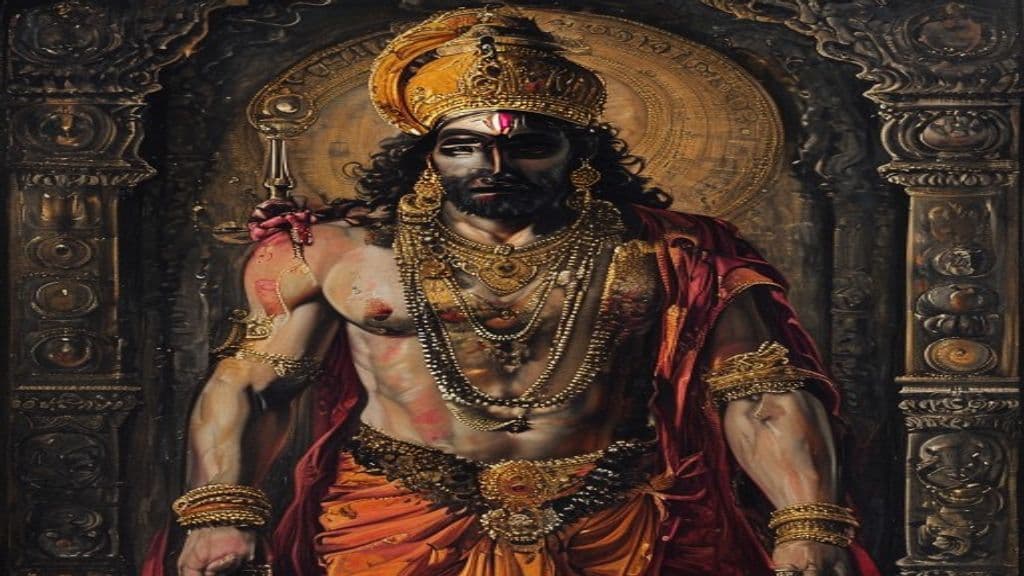
Community Record
- [1]Hanuman. Wikipedia: Hanuman (accessed via provided notes)wiki
- [2]Hanuman (Wikidata). Wikidata summary for Hanuman (as provided in notes)wiki
- [3]Jai Jai Jai Bajrang Bali (television series). Wikipedia entry for the television series 'Jai Jai Jai Bajrang Bali' (noting media use of the epithet)wiki
- [4]Hanuman Natak Handwritten Pothi - Puratan. Archive: Hanuman Natak handwritten pothi (cited among examples of continuing textual/performance tradition)other
- [5]Adipurush (2023): Film description/review. Film review quoting a description of the depiction of Hanuman in Adipurush (2023), used here to illustrate modern visual emphasis on muscular, simian formother
- [6]Bajrang Bali wallpapers and images (example listings). Peakpx and Pxfuel wallpaper/image listings titled 'Bajrang Bali' cited as examples of popular visual depictionsother
- [7]Veer Hanuman - Bolo Bajrang Bali Ki Jai (web series listing). Digit.in listing for the web series 'Veer Hanuman - Bolo Bajrang Bali Ki Jai' (example of contemporary devotional media)other