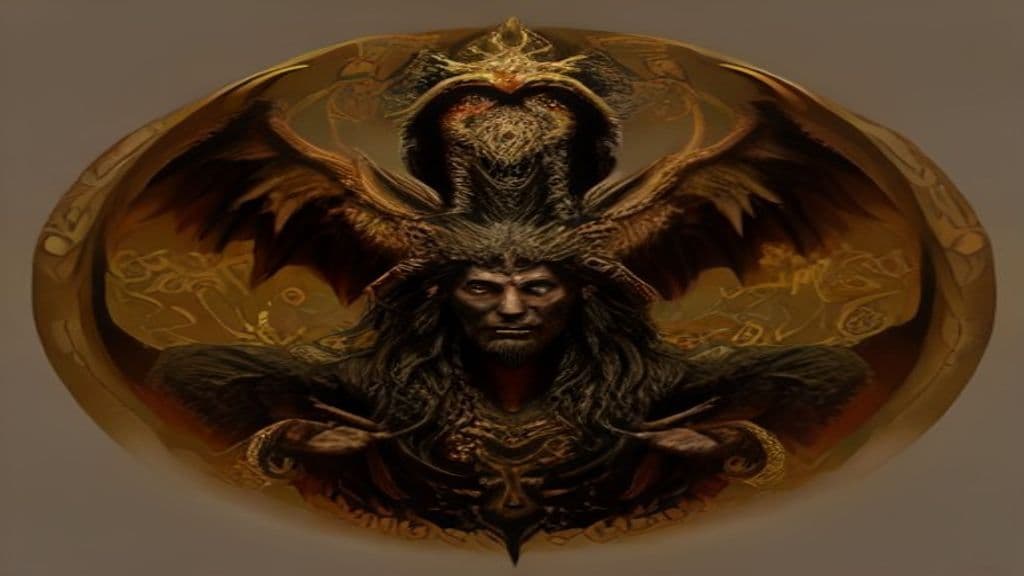
The balaur has no single cosmogonic origin recorded in the supplied sources; rather, the term and figure emerge from layered regional traditions. Linguistic proposals link the word to Albanian terms for snakes (boljë/bollë, buljar) and to hypothetical Thracian/Illyrian roots (*bell-/ *ber- meaning 'beast/monster'), while similar Slavic forms along the Adriatic (blavor, blaor, blavur) suggest either borrowing or common Balkan substrate. Scholarly opinion represented in the sources treats etymology as disputed and the creature as the product of cross‑cultural folkloric contact rather than a single origin myth.
Balauri are recurrently described as monstrous serpents or many‑headed dragons; typical accounts give three heads but variants report seven or twelve. Some descriptions add wings and a golden appearance (as noted by Lazăr Șăineanu). They are sometimes said to be large enough to dwell in wells or lakes and capable of flight, using the rainbow as a path when moving through the air. The balaur thus combines hydra‑like multiheadedness, serpentine form, and occasional draconic attributes such as wings and golden scales.
In the folklore corpus balauri are ravenous predators and abductors, commonly taking young maidens or princesses and occupying the antagonist role in hero tales where figures like Făt‑Frumos or saints (e.g., Saint George) slay them. They guard treasures and princesses in lairs and are credited in some traditions with producing precious stones from their saliva. Folk taxonomy distinguishes water‑, land‑, and air‑dwelling types; air‑dwelling balauri are implicated in a mythic meteorology where their aerial fights cause storms (uprooting trees, tossing objects) and certain serpentine types are said to draw moisture into clouds to make rain. A minority/variant tradition reports that Solomonari (weather‑controlling sorcerers) ride or control dragons; while these dragons are often called zmei, some sources assert that they are balauri and that control is effected by a 'golden rein' (Romanian: un frâu de aur).
Weaknesses
- otherslain by hero or saint (narrative motif)
Wards
- othercontrolled by a Solomonar's 'golden rein' (variant tradition)
Community Record
- [1]Balaur (Wikipedia). Wikipedia: Balaurwiki
- [2]Balaur (Wikidata). Wikidata: Q18511081wiki
- [3]Ce qu'ont vu nos ancêtres, Voyage sur une ligne de vie (archive). Archive: Ce qu'ont vu nos ancêtres, Voyage sur une ligne de vieother
- [4]Balaur V1 (Whalebite) (archive). Archive: Balaur V1 (Whalebite)other