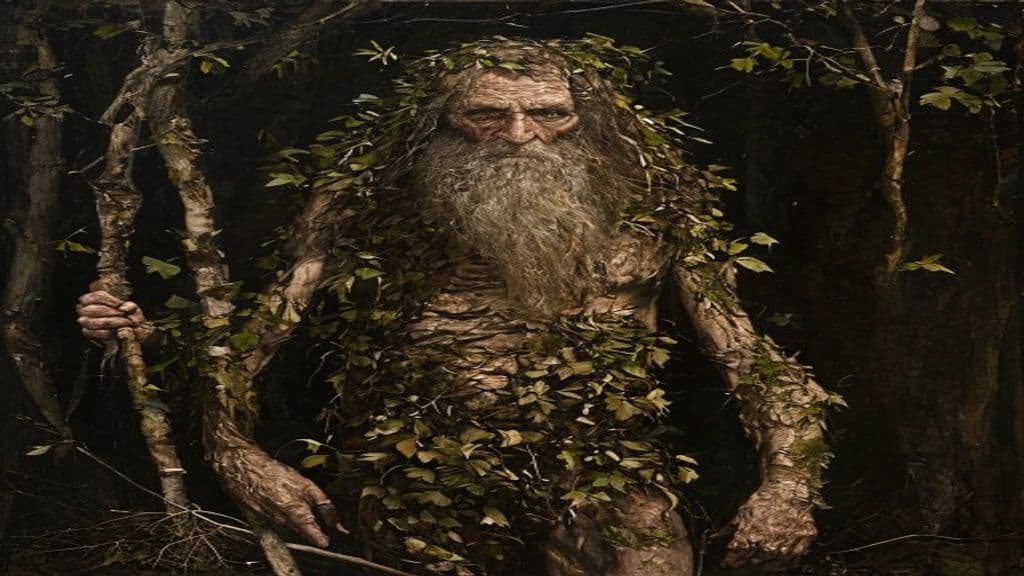
Within Slavic peasant cosmology the banya (bathhouse) is treated as a distinct, liminal domain invested with vital forces and potential spiritual danger. The bannik is the localized occupant and guardian-spirit of that domain: a personal, place-bound being whose moods and needs are bound to the banya's functioning, its firing cycle, births that occur there, and divinatory practices. He is understood as part of a family of domestic structure-spirits (such as the domovoy or ovinnik) whose favor must be maintained by ritual attention; structural mishaps like fires were interpreted as signs the bannik had been affronted and required appeasement.
He is usually described as a small, naked old man with a long beard, his body covered in the birch leaves left over from well-used bath brooms. Sources also report shapeshifting or concealed guises: he can appear as a familiar local person to someone who stumbles across him or take the form of inanimate objects within the stove, for example a stone or coal used to heat the bathhouse.
The bannik serves as guardian and occupier of the banya: his favor or displeasure has immediate material consequences. If disturbed while someone is washing he might pour boiling water over the intruder or even strangle him. He possesses a tactile divinatory power: a supplicant standing with their back exposed in the half-open bath door could be stroked by the bannik to indicate good fortune, or struck with his claws to presage trouble. He is said to invite demons and forest spirits to share his bath, and is commonly blamed when the banya is damaged or burns down, indicating a punitive and prognostic role rather than an abstract moralizing force.
Weaknesses
- symbolChristian images (prohibited inside the banya because they would offend occupants or prevent spirits from gathering)
- conditionplacation by offerings (the bannik is placated—kept 'happy and peaceful'—by regular ritual offerings; absence of such offerings is associated with mishap)
Wards
- ritualOfferings during reserved firing or at quitting
- conditionProhibition of Christian images inside the banya
- ritualFoundation appeasement when rebuilding (black hen rite)
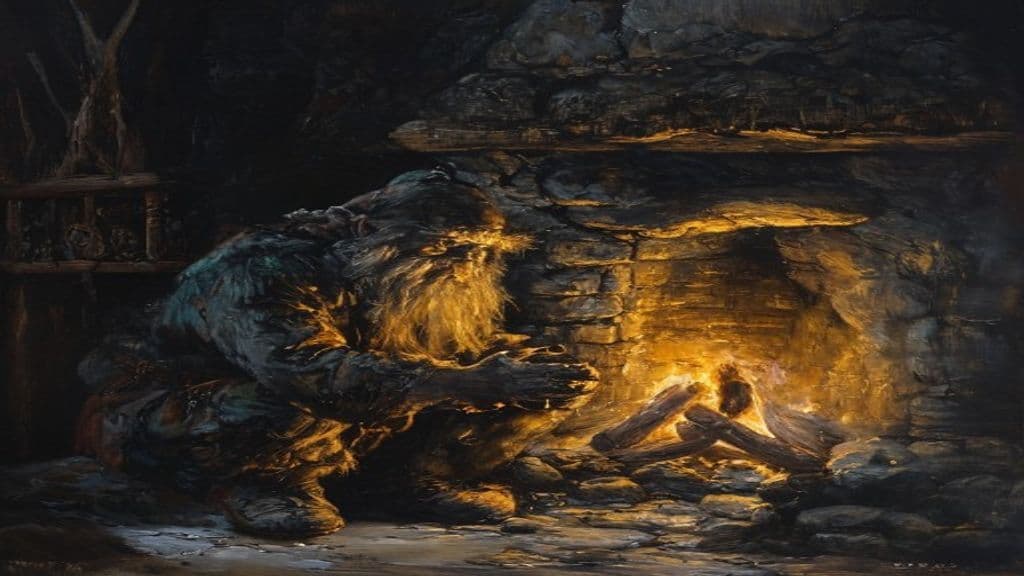
Baba Yaga
Baba Yaga is an ambivalent female figure of East Slavic folktale tradition, depicted variously as a fearsome, child-eating crone or as a helpful, maternal donor. She is associated with the deep forest, a hut described as standing on chicken legs, and the motific accoutrements of a mortar and pestle.
Bald Mountain (Slavic)
A location in Slavic folklore associated with witchcraft and the Witches' Sabbath. (Note: 1. Power tier should be Primordial since it's associated with witchcraft and has connections to deities (witches are often seen as having deity-level powers). Greater is too low of a power level. 2. A)
Boginka
A Slavic/Polish female nature-spirit category: personifications of wild natural forces (forests, fields, mountains, fresh and sea waters) that appear in folklore as ambivalent beings—often hostile toward humans, especially pregnant women and infants, but also recalled in some sources with neutral or protective aspects.
Błędnica
A Slavic forest demoness who misleads travelers, abandoning them deep in the woods to die of exposure, starvation, or be taken by wild animals. She is typically depicted as a young, attractive woman and is countered in tradition by strong spells or by making sacrifices at home or during the hunt.
Cornflower Wraith
A Slavic field spirit associated with midday who enforces proper conduct in cultivated grain. Described as a young woman in azure with cornflowers in her hair, she punishes workers who trample crops or use sharp tools at the wrong time, often by inducing sleep followed by pain or by causing broken limbs.
Fiery Serpent (Slavic)
A supernatural entity from Slavic folklore, described as a manifestation of fire in the sky or air. (Note: 1. Power tier should be adjusted from Primordial to Ancient, as it appears to be a deity-level entity rather than a cosmic one. 2. Add sensory cues for sounds associated with the entity (e.g., roaring)
Firebird (Slavic folklore)
A marvelous luminous bird from Slavic folktales, the Firebird (zhar-ptitsa) is a glowing, often fire‑colored bird whose appearance initiates quests and whose possession brings both wonder and misfortune. It functions as a coveted wonder and a dangerous omen within tale cycles.
Geira
In Slavic tradition, Geira was a Wendish princess attested by Old Norse sagas who ruled over territory near the border of Germania and married a young Óláfr Tryggvasonr. (Note: * Power tier: Not provided in source material, but can be inferred as Primordial given the lack of detailed information and Geira's significance in Old Norse sagas. * Summary: Inaccurate; correct summ)
Hag
A hag is a folkloric figure typically depicted as an old, wizened woman who appears across European traditions in multiple roles: a nightmare spirit, a witch-like or fairy-type being, a river or household monster, or (in some cases) a form adopted by sovereignty or storm goddesses. The figure functions variously as a cautionary monster, an explanation for sleep paralysis and nightmares, and a liminal test-figure in myth.
Kikimora
A female house spirit in Slavic folklore that functions as a domestic agent: helpful in well-kept homes and disruptive or dangerous where household morals or order fail. Variants include a domestic (house) kikimora paired with the domovoy and a swamp (bolotnaya) kikimora associated with marshland spirits.
Koschei the Deathless
Koschei (also Koshchei, Kashchei), commonly called "the Deathless" or "the Immortal," is an archetypal male antagonist in Russian and wider Slavic folklore. He functions in folk narratives as a legendary villain whose name and legend persist into modern cultural works and references.
Lady Midday (Poludnitsa)
Poludnitsa, often called Lady Midday or Noonwraith in English, is a Slavic field spirit personifying the dangers of the hottest part of summer days. She is associated with grain fields and midday heat and appears in diverse regional tales as a young woman, hag, or girl who harasses or injures people working or resting at noon.
Community Record
- [1]Bannik. Wikipedia, 'Bannik' article (accessed online).wiki
- [2]Bannik (Wikidata entry). Wikidata: Q2417701.other