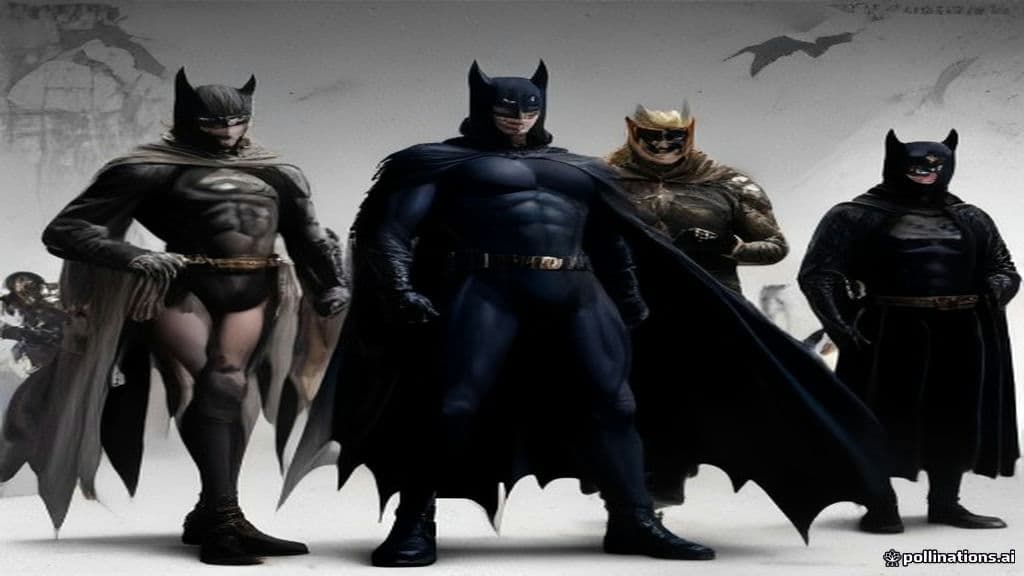
Originally introduced in the Silver Age Detective Comics #215 (1955) story "The Batmen of All Nations," the concept depicts Batman convening his international counterparts in Gotham City, establishing an informal club of heroes modeled on his example. Subsequent continuity and reprints revisited and renamed the concept (commonly as the Club of Heroes or International Club of Heroes), and in post‑Crisis continuity some versions were retconned or rebranded as the Dome and linked to broader international teams. Later reinterpretations (notably Grant Morrison's 2007 arc) revisit aging members and the consequences of imitation, showing revisions to membership, status, and narrative function across eras.
The group is not visually uniform but comprises distinct costumed individuals whose designs evoke national or cultural archetypes. Representative members include England's Knight and Squire, the Sioux‑themed Man‑Of‑Bats and Little Raven (United States), Argentina's El Gaucho, France's Musketeer (later replaced in some stories by Nightrunner), Italy's Legionary, Australia's Ranger/Dark Ranger and Scout, and Sweden's Wingman, alongside Batman and Robin. Across eras and media their looks vary: Silver Age stylings differ from later, sometimes aged or reinterpreted depictions in modern comics and animated adaptations.
Members are generally non‑superpowered human vigilantes who rely on training, skills, equipment, and detective tradecraft rather than innate supernatural powers. Individual competence varies by member — some are explicitly described as "powerless" but skilled, while others (in later stories) are portrayed as highly competent national superheroes. Narrative arcs emphasize training and mentorship by Batman, varied skill sets themed to national tropes, susceptibility to human failings (jealousy, scandal, betrayal), and the limits of imitation when members face manipulation or corruption.
Weaknesses
- conditionHuman vulnerability (non‑superpowered susceptibility to injury and defeat)
- otherSusceptibility to corruption, scandal, betrayal, and manipulation (as shown in modern storylines)
Wards
None recorded.
Community Record
- [1]Batmen of All Nations - Wikipedia. Wikipedia: 'Batmen of All Nations' entrywiki
- [2]Batmen of All Nations – Chris Roberson. Chris Roberson blog: Batmen of All Nationsother
- [3]DCAU Resource - Batmen of All Nations. DCAUResource profile: Batmen of All Nationsother
- [4]Batmen of All Nations (DC Database). DC Fandom: Batmen of All Nationswiki
- [5]Roberson's Interminable Ramble: March 2007. Chris Roberson commentary on Batmen of All Nations and related continuityother
- [6]Is it 'Batmen' or 'Batmans'?. Sci‑Fi StackExchange discussion on pluralization usage in sourcesother