
The Batwoman identity was first introduced in Detective Comics #233 (July 1956) as Kathy Kane, created in the Silver Age as a female counterpart and love interest for Batman; editorially the character was in part a response to mid-20th-century controversies about Batman's subtext. The original Kathy Kane incarnation was removed during 1960s editorial revamps and later killed off in Detective Comics #485 (1979), with subsequent reappearances in alternate-continuity stories. In 2006 DC reintroduced a new Batwoman, Kate Kane, a redesigned modern take intended to increase representational diversity; this mantle has since been used by multiple characters across comics, animation, and a 2019 American television series (Ryan Wilder among on-screen holders of the codename).
Appearances vary by incarnation and medium but consistently present Batwoman as a masked, costumed female vigilante modeled on Batman iconography. The Silver Age Kathy Kane used gadgets often disguised as stereotypical feminine accoutrements; modern redesigns (including the 2006 Kate Kane relaunch influenced by contemporary costume design) portray an armored, gadget-using crimefighter. Television and animated versions likewise adapt the costume and visual details per production, resulting in inconsistent specifics across versions.
Batwoman is depicted as a non-superpowered human vigilante who relies on physical combat training, investigative skills, tactical use of gadgets, and armored costume protection. Different incarnations emphasize different backgrounds (Silver Age gadgetry for Kathy Kane; Kate Kane's modern portrayals emphasize military training, detective work, and wealth enabling advanced equipment). Behaviorally, holders of the Batwoman mantle operate as vigilantes allied with Batman and the larger 'Batman Family.'
Weaknesses
- conditionNon-superpowered human limitations (vulnerability to injury, reliance on equipment)
Wards
- otherNone / not applicable (Batwoman is a human fictional vigilante; sources do not document protective wards)

Batgirl
Batgirl is a comic-book superheroine identity published by DC Comics, used by multiple human characters as a female counterpart and ally to Batman within the shared Gotham City vigilante continuity. The mantle has been assumed by different women across publication history and has been used to explore themes of gender, disability, and editorial continuity in modern popular culture.
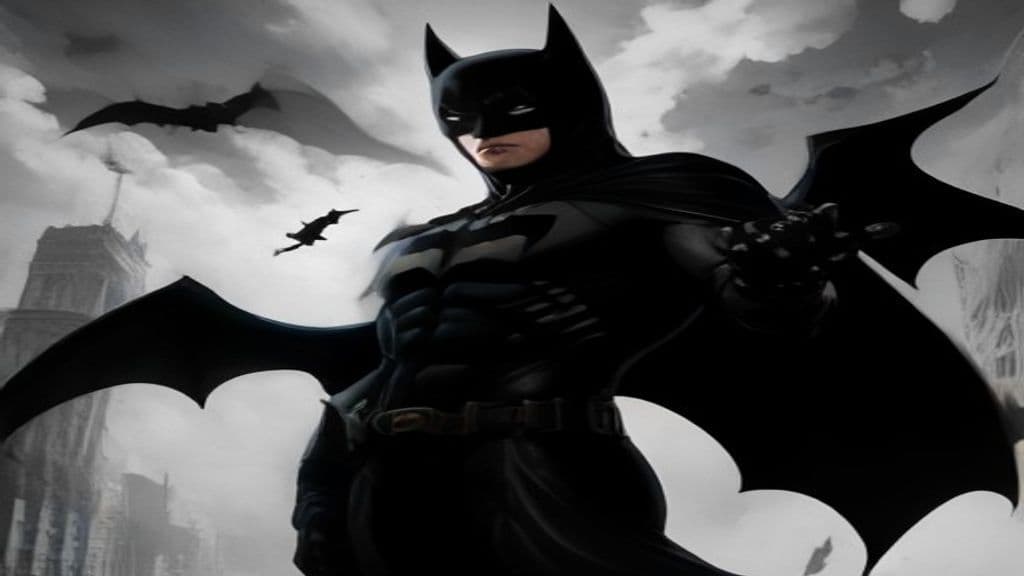
Batman
Batman is a fictional, human costumed persona created for American comic books, adopted by Bruce Wayne to combat crime in the fictional Gotham City. Presented in mainstream continuity as a non‑superpowered figure, he relies on intellect, physical training, gadgets, and wealth and functions as an iconic cultural symbol across comics, film, television, and games.
3-D Man
3-D Man is a Marvel Comics superhero identity associated with a 1950s-era origin in which the body of Chuck Chandler can materialize in three-dimensional existence when activated by his brother Hal via a pair of glasses. The mantle was later assumed by Delroy Garrett (formerly Triathlon) in modern continuity.
Aqualad
Aqualad is a modern American fictional superhero mantle published by DC Comics and appearing across comics, animation, live-action television, film, and games. The name denotes youthful water-associated protégés of Aquaman — chiefly Garth (an Atlantean who later becomes Tempest) and Jackson Hyde / Kaldur'ahm (a reimagined, partly human version created for Young Justice).
Arthur Curry (Aquaman)
A fictional comic-book superhero created for DC Comics, Arthur Curry (commonly called Aquaman) debuted in More Fun Comics #73 and has been presented across anthology and solo series; he is depicted within DC continuity as a leading Atlantean figure and, in later reinterpretations, as king of Atlantis.
Barry Allen
Barry Allen is a fictional human superhero appearing in American comic books published by DC Comics, best known as the second character to bear the Flash mantle. A forensic chemist who gains superhuman speed after a laboratory lightning accident, Barry functions as a science-oriented protagonist whose actions have driven major company-wide storylines and multiverse-level events.
Booster Gold
Booster Gold (Michael Jon "Booster" Carter) is a fictional superhero from DC Comics: a 25th-century human who travels to the 20th/21st century using future technology to operate as a publicity-minded hero in Metropolis and later matures into a more responsible protector involved in time-travel storylines and Justice League membership.
Freedom Beast
Freedom Beast (Dominic Mndawe) is a fictional comic-book superhero published by DC Comics. A South African activist-turned-powered figure, he gains animal-themed abilities from an elixir and an ancient helmet and operates in narratives that link political resistance (apartheid-era origins) with animal protection and superheroic alliances.
Baton (Greek Mythology)
In Greek mythology, the origin, appearance, and abilities of Baton are unknown due to lack of information. (Note: 1. Add "incomplete" or "insufficient information" to the summary to reflect that there's no actual description of Baton, rather than it being unknown. 2. Power tier should be listed as "Unknown" since)
Batroc the Leaper
Georges Batroc, known as Batroc the Leaper (French: Batroc le Sauteur), is a fictional human mercenary and recurring antagonist in Marvel Comics. He is portrayed as a peak‑condition savate specialist and acrobat who leads small mercenary teams, accepts contracts, and occasionally allies with heroes when his code of honor dictates.
Battus
Battus (Ancient Greek: Βάττος) is a mortal figure in Greek and Greco-Roman tradition who, in the Hermes–Apollo cattle-theft episode, witnessed Hermes stealing Apollo's cattle, accepted a heifer for silence, later betrayed the secret and was punished by being turned into stone. The name also appears separately in Greco-Roman legend as a semi-legendary king of Malta who sheltered Anna Perenna; sources do not identify the two attestations as the same individual.
Bat‑Mite
Bat‑Mite is a small, childlike fifth‑dimensional imp‑like being from DC Comics who idolizes Batman and visits the three‑dimensional world to observe and provoke situations for the hero to resolve. Portrayed primarily as a mischievous, comedic foil rather than a malign folkloric monster, Bat‑Mite possesses near‑omnipotent fifth‑dimensional powers that appear as magic to humans and appears across comics and animated media since 1959.
Bau
Bau is a deity attested in Sumerian and Akkadian ritual-literary texts. In the supplied hymnic excerpts she is addressed as 'child of holy An' and invoked as one who 'decide[s] the fate of all the countries' and 'renders verdicts and decrees judgments.'
Bauchan
A household-associated hobgoblin from Scottish Highland folklore, the bauchan is portrayed as ambivalently belligerent and helpful; in at least one recorded tale it accompanies a human household across the Atlantic and can shapeshift into a goat.
Community Record
- [1]Batwoman — Wikipedia. Wikipedia: 'Batwoman is a name of several superheroes appearing in American comic books published by DC Comics, depicted as female counterparts and allies of Batman...' and related publication history details (Detective Comics #233 debut, character origins, 2006 reintroduction, Kathy Kane background, Kate Kane attributes).wiki
- [2]Batwoman (Wikidata entry). Wikidata: notes the American television series (2019–) adaptation and related media presence.other
- [3]Awesome Village Episode 110 (archive). Archive: fan podcast reference to Batwoman and associated media/fandom discourse.other
- [4]The CW Got Woke Went Broke? (archive). Archive: commentary referencing The CW programming including Batwoman television adaptation.other
- [5]Starling Tribune - Season 5 Edition - What We Leave Behind (Fan Podcast) #131 (archive). Archive: fan podcast discussing Batwoman within Arrowverse/DCTV fan discourse.other