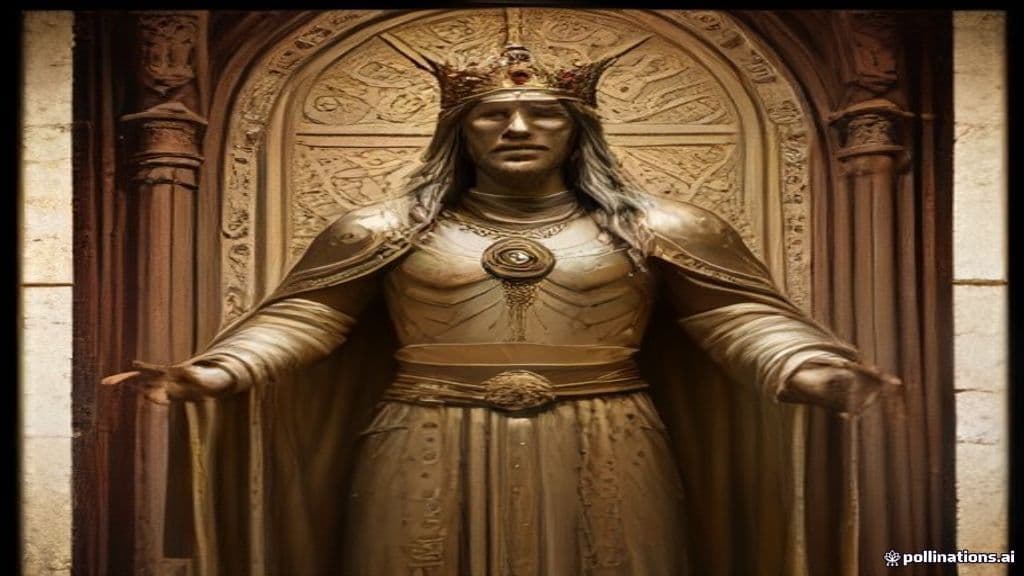
In Geoffrey of Monmouth’s narrative tradition (as summarized in modern sources) Belinus is a son of King Dunvallo Molmutius. Early in his career he falls into open conflict with his brother Brennius: the two divide the realm, with Belinus becoming king of the Britons and Brennius king of the north. Discord returns when Brennius marries without consulting Belinus; Belinus seizes Brennius's lands, Brennius is driven into exile and flees to Gaul. Their mother mediates a reconciliation: the brothers make peace, reunite their armies, and undertake joint campaigns abroad, including invasions of Gaul and later operations that threaten and participate in the capture of Rome. After long rule marked by laws, city-building, and campaigns, Belinus dies; Geoffrey reports he was cremated and his pyre placed atop a great tower he had built, and he is succeeded by his son Gurguit Barbtruc.
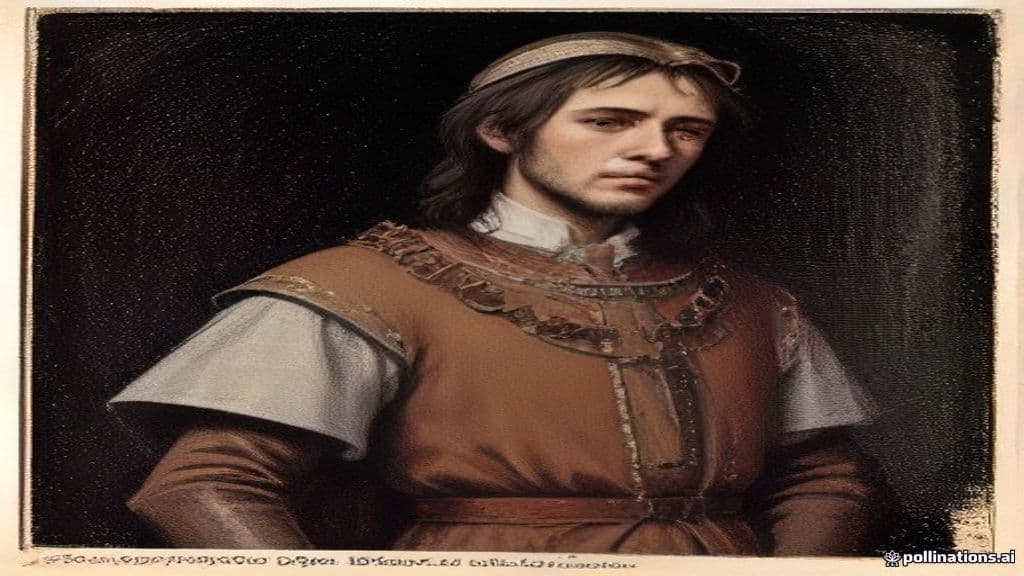
The textual tradition presents Belinus as a human king and does not supply a specific iconography or supernatural appearance. He is described through his offices and actions — warrior-king, lawgiver, founder and restorer of cities (for example Kaerusc/Caerleon) — implying the usual regalia and trappings of medieval kingship in narrative terms, but no anthropomorphic or divine attributes, magical accoutrements, or distinct physical descriptors are provided in the cited sources.
Sources attribute political, military, and administrative capacities rather than supernatural powers. Belinus is presented as a military leader who defeats his brother in civil war, expels Brennius to exile, later unites forces with him for campaigns in Gaul and on the continent, and participates in operations that threaten Rome. He is credited with upholding and emphasizing the Molmutine Laws of his father, ruling justly, building and restoring cities and roads (notably Kaerusc/Caerleon), taking hostages and prisoners during warfare, and undertaking large-scale state activities. Upon his death the narrative records cremation atop a great tower he had constructed. The sources do not ascribe magical abilities or immortality; his stature is that of an exemplary mortal king in legendary-historical narrative.
Weaknesses
- otherNone documented — sources present Belinus as a mortal king; no supernatural vulnerabilities or countermeasures are given
Wards
- otherNone documented — no apotropaic wards or protective rituals against Belinus are recorded in the provided sources
Community Record
- [1]Belinus - Wikipedia. Belinus. Wikipedia. Accessed via provided research notes.wiki
- [2]Belinus (Wikidata entry). Wikidata entry for Belinus. Accessed via provided research notes.wiki
- [3]Brennius - Wikipedia. Brennius. Wikipedia. Discusses the brotherly relationship and shared campaigns as treated in Geoffrey-derived traditions.wiki
- [4]A02091.txt (Early print excerpt). A02091.txt. Excerpted early-text material referenced in research notes concerning Geoffrey-derived narratives.literary
- [5]Early British Kingdoms — King Bran Hen of Bryneich. Early British Kingdoms site; part of the corpus of Geoffrey-derived and early-king-list material referenced in the research notes.literary
- [6]Biblical Cyclopedia — Belinus, Belis. Biblical Cyclopedia entry for Belinus/Belis cited in the research notes.other
- [7]Archive — Belinus musical and forum usages. Archive items cited in the research notes demonstrating modern cultural reuse of the name 'Belinus'.other