Origin
Possibly derived from the Norse hellhound or the widespread British tradition of the Black Dog. In 1577, an enormous black dog reportedly appeared at two churches in Suffolk — Bungay and Blythburgh — during a terrible storm, killing parishioners before vanishing through the locked doors.
Appearance
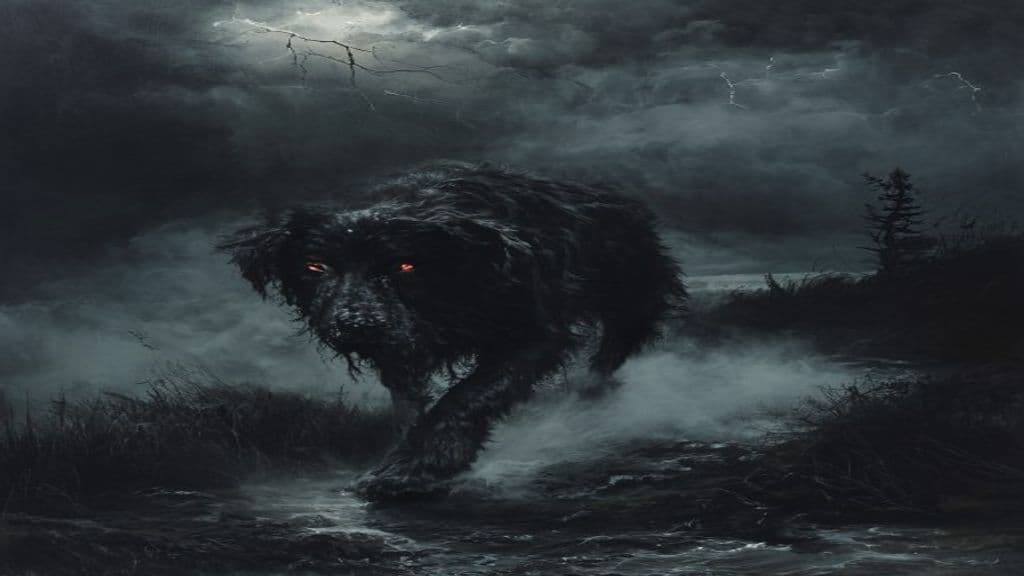
The size of a calf or larger. Jet black fur, eyes like glowing coals (red or green depending on account), and sometimes missing an eye entirely. Leaves scorched marks where it has passed.
Abilities
Its gaze can kill or cause immediate blindness. Can appear and disappear through solid walls. The scorch marks left at Blythburgh church (visible to this day) mark its passage. Its howl carries across impossible distances.
Weaknesses & Wards
Weaknesses
- conditionDo not make eye contact
Wards
- symbolIron horseshoe above the door
Community Record
Sources
- [1]The Black Dog of Bungay. Fleming, Abraham. 1577. A Straunge and Terrible Wunder. London.literary
- [2]British Goblins. Sikes, Wirt. 1880. British Goblins: Welsh Folk-lore, Fairy Mythology, Legends and Traditions. Sampson Low.folk
folk-consensus