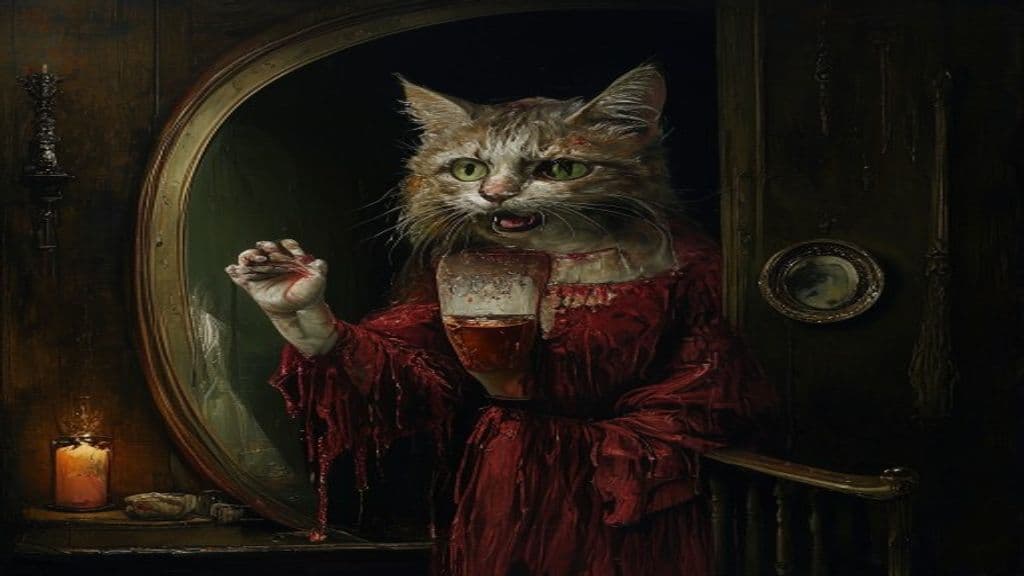
No single traditional origin is documented in the supplied sources. The figure appears in contemporary urban-legend and childlore contexts rather than in a codified historical or religious cosmology. Sources supplied treat Bloody Mary as a modern ritualized dare transmitted among children and teenagers (for example at slumber parties and school bathrooms); while the name echoes other cultural referents listed on disambiguation pages, the folklore entry itself lacks an origin myth or older-language etymology in the provided material.
Accounts vary: Bloody Mary is reported as a corpse, witch, ghost, or occasionally a skull/Grim Reaper-like visage in older divinatory variants. Modern descriptions frequently emphasize a bloody appearance (hence the epithet), and narrative reports include manifestations that scream, curse, or physically attack participants (for example by strangling or scratching eyes out). The form and demeanor are inconsistent across versions, ranging from an image revealing a future spouse to a violent, blood-covered specter.
The folkloric core documented in the sources is a mirror-appearance triggered by the repeated chanting of her name. In modern horror media and summaries cited here, Bloody Mary is sometimes portrayed as violent or lethal and is ascribed enhanced abilities for narrative effect—most notably the capacity in at least one television episode summary to travel through all reflective surfaces when hunting victims. The supplied material frames invocation typically as a dare among youths, and media accounts show protagonists attempting to destroy or stop the spirit.
Weaknesses
- conditionNot performing the mirror conjuration ritual (avoidance of catoptromancy)
Wards
- conditionRefrain from performing the mirror ritual (do not chant the name into a mirror in dim/candle-lit conditions)
Candyman
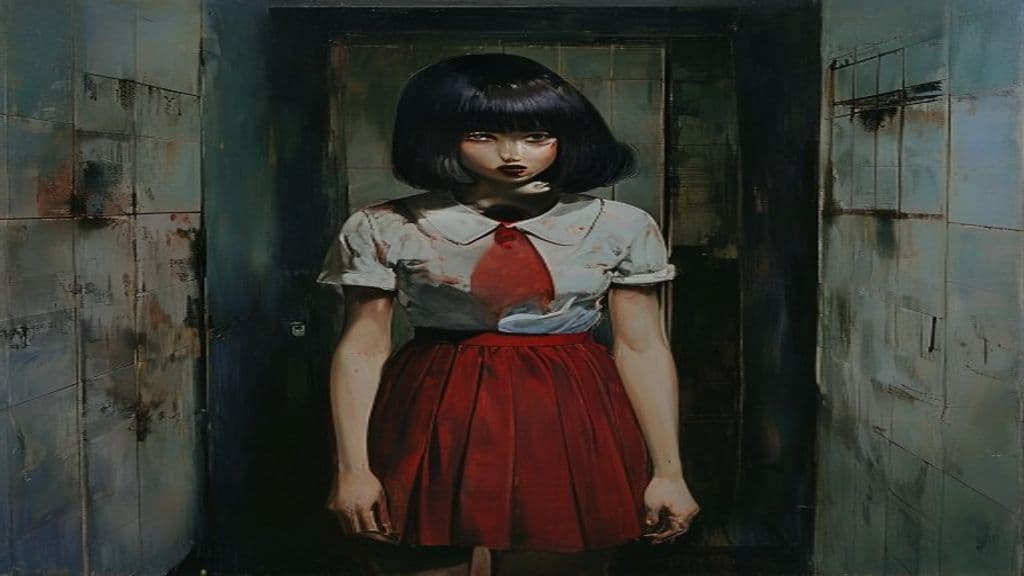
A modern urban-legend ghost figure originating in Clive Barker’s short story and adapted into a film franchise; Candyman is a named, summoned presence bound to a violent historical death and sustained by stories, belief, and traumatic community memory. In the films he is most commonly invoked by speaking his name repeatedly into a mirror and appears as a violent, hook‑handed apparition tied to histories of racial injustice in an urban housing setting.
Cloak and Dagger
Primarily an English idiom meaning situations of intrigue, secrecy, espionage, or mystery, and the proper name of multiple modern cultural properties — most prominently a Marvel Comics superhero duo. The phrase functions as a title across media (music, film, radio, television, video games, comics) rather than a traditional folkloric supernatural being.
Frank Tower
Frank Tower is a 20th‑century urban‑legend figure alleged to have survived multiple major ship sinkings (Titanic, Empress of Ireland, Lusitania). Sources treat the story as a tall tale circulated in novelty and popular‑culture outlets; documentary research finds no evidence that a single person named Frank Tower was aboard and survived all three disasters.
Hawkeye
Hawkeye is a polyvalent English-language cultural label applied to multiple non-supernatural referents including literary and comic-book characters (notably Natty Bumppo and Marvel's Clint Barton and Kate Bishop), regional nicknames and place-names in the United States (e.g., Iowa, 'Hawkeye State'), and various commercial or artistic uses. The supplied sources treat Hawkeye as a modern/pop-cultural name rather than a spirit or mythic being.
Heavenly Executioner Chiwoo
Heavenly Executioner Chiwoo is a fictional human protagonist of a Korean manhwa (comic) series titled 치우천하, presented as an action-fantasy story set in an imagined ancient-Korean milieu. The character is a streetwise youth who discovers his father was a mangnani (executioner) and adopts that stigmatized social role amid imperial persecution of executioners; the series is partly inspired by legends of the mythic figure Chiyou but treats Chiwoo as a literary/fictional character rather than a pre-modern supernatural being.
Mothman
A modern American folkloric figure originating from a cluster of 1966–67 sightings around Point Pleasant, West Virginia. Described in press reports and later retellings as a large humanoid or winged creature with notable eyes, the Mothman legend has been variously interpreted as misidentified wildlife, hoaxing/sensationalism, or a paranormal omen linked in some retellings to the Silver Bridge collapse.
Naaga
Naaga is not attested in the provided sources as a folkloric or supernatural being; the name appears only as a modern proper noun used for a 2003 Telugu film, an organizational acronym (NAAGA) in a media segment, a film-certificate entry, and as a music track title.
Blonde Phantom
A Golden Age American costumed crime-fighter published by Timely Comics (later Marvel Comics). The Blonde Phantom is the masked vigilante identity of secretary Louise Grant (later Louise Mason), a glamorous alter ego who aids detective Mark Mason and starred in her own comics in the late 1940s and was revived in Modern Age stories beginning in 1989.
Bloodwynd
Bloodwynd is a legacy superhero identity in DC Comics tied to a mystical 'blood gem' created by an ancient ritual. The gem houses the spirit Rott (the incarnate spirit of Jacob Whitney in the gem's microscopic world) and bestows necromantic and psychic powers on its bearers while exacting moral and metaphysical costs.
Bloody Bones
Bloody Bones (also Rawhead, Rawhead-and-Bloody-Bones) is a vernacular bogeyman figure originating in Britain and carried into regional North American traditions; it functions chiefly as a cautionary monster used to frighten children from danger and ill speech, typically associated with deep water or dark household recesses.
Blud
Blud is a Slavic concept that functions both as a supernatural agent said to cause physical disorientation—leading people to wander "aimlessly around and round"—and as a lexical term in church discourse denoting illicit sexual desire or moral deviation, which clerics attributed to the Devil.
Blue Beetle
Blue Beetle is a recurring American comic-book superhero identity first appearing in 1939. The mantle has been borne by multiple human individuals over decades and has been explained variously by technology, a mystical scarab artifact, or legacy succession depending on publisher continuity.
Community Record
- [1]Bloody Mary (folklore) - Wikipedia. Wikipedia contributors. "Bloody Mary (folklore)." Wikipedia, The Free Encyclopedia.wiki
- [2]Wikidata: Q717100. Wikidata item Q717100: Bloody Maryother
- [3]Folklore Fridays, Part 5: Bloody Apples (archive). Archive.org: Folklore Fridays, Part 5: Bloody Applesother
- [4]Friday the 13th: The Series (archive reference). Archive.org reference to folklore in media: Friday the 13th: The Seriesother
- [5]Episode 29 - Folklore and Legends with Dr. Michael Bell (archive). Archive.org: Episode 29 - Folklore and Legends with Dr. Michael Bellother
- [6]Bloody Mary (Wikipedia disambiguation and folklore entry). Wikipedia, 'Bloody Mary' (disambiguation and folklore entry) — 'Bloody Mary (folklore), a ghost who appears in a mirror when her name is repeatedly chanted.'wiki
- [7]Archive: S01E05 'Bloody Mary' (episode summary) / Podcast episode descriptions. Episode/podcast summary describing a Supernatural/CW episode: 'Bloody Mary has the power to travel through all reflective surfaces when she is hunting a victim. Worried that teens are accidentally summoning Bloody Mary, Sam and Dean race to destroy the violent spirit before she can kill again.'other
- [8]Archive: Journey Through the Gate's: Ep. 5 Ghosts & Darker Shades of Wail with Scott Davis. Podcast description referencing encounters with Bloody Mary and noting its role in urban legend and childlore contexts (sleepovers, school bathrooms).other