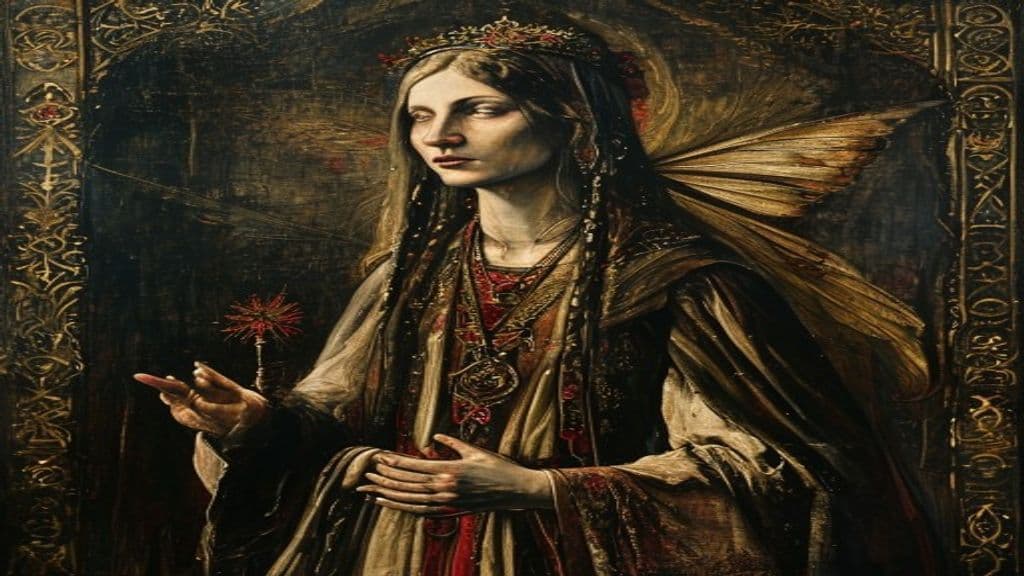
Sources do not provide a narrative cosmogonic origin for Blud. In the materials available, Blud appears as a named agent within Slavic mythological vocabulary—described in one source as "one of the Slavic fairies" and as an "evil-deity"—and simultaneously as a term in ecclesiastical moral language. The dual register in which the term appears (folk belief about a wandering-causing being and clerical usage for sexual immorality) is the only attested origin context in the cited source: Blud arises as both a folk explanation for becoming physically lost and as a theological explanation for illicit desire, which clerics claimed came from the Devil.
The provided source gives no physical description of Blud. The only classificatory detail is that it is called "one of the Slavic fairies" and an "evil-deity" in that source; beyond these labels, no form, size, gender, dress, or other visible traits are recorded in the available text.
According to the source, Blud's primary attributed ability is to cause disorientation, specifically to lead a person "aimlessly around and round." In clerical language the same word denotes illicit sexual desire (fornication, adultery), which church writers treated as originating from the Devil; thus Blud functions both as a folk agent producing literal wandering and as a conceptual cause of moral/sexual deviation in ecclesiastical discourse. No additional powers, longevity, or routine behaviors are documented in the cited material.
Bolotnik
A Slavic place‑spirit of swamps and bogs, regarded in popular tradition as the proprietor or guardian of marshy places who lures people and animals into the depths. Descriptions and names vary regionally; in Christianized accounts bolotniks are sometimes classed with fallen angels or demonic beings.
Likhoradka
A female spirit in Slavic (particularly Russian) popular belief who personifies fever and sickness. Traditionally portrayed as an agentive being that can possess people or bring disease by touch or kiss; the term likhoradka later lexicalized in modern Russian to mean 'fever'.
Nocnitsa
A Slavic night spirit or 'night hag' that torments sleepers—especially children—by visiting at night, producing nightmares or sensations of pressure on the chest, and in some accounts drawing life energy from victims.
Saint Nedelya
In Slavic folk‑Orthodox belief, Saint Nedelya is the personification of Sunday/the Week as a female sacred presence who embodies the day's sanctity and enforces prohibitions against working on Sunday. The figure appears in ethnographic and folkloric sources across several Slavic regions and is syncretically related to named saints such as Anastasia/Kyriakia and to apocryphal texts that sacralize the day.
Blonde Phantom
A Golden Age American costumed crime-fighter published by Timely Comics (later Marvel Comics). The Blonde Phantom is the masked vigilante identity of secretary Louise Grant (later Louise Mason), a glamorous alter ego who aids detective Mark Mason and starred in her own comics in the late 1940s and was revived in Modern Age stories beginning in 1989.
Bloodwynd
Bloodwynd is a legacy superhero identity in DC Comics tied to a mystical 'blood gem' created by an ancient ritual. The gem houses the spirit Rott (the incarnate spirit of Jacob Whitney in the gem's microscopic world) and bestows necromantic and psychic powers on its bearers while exacting moral and metaphysical costs.
Bloody Bones
Bloody Bones (also Rawhead, Rawhead-and-Bloody-Bones) is a vernacular bogeyman figure originating in Britain and carried into regional North American traditions; it functions chiefly as a cautionary monster used to frighten children from danger and ill speech, typically associated with deep water or dark household recesses.
Bloody Mary
A mirror-associated apparition invoked by chanting a female name in dim or candlelit conditions. Originating in catoptromantic divination practices, the figure functions in modern youth-lore and urban legend as an ambiguous ghost/witch who may reveal future information or enact violent harm on participants.
Blue Beetle
Blue Beetle is a recurring American comic-book superhero identity first appearing in 1939. The mantle has been borne by multiple human individuals over decades and has been explained variously by technology, a mystical scarab artifact, or legacy succession depending on publisher continuity.
Blue Beetle (Jaime Reyes) — tradition
Blue Beetle is a published fictional superhero identity in American comic-book tradition that has been held by multiple human protagonists. The Jaime Reyes incarnation is the modern, scarab-bonded teenager whose scarab morphs into an armored battle suit; the mantle as a whole illustrates editorial legacy, shifting origins (chemical, mystical, technological), and reinvention across publishers (Fox, Charlton, DC).
Blue Ben (of Kilve)
A local Somerset dragon-legend tied to the coastal landscape of Kilve. The tale explains coastal features and a fossil ichthyosaur skull by attributing them to the life and death of a fire-breathing dragon sometimes said to have been ridden by the Devil.
Blue Lantern Corps
A fictional interstellar organization in DC Comics that channels the blue light of the emotional spectrum—hope—through power rings and constructs. Founded by former Guardians Ganthet and Sayd on the planet Odym, the Corps acts as a structured order whose abilities often function cooperatively with other Lantern Corps, especially the Green Lantern Corps (willpower).
Community Record
- [1]Blud. Wikipedia: 'Blud ... is one of the Slavic fairies in Slavic mythology, is an evil-deity that causes disorientation and leads a person aimlessly around and round.' Also: 'The term also refers to illicit fornication, the desire for which Slavic clerics claimed to come from the Devil.' and 'Blud in the Russian language means: debauchery, adultery and deviation from the straight path in the literal and figurative sense.'wiki