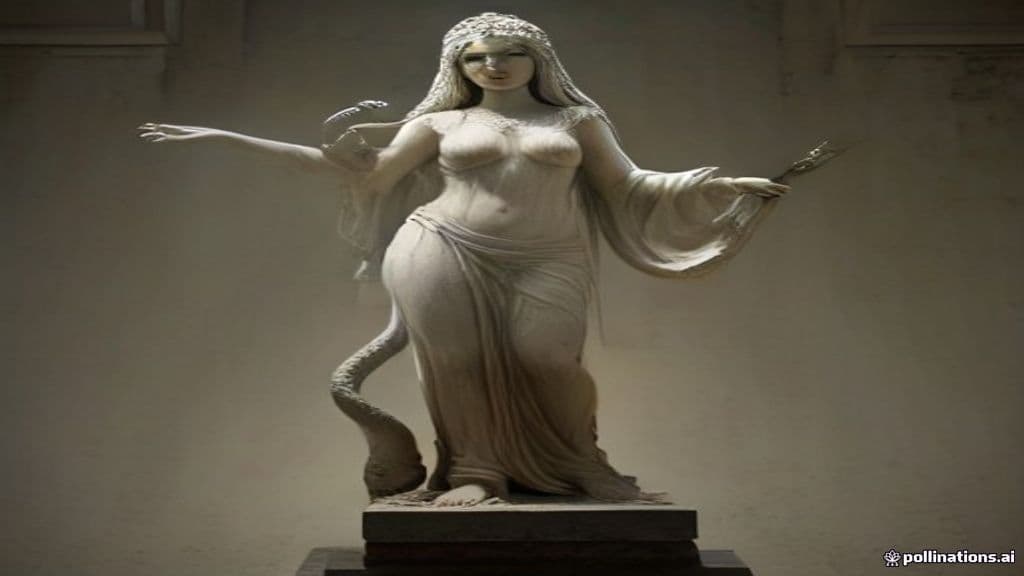
Classical literary sources and later antiquarian writers do not preserve a single definitive mythic birth or origin for Bona Dea; rather, Roman authors present the cult as native to Roman religious practice and sometimes report that the goddess' cult identity was fluid or conflated with other deities. Late-antique commentaries (citing Varro, Macrobius, Servius, and Festus in the modern summaries) identify or equate her at times with Fauna (female counterpart of Faunus), Maia, Ops, Terra, Cybele, and, in one account, a Damia read alongside Greek Demeter. Some Roman sources report ritual or cult traditions thought to derive from Latium or archaic Roman practice; other authors offer etymological and moralizing explanations for her female-exclusive rites. Modern summaries stress that the name 'Bona Dea' functions as an honorific pseudonym and that the cult withheld a secret name from non-initiates.
Surviving statuary and archaeological notes attested in the literary record present Bona Dea as a sedate Roman matronal figure, commonly represented with a cornucopia and with an associated snake. Late-antique authors (as cited in modern summaries) link living snakes with her temple precincts and mythic episodes that explain serpent imagery through identification with Fauna/Faunus traditions.
Ancient sources attribute to Bona Dea guardianship over chastity and fertility among married women, healing powers, and a protective civic function for the Roman people via her Aventine temple and associated public rites. Literary commentators also record prophetic aspects when she is equated with Fauna/Fatua — a figure connected with uttering prophecy — and later authors and modern scholarship note that the cult allowed women to perform practices normally proscribed to them (for example the use of strong wine and blood-sacrifice) within female-exclusive ritual space. Modern academic work (summarized in the provided notes) has argued for an association between the cult and healing of ocular pathologies in certain historical periods, but that ocular link is presented as a modern scholarly interpretation rather than an explicitly preserved ancient liturgical attribute.
Weaknesses
- otherClassical sources do not record specific supernatural weaknesses
Wards
- ritualRegular cult observance (state and domestic rites)
- conditionFemale-exclusive officiation by legitimate priestesses (Vestal Virgins, Sacerdos Bonae Deae, or provincial virgin/matron priestesses)
- ritualMaintenance of sacred precincts with sacred snakes

Community Record
- [1]Bona Dea - Wikipedia. Wikipedia: Bona Dea (lead and article summaries as cited in research notes)wiki
- [2]Temple of Bona Dea - Wikipedia. Wikipedia: Temple of Bona Dea (Aventine temple and dies natalis references)wiki
- [3]Bona Dea - NovaRoma. NovaRoma summary of cult practice and temple observancesother
- [4]The Fate of a Healing Goddess: Ocular Pathologies, the Antonine Plague, and the Ancient Roman Cult of Bona Dea. Ambasciano, L. (2016) — modern scholarly argument linking the cult to healing and ocular pathologiesacademic
- [5]The Materiality of a Mystery — The Cult of the Bona Dea at Ostia through the Archives. Mary Jane Cuyler — discussion of provincial cult evidence and material contexts (Ostia)academic
- [6]Bona Dea - Biblical Cyclopedia. Reference summary noting cult functions and attributesother
- [7]The Gendered Deep History of the Bona Dea Cult. Journal of Cognitive Historiography article summarizing gendered aspects of the cult (as cited in research notes)academic
- [8]Women in Antiquity: The Cult of Bona Dea (blog summary). Modern summary synthesizing classical literary claims about rites and the Clodius incidentother