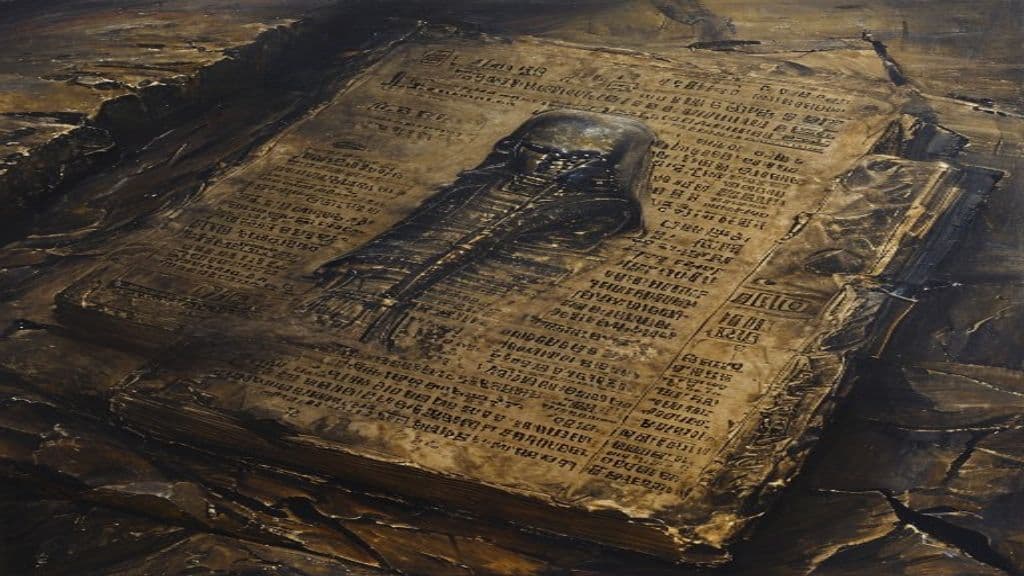
The Book of the Dead represents a collection of magical spells and texts that assist a deceased person's journey through the Duat (underworld) into the afterlife. Its original name is rw nw prt m hrw, which translates to 'Spells of Coming Forth by Day'.
The Book of the Dead does not describe a physical appearance of an entity, but rather a collection of texts and magic spells.
The Book of the Dead contains spells that aim to assist the deceased person in navigating the underworld and reaching the afterlife. These spells are written to help protect the individual from various dangers and challenges they may face during their journey.
Ahmose‑Nefertari
Ahmose‑Nefertari was an 18th‑Dynasty Egyptian queen who, after her death, received institutionalized cult worship and was venerated in the Theban necropolis and Deir el‑Medina. Sources present her both as a historically attested royal (great royal wife and king's mother) and as a deified figure given epithets such as 'Goddess of Resurrection', 'Mistress of the Sky', and 'Lady of the West'.
Akhekh
The Akhekh (also Akhekhu/Akekhu) is a composite legendary creature from ancient Egyptian myth and art, associated with the god Set and with liminal domains of darkness, the western desert, chaos, and water. It appears in texts and iconography in variable forms — from serpentine/dragon-like to winged antelope or griffin-like hybrids — and functions as a chthonic, martial, and portentous figure rather than a fully specified ritual agent in the surviving excerpts.
Ammit
Ammit is an ancient Egyptian funerary guardian-demon of the Duat who stands at the Hall of Two Truths during the weighing of the heart. Feared and not worshipped, she awaits the verdict and consumes hearts judged impure, thereby preventing the deceased from joining the blessed dead.
Ankh
A symbol representing life in ancient Egyptian cosmology, often associated with eternal life and resurrection. (Note: - Power tier should be Ancient (not Primordial), as it's a symbol representing concepts in ancient Egyptian cosmology. - Abilities description is too vague; consider specifying how the Ankh affects or)
Ash (Yuc)
Ash (Tamazight Yuc) is an Amazigh sky god recorded in Egyptian sources and worshipped by Libyan and Tehenu tribes of the Western Desert. In Egyptian texts he is presented as a named deity connected with the vineyards of the western Nile Delta, oases, and as ‘Lord of the Tehenu,’ and is sometimes associated or equated with the god Set.
Bes
Bes is an ancient Egyptian household protective deity, commonly kept close to domestic life to guard mothers, children, and childbirth; he also defends households against snakes and malevolent spirits and is associated with music, dance, and sexual vitality.
Book of Caverns (Egyptian tradition)
The Book of Caverns is an ancient Egyptian text that describes Ra's journey through the underworld, Duat. It does not describe a specific supernatural entity but mentions interactions between Ra and the residents of the underworld. (Note: 1. Power tier should be Ancient (deity-level) since it describes a journey of the sun god Ra and interactions between him and other deities. 2. Origin story needs clarification that the Book of Cavern)
Dragon (Long)
Long (龍, "dragon") is a pervasive cultural and artistic motif that appears in Taoist sacred-geographical contexts, Chinese literature, and modern exhibitions; the provided sources treat it as part of the broader mythic imagery present around Taoist sites and ritual scenes rather than as a single, consistently described doctrinal entity.
Horus Name
Title or crest used by ancient Egyptian rulers, symbolizing divine connection and royal identity. (Note: - Power tier should be Ancient (deity-level) as it represents a connection to a deity and is used by rulers, not just regional spirits. - Summary: While accurate, could be rephrased for clarity: "Titl)
Menes
Historical figure and pharaoh of ancient Egypt, credited with unifying Upper and Lower Egypt. (Note: * Power tier: Should be Primordial, not Ancient (Historical figure and pharaoh, not a deity-level entity) * Abilities: The text does not support the claim that Menes' unification had a "profound impac)
Mummy (undead) (Egyptian tradition)
In Egyptian folklore, a mummy is an undead creature believed to be the reanimated corpse of a deceased person. (Note: * Power tier: Should be Primordial, given the association with cosmic entities and magical powers tied to ancient Egyptian rituals. * Abilities: Clarify that supernatural abilities refer to those on a)
Nebty Name
One of the 'great five names' used by Egyptian pharaohs, representing a specific aspect of their divine authority. (Note: - Power tier should be Ancient (deity-level) since it's one of the 'great five names' used by pharaohs, representing divine authority. - Abilities need to be clarified or removed, as the text currentl)
Community Record
- [1]Wikipediawiki