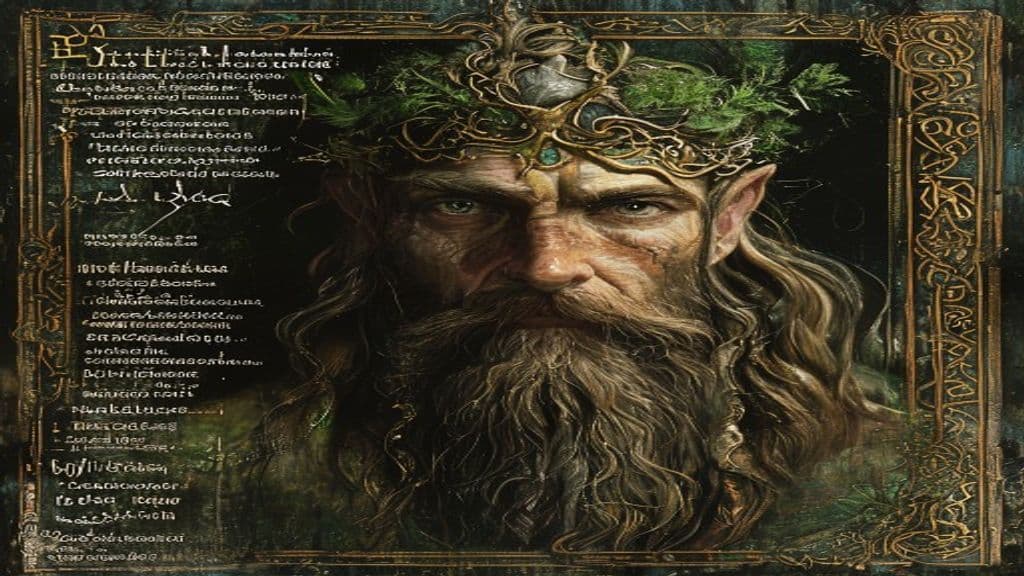
In the Lebor Gabála and Cath Maige Tuired accounts Bres is the son of a Fomorian (commonly named Elatha) and Ériu of the Tuatha Dé Danann, placing him at the liminal intersection of the two groups; alternative medieval variants (e.g., in The Fate of the Children of Tuirenn tradition) give Balor as his father. He becomes king of the Tuatha Dé for seven years, ruling in a manner that favours his Fomorian kin and provokes deposition and the restoration of Nuada, after which he returns to lead the Fomorians at the Second Battle of Magh Tuiredh (sources: Lebor Gabála, Cath Maige Tuired, The Fate of the Children of Tuirenn; dindsenchas poems).
Medieval texts (Lebor Gabála, Cath Maige Tuired) repeatedly describe Bres as physically beautiful; the scribal glosses record his name as meaning "beautiful," and dindsenchas poetry (Carn Hui Neit) lists numerous flattering epithets — "gifted with excellences," "ornament of the host," "with a visage never woeful." One summary tradition notes rapid childhood growth (reaching the size of a fourteen-year-old by seven). Despite attractive appearance, narrative depictions contrast that beauty with inhospitable behaviour (sources: Lebor Gabála, Cath Maige Tuired, Carn Hui Neit; Wikipedia summary of medieval material).
The tradition does not ascribe a catalogue of arcane powers to Bres; poetic sources credit him with attractiveness and even with being a "master of love-spells" (Carn Hui Neit). His narrative agency is political and practical: as king he levied tribute and labour from the Tuatha Dé (forcing figures like Ogma and the Dagda into menial tasks), and in one strand of the tradition he survives defeat to teach agriculture to the Tuatha Dé after promising Lugh that he will instruct them. Alternative accounts give his death by Lugh's trickery (the dindsenchas wooden cows filled with a lethal red liquid). Thus his role is chiefly that of a morally contested ruler whose actions produce social and political consequences rather than an explicitly magic-wielding supernatural antagonist (sources: Lebor Gabála, Cath Maige Tuired, Carn Hui Neit, dindsenchas; The Fate of the Children of Tuirenn variant noted).
Weaknesses
- conditionsusceptibility to poetic/satirical censure
- otherpolitical loss of legitimacy upon restoration of a whole king (Nuada's restoration)
- otherobligation of hospitality (exploited in dindsenchas account where it causes his death)
Wards
- ritualrestoration of rightful kingship (medical-restorative act by Miach and Airmed)
Community Record
- [1]Bres (Wikipedia entry). Wikipedia, entry 'Bres' summarizing Lebor Gabála, Cath Maige Tuired, dindsenchas, and related textswiki
- [2]Cath Maige Tuired (medieval text summaries). Cath Maige Tuired material summarized in sources cited by the Wikipedia entry and the supplied research notes (Lebor Gabála and manuscript glosses referenced there)literary
- [3]Carn Hui Neit (dindsenchas poem) – praise lines for Bres. Carn Hui Neit lines and dindsenchas material summarized in Story Archaeology and the supplied research notesliterary
- [4]Cairpre mac Edaine, 'Satire Upon Bres mac Eladain'. Text of the satire traditionally held to have been composed against Bres (noted in supplied sources as central to his deposition)literary
- [5]Story Archaeology — 'Bres – Kingship and Status' and 'Bres in Other Texts'. Summaries and discussion of variant portrayals and appearances of Bres across texts (used in supplied research notes)other