Recorded use of the word in colonial sources traces the form 'bahnyip' to early 19th-century print in the Sydney Gazette (1812) and etymologies link the recorded word form to Wemba-Wemba / Wergaia languages of Victoria. Within Aboriginal traditions the bunyip is not a single unified creation narrative but a class of watery, animate presences tied to particular waterholes and local dreaming; in Ngarrindjeri dreaming the water-being appears as the Mulyawonk, a spirit that polices fishing practices and warns children away from deep water. Later European commentators and antiquarians added speculative identifications (for example, inland seals or echoes of extinct megafauna), but those are interpretive overlays on diverse indigenous accounts rather than a single origin myth.
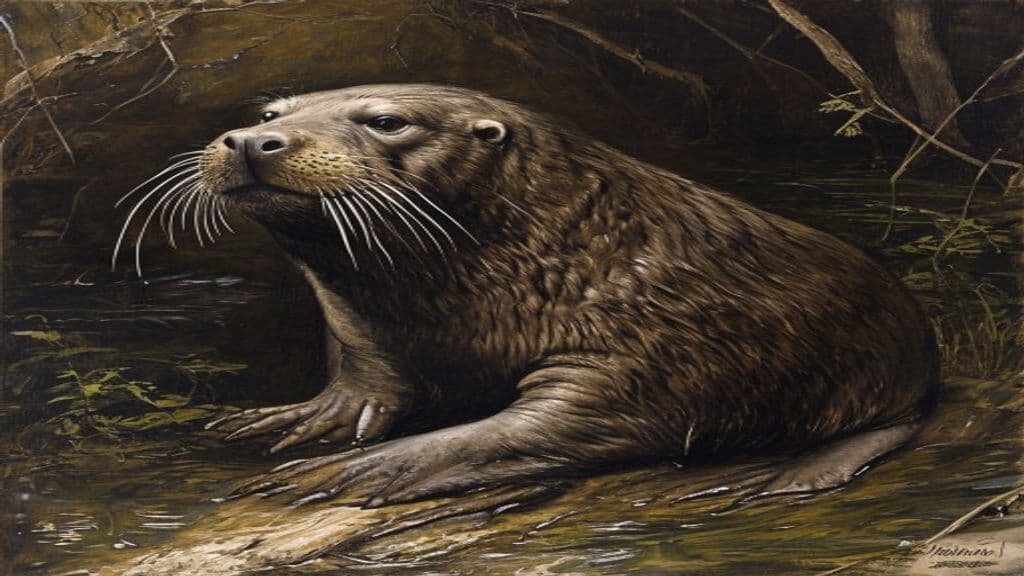
Descriptions vary widely by place and reporter. Colonial and later compilations record several common morphologies rather than a single fixed form: a seal- or otter-like 'seal-dog' with shaggy dark coat, rounded head and whiskers; a long-necked, maned form with a small head and folds of skin; rarer reports include starfish-like or owl-snouted variants and carved outline figures. Accounts provide estimated sizes and features in some colonial reports, but sources emphasize regional variation and uncertainty, noting that dread often discouraged close description.
Folkloric attributes recorded in sources present the bunyip as an amphibious, primarily aquatic being inhabiting inland waters (swamps, billabongs, creeks, riverbeds and waterholes). Traditions describe it as largely nocturnal and reclusive, a swift swimmer (reports sometimes mention fins or flippers), and associated with a loud roaring or bellowing call. In some stories it feeds on aquatic fauna such as crayfish; many tales warn that it can be dangerous to people—particularly women and children—and in Ngarrindjeri lore the Mulyawonk punishes overfishing or those who take more than their share. Legendary motifs include claims that bunyip eggs may be laid in platypus nests; such elements are presented as folkloric reports rather than biological fact.
Weaknesses
- conditionAvoidance by people (social boundary enforcement)
- conditionNocturnality and reclusiveness (limited surface sightings)
Wards
- conditionAvoid unfamiliar or certain waterholes
- conditionComply with local fishing norms and keep children away from dangerous waters
Community Record
- [1]Bunyip. Wikipedia: 'Bunyip' (summary of ethnographic, colonial and modern sources)wiki
- [2]Wikidata: Bunyip. Wikidata entry for Bunyipother
- [3]Episode 29 - Ambiguous Beyond Categorization. Podcast episode mentioning bunyip legend in discussion of swampsfolk
- [4]Naked Bunyip (1970) [film title reference]. Film title referencing the bunyip in Australian popular cultureother