No indigenous Cantabrian origin myth is preserved in the supplied material. The available texts present the Latin name Neptune (Neptunus) applied to the sacred agency of the sea in northwestern Iberia. This pattern is consistent with interpretatio romana or post‑Roman summarizing of local water cults: pre‑Roman Cantabrian beliefs appear to have been described and absorbed into Roman religious vocabulary rather than recorded under an indigenous name, leaving only fragmentary evidence of site‑based invocations (e.g., sacrifices made at the sea 'to Neptune').
The supplied sources do not record a folkloric physical appearance for a Cantabrian Neptune. Classical Neptunian iconography is referenced in literary and emblematic contexts, and modern coastal toponyms and image captions (for example a rock called 'The Throne of Neptune' at El Sardinero, Santander) evoke Neptune as a coastal symbol, but no indigenous ethnographic depiction or sensory description of an anthropomorphic sea-being is attested in the materials provided.
Sources indicate Neptune functions as the patron or ruling agency of the sea who may be invoked or propitiated through sacrifices made 'in the sea.' Roman literary and emblematic references place Neptune among civic and marine authorities, and contemporary literary uses employ Neptune metaphorically as a rescuing sea‑power, but the supplied corpus contains no Cantabrian narratives describing specific interventions, personalities, or behaviors beyond the expectation that offerings at sea are addressed to Neptune.
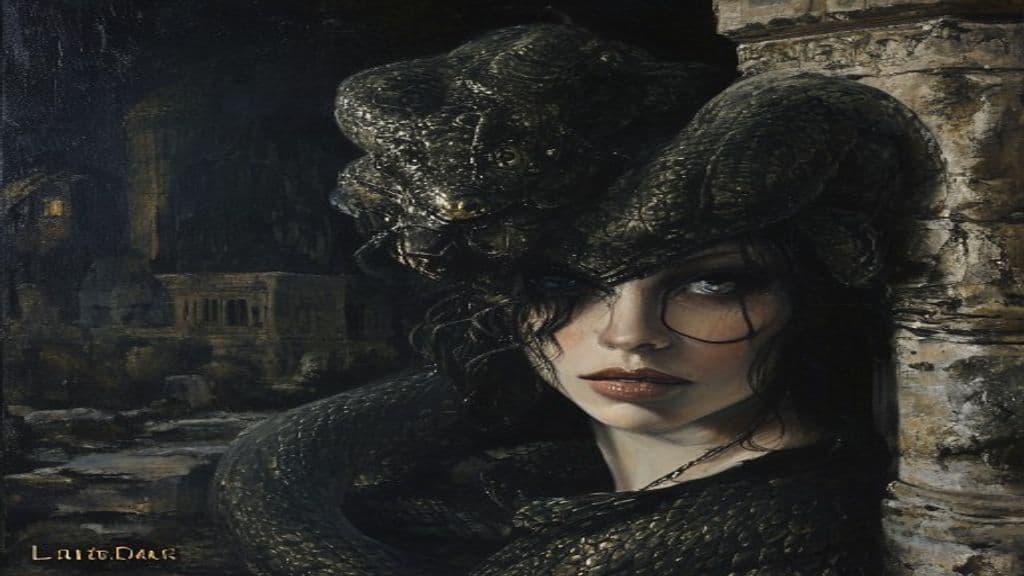
Lamia
A child-devouring demon of Greek mythology — once a queen of Libya and lover of Zeus, driven mad by Hera's destruction of her children and transformed into a monstrous hunter of other women's children.
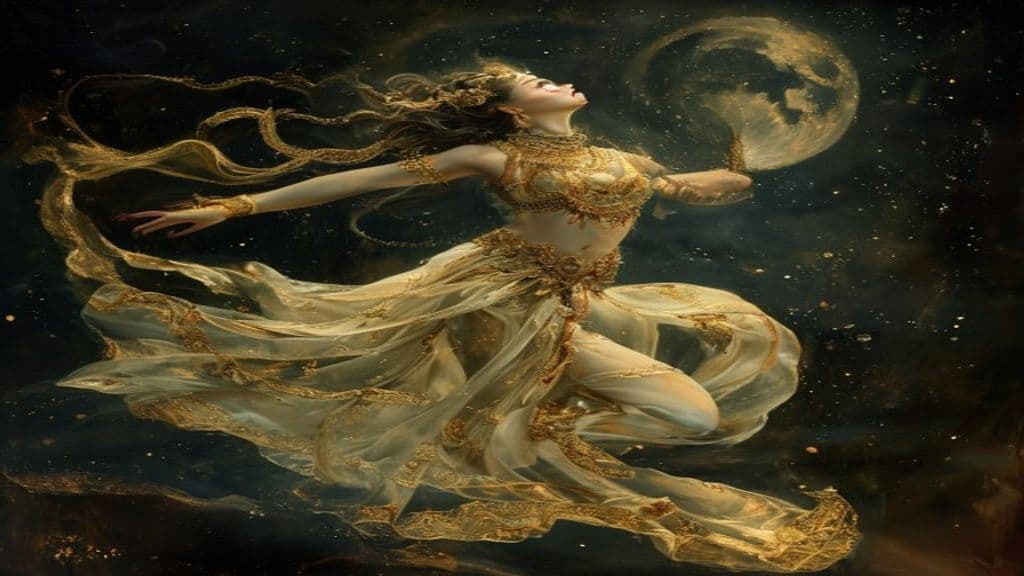
Apsara
Celestial dancers and water nymphs of Hindu cosmology — beautiful semi-divine beings who dance at the court of Indra and, by his command, descend to earth to distract sages from excessive asceticism.
Community Record
- [1]Kingdom of Asturias (entry referencing water ritual taxonomy). "To them they do their sacrifices: in the sea they invoke Neptune, in the rivers the Lamias, in the fountains the Nymphs..." (preserved regional summary)wiki
- [2]Cantabrian mythology. "Cantabrian mythology refers to the myths, teachings and legends of the Cantabri... Over time, Cantabrian mythology was likely diluted by Celtic mythology and Roman mythology with some original meanings lost."wiki
- [3]Imaggeo - The Throne of Neptune (image caption). Image caption describing a coastal rock formation titled 'The Throne of Neptune' at El Sardinero, Santander (modern toponymic/cultural echo).other
- [4]A treasure hunter’s checklist: Facts to point you to the correct solution – Golden Owl Hunt. "Neptune will come to your rescue and lead you away from the icy North" (modern literary/puzzle use of Neptune as metaphorical sea‑power).other
- [5]Stanford Digital Forma Urbis Romae Project Viewer (bibliography referencing Temple of Neptune). References to Roman urban/architectural contexts where a Temple of Neptune is attested in the classical corpus and mapped in Forma Urbis material (shows civic/temple context for Neptune in Roman practice).academic
- [6]The Works of Horace. Classical literary references to Neptune and Neptunian festivals in Roman literature (used to contextualize Roman observances rather than Cantabrian folk detail).literary