
Created for American comic books and debuting in Batman #1 (spring 1940) as "the Cat," Catwoman was introduced in a burglary story in which she initially disguised herself as an old woman before being revealed as a young attractive femme fatale. The character was developed by creators including Bob Kane and writer Bill Finger; Kane and Finger framed the cat imagery as an oppositional symbol to Batman's bat motif and intended feline qualities (cool, detached, sexually charged) as central to the character. Over decades the Catwoman identity has been most commonly associated with Selina Kyle, though other characters (notably Holly Robinson and Eiko Hasigawa) have later adopted the mantle in the comics.
Early depictions presented Catwoman first as a disguised old woman and then as a glamorous criminal lacking the modern costume. Over successive publications she became iconically shown wearing a skintight cat-suit and frequently using a bullwhip as her characteristic tool and weapon. Visual portrayals vary widely across eras and media—different comic runs, television series, films and video games depict differing costumes and accessories depending on tone and adaptation—yet the persistent motifs are feline styling, agility-oriented attire, and an emphasis on sleek, alluring presentation.
Catwoman is portrayed as a human of exceptional stealth, athleticism, and skill in burglary and close-quarters combat. She commonly uses a bullwhip as a tool and weapon and relies on agility, stealth, and cunning rather than supernatural powers. Her moral behavior is ambiguous across continuities: creators initially described her as a "friendly foe" and romantic interest to Batman who did not kill, while some Silver Age stories depicted versions that committed homicide—indicating continuity variance. The role of Catwoman is sometimes an adopted persona assumed by different human characters, emphasizing that the identity functions as a performative, non-metaphysical mantle within the fictional world.
Weaknesses
- conditionmundane vulnerability to law enforcement and restraint
- othercontinuity-dependent limits (no inherent supernatural invulnerability; behavior and willingness to kill vary across eras)
Wards
None recorded.
Atomic Mouse
Atomic Mouse is a 1953 American talking-animal superhero created by Al Fago for Charlton Comics. In the comic backstory the mouse Cimota is shrunk by an evil wizard and given U-235 pills by Professor Invento, granting him unspecified superpowers which he uses to fight enemies such as Count Gatto.
Badrock
Badrock (Thomas John McCall) is a fictional superhero from Image Comics who, as a transformed 16-year-old, possesses a body of organic rock and serves as a member of teams such as Youngblood. He appears across Image Comics titles and crossovers, participating in team-based national-security level missions and occasional metaphysical storylines.
Batgirl
Batgirl is a comic-book superheroine identity published by DC Comics, used by multiple human characters as a female counterpart and ally to Batman within the shared Gotham City vigilante continuity. The mantle has been assumed by different women across publication history and has been used to explore themes of gender, disability, and editorial continuity in modern popular culture.
Batman
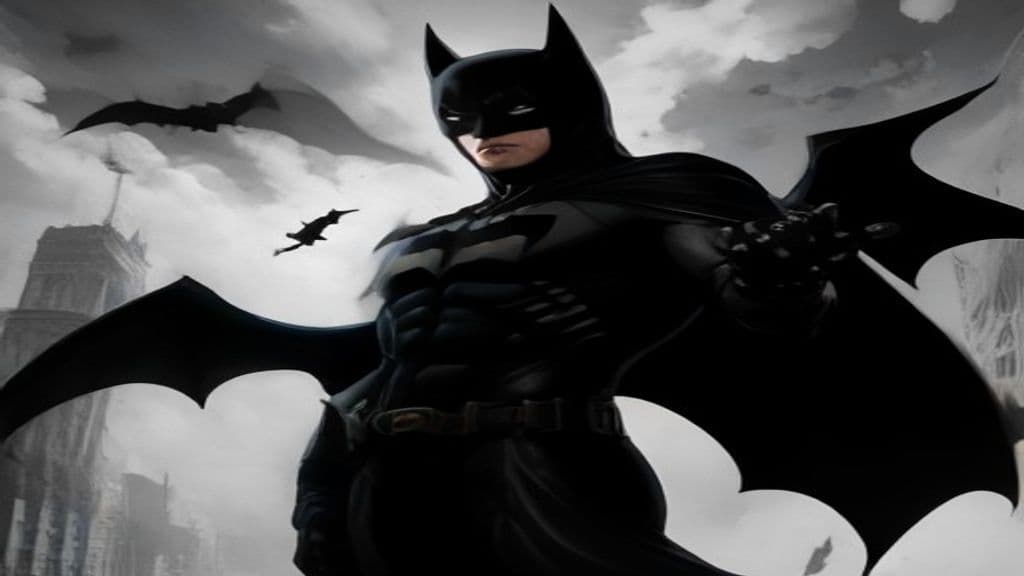
Batman is a fictional, human costumed persona created for American comic books, adopted by Bruce Wayne to combat crime in the fictional Gotham City. Presented in mainstream continuity as a non‑superpowered figure, he relies on intellect, physical training, gadgets, and wealth and functions as an iconic cultural symbol across comics, film, television, and games.
Beast Boy (Garfield Mark "Gar" Logan)
Beast Boy is a fictional superhero from DC Comics (first appearance Doom Patrol #99, November 1965), a human named Garfield Mark "Gar" Logan who acquired the ability to transform into any animal after an experimental medical procedure. He is portrayed as a youthful team member of Doom Patrol and Teen Titans, often providing comic relief while coping with deep personal trauma.
Bug-Eyed Bandit
A nom-de-crime used by two DC Comics supervillains and later media adaptations for insect-themed criminal inventors who employ robotic or biologically inspired insect devices to commit theft, extortion, and assaults on technology-rich targets. The identity has appeared as Bertram Larvan (original comics), an unnamed son (later comics), and as a female reinterpretation Brie Larvan in Arrowverse television.
Deadshot (Floyd Lawton)
Deadshot is a fictional human character (Floyd Lawton) from DC Comics, portrayed as an expert marksman and professional assassin who often appears as an antagonist in Batman stories and as a core member of Task Force X / the Suicide Squad. He is characterized by near‑superhuman accuracy, a persistent 'death wish' psychology, and recurring appearances across comics, animation, television, and film adaptations.
Doctor Doom
Doctor Doom (Victor von Doom) is a fictional supervillain in American comic-book popular culture, created for Marvel Comics as the armored, hooded sovereign of the fictional nation Latveria who blends advanced science and sorcery. He serves as a recurring antagonist—most notably to the Fantastic Four—and functions as a narrative symbol of arrogance, technological hubris, and authoritarianism.
Flash Thompson
Eugene "Flash" Thompson is a fictional human character from American comic books published by Marvel Comics. Introduced as a star high-school football player and bully of Peter Parker, he later serves in the U.S. Army, loses both legs in the Iraq War, and becomes host to the alien Venom symbiote, operating for a time as the costumed figure Agent Venom (and later Agent Anti‑Venom) in Marvel storylines.
Gorilla-Man
Gorilla-Man is a recurring Marvel Comics construct: multiple distinct human individuals who become or inhabit gorilla-bodied humanoids (not a spirit). Incarnations range from heroic/ally (Kenneth Hale) to criminal/antagonist (Dr. Arthur Nagan, Franz Radzik), with origins described as mystical curse, surgical transplant, or technological mind-transfer.
Grey Hulk
A distinct persona/alter of Bruce Banner within mainstream American comic-book continuity and adaptations, identified by grey skin in many iterations and a temperament that differs from other Hulk personae. The Grey Hulk is an internal, emergent identity that manifests during Banner's transformations rather than an external spirit or traditional folkloric being.
Caturvyūha
A theological/doctrinal model in early Vaiṣnava tradition describing four earthly emanations (vyūhas) of the Supreme deity—originally Nārāyaṇa and later Viṣṇu—named Vāsudeva (central), Saṃkarṣaṇa (Balarāma), Pradyumna and Aniruddha. The concept maps localized Vrishni hero cults onto a system of divine manifestation reflected in early Mathura/Kushan sculpture and later Vaishnava liturgical categories.
Community Record
- [1]Catwoman — Wikipedia. Wikipedia, 'Catwoman' articlewiki
- [2]Catwoman — Wikidata. Wikidata entry Q5054224other
- [3]DNA Lounge: Nu Metal vs. Emo (2025-08-08d). Archive.org event listing referencing Catwoman in cultural performance contextsother
- [4]Funny or Die Video: John McCain as the Penguin (Batman and Robin). Archive.org listing of a parody video casting Palin as Catwoman, illustrating cultural parody useother