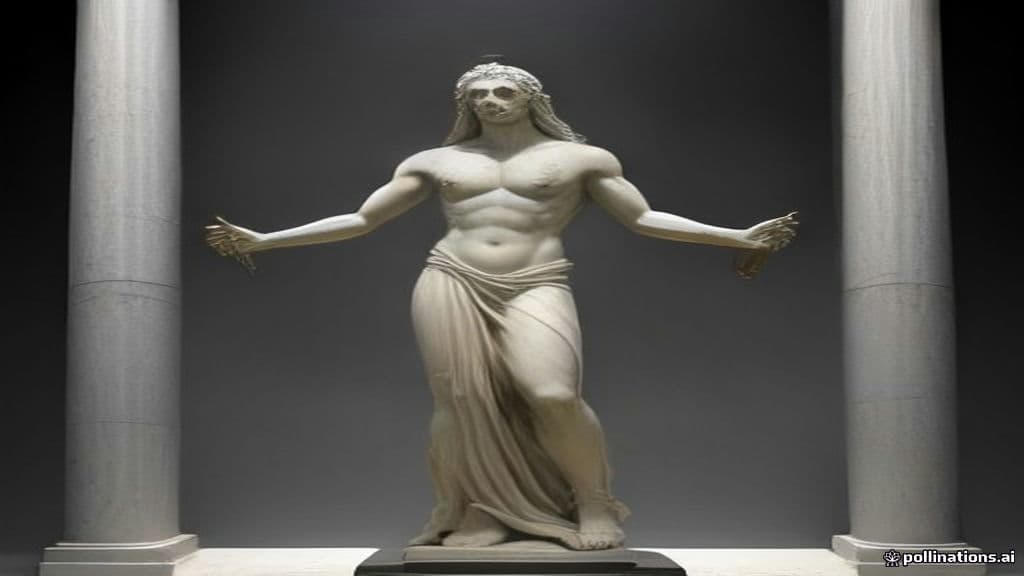
Two divergent but attested strands describe Caucon's origin. In an Arcadian tradition he is one of the fifty sons of King Lycaon and thereby part of the Lycaon myth-cycle in which the king's impiety leads Zeus to strike the family down (sons killed by lightning); he is also presented in some genealogies as father or ancestor to figures connected with Lepreus/Lepreum. In a separate Eleusinian/Messenian tradition Caucon (described as son of Celaenus and grandson of the autochthon Phlyus in some accounts) is a priestly figure credited with bringing the rites of the Great Goddesses from Eleusis to Andania in Messenia; in this role he is honored as a hero and was said to have appeared in a dream to the Theban general Epaminondas, after which Messenian allies offered sacrifices to him.
Ancient sources supply no consistent personal portrait of Caucon in life. Local cult practice left material traces: Pausanias (as summarized) reports that at Lepreus a tomb was shown with a statue 'of a man with a lyre standing over it,' implying a funerary/hero-statue representation but not narrative description of living appearance. No supernatural visual manifestations are consistently reported in the cited material.
Caucon's efficacy in the sources is cultic and aetiological rather than manifesting explicit magical powers. He is credited with transmitting and establishing the Mysteries of the Great Goddesses in Messenia (priestly/ritual authority), is invoked in cult (hero-sacrifice at Lepreus; sacrifices offered after his dream-appearance to Epaminondas), and in one account appears in a prophetic dream. Other accounts cast him as a mortal participant in the Lycaon impiety who is destroyed by Zeus, indicating narrative roles that range from culturally authoritative founder to punished impious royal son. No specific supernatural abilities (elemental control, shapeshifting, possession rites) are attested in the provided sources.
Weaknesses
- conditionvulnerability to divine wrath (killed by Zeus' lightning in the Lycaon narrative)
Wards
- ritualpropitiatory sacrifice
Community Record
- [1]Caucon — Wikipedia. Wikipedia entry summarizing ancient sources (Pausanias, Strabo, Apollodorus) and modern commentarywiki
- [2]CAUCON (Kaukon) - Messenian Priest of Greek Mythology — Theoi. Theoi web entry describing Caucon as priest of Demeter who established the Mysteries in Messeniaother
- [3]Melanthus, Codrus, Neleus, Caucon: Ritual Myth as Athenian History — Noel Robertson (GRBS). Academic article discussing aetiological roles of named ritual-founders including Cauconacademic
- [4]Strabo's Geography — Book VIII (Lepreus / Caucones references). Strabo's geographic/ethnographic references to the Caucones and regional traditionsliterary
- [5]LEPREUS — Theoi (Lepreus hero / tomb references). Theoi entry on Lepreus summarizing sources that link Lepreus to Caucon and note tomb/statue evidenceother
- [6]Person: Caucon — University of Victoria Mythology Pages. Reference summary of Caucon traditions and genealogical variantsother
- [7]Aelian: Various Histories. Book I. Ancient source collection referenced in summaries of variant traditions (Lycaon-cycle material cited in the research notes)literary