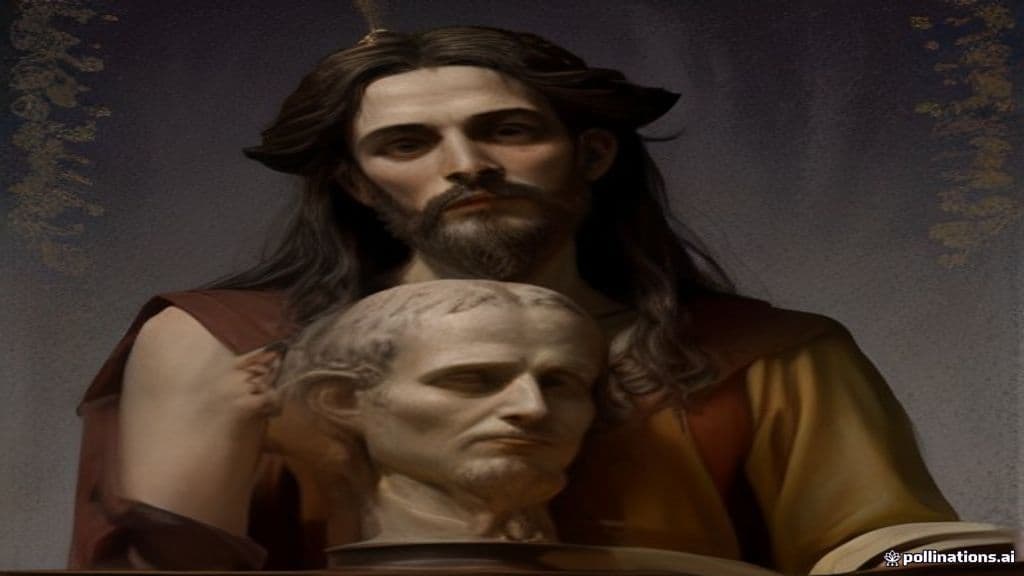
Cenodoxus originates as the protagonist of a Latin miracle play by the Jesuit Jacob Bidermann first performed in Augsburg in July 1602 and thereafter staged across Catholic Europe (recorded performances in Munich, Lucerne 1609; Pruntrut 1615; Ingolstadt 1617; Paris 1636; Ypres and Hildesheim 1654). The name Cenodoxus derives from the Latin cenodoxia, meaning "vainglory" or "empty teaching," signaling the play’s moral premise that conspicuous virtue and reputation can conceal inward vice. Within the play’s internal narrative, the dramatic climax occurs after Cenodoxus’s death when liturgical attempts at last rites produce a sequence of vocal proclamations by his corpse that reveal his spiritual fate; the spectacle is designed as pedagogical theater rather than a documentary claim about real supernatural phenomena.
In life, Cenodoxus is portrayed as outwardly exemplary: famed for healing the sick, helping the poor, speaking kindly, and ministering to many — a teacher, scholar, doctor, lawyer, and philosopher admired by all. Onstage at his death the drama depicts his corpse laid on a cathedral stone table where, as a theatrical device, it cries out on three successive days during attempts at last rites. The play also stages elaborate costuming and choreographed appearances for the personifications of the Seven Deadly Sins, who approach the sleeping/dying man in bedroom tableaux and dance about the scene; descriptions in the sources emphasize the theatricality of these figures (often performed by students in costume) rather than treating them as independent folkloric beings.
As a dramatic device within Bidermann’s play, the corpse of Cenodoxus vocalizes in response to liturgical invocations over three days, with the utterances progressing from "I have been accused," to "I have been found guilty," and finally "Oh, My God, My God, My God, I have been damned to Hell Eternal." The play also personifies the Seven Deadly Sins, who are staged as whispering to the sleeping man, tempting or magnifying flaws within him; these personifications function theatrically to make internal moral forces visible to the audience. The sources present these phenomena as components of the play’s didactic dramaturgy rather than as claims of persistent supernatural agency outside the work.
Weaknesses
- conditionhidden vainglory/pride (moral condition)
- otherremedy framed as interior humility and continual self-examination
Wards
- otherassociated rites/setting: last rites/viaticum and cathedral liturgy (contextual elements in the narrative; not depicted as effective wards)
Community Record
- [1]Cenodoxus — Wikipedia. Wikipedia contributors, 'Cenodoxus,' Wikipedia, The Free Encyclopedia.wiki
- [2]Cenodoxus (Wikidata Q1053408). Wikidata entry Q1053408 for Cenodoxus.other
- [3]Das Ordensdrama (archive collection including editions). Das Ordensdrama — archival/print edition references (collection containing Cenodoxus editions).other
- [4]Cenodoxus (facsimile/edition). Facsimile/edition entries for Bidermann's Cenodoxus in archival holdings.literary