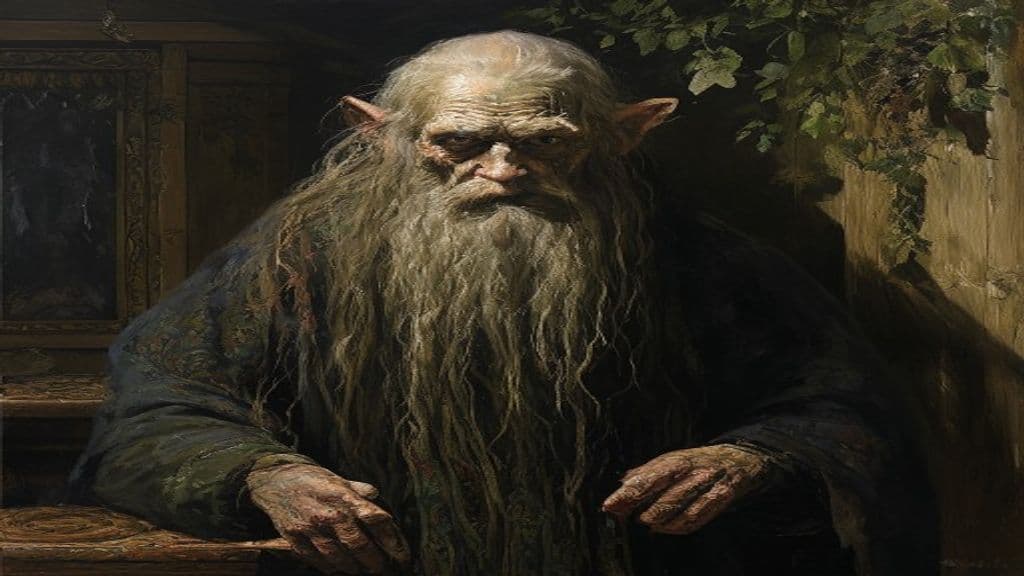
In the broad folkloric cosmology presented in the sources, various nonhuman peoples (fairies, trolls, nereids, demons and similar groups) interact with human families and sometimes abduct humans—especially infants—and leave one of their own or an enchanted object in the human's place. The substitution may serve multiple motives attributed in the traditions: to obtain servants, to have human children raised by the otherworld, out of malice, or because human beauty or other desirable traits attract otherworldly attention. The changeling thus arises as an exchange enacted by those nonhuman communities within domestic life.
Accounts vary by region. Changelings are generally human-like but often sickly and failing to grow at a normal rate; Irish legends mention beards or long teeth and uncanny intelligence. German names such as Kielkopf or Dickkopf point to reports of unusually large heads or necks. In some stories the replacement is not a living creature but an enchanted object (a 'stock' or log) or an elderly otherworldly person left in place of an infant. Appearance therefore ranges from infantile-but-failing-to-thrive, to oddly aged, to physically deviant in small ways.
Changelings typically display behaviors and traits that mark them as other: failure to thrive or normal growth, ravenous appetite, unusual or uncanny intelligence and perceptiveness, and behavior that may reveal its nature when it believes itself unobserved (jumping, dancing, or playing instruments in Irish and Scottish accounts). Some changelings forget their nonhuman origin and live within human families; others may remember and return to their own people, leaving the human family. The phenomenon is presented functionally as substitution rather than as a defined set of magical powers.
Weaknesses
- conditionBaptism (regional - medieval Scandinavia)
- otherVigilant human watchfulness over the infant
Wards
- symbolIron left open (e.g., open iron scissors placed where the child sleeps)
- otherAn inverted coat placed where the child sleeps
- ritualPassing the suspected changeling through Mên-an-Tol (Cornwall)

Fairy
A class of anthropomorphic supernatural beings found across multiple European folk traditions, fairies are magical, liminal entities variously described as spirits, an older race, or enchanted people; their depiction ranges from human-sized to diminutive and their attributes and moral alignment vary by region and period.
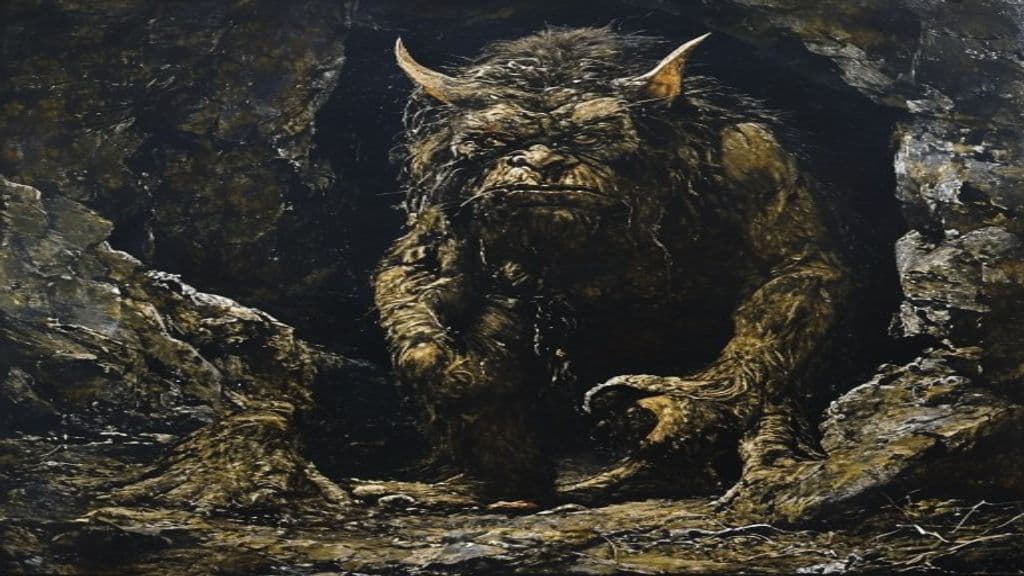
Troll (Germanic Tradition)
In Germanic folklore, a troll is a being that dwells in isolated areas of rocks, mountains, or caves, living together in small family units and rarely interacting with humans. (Note: - Power tier should be changed from Primordial to Ancient (trolls' origins from primordial forces don't necessarily imply cosmic-level power). - Ability description is not entirely accurate; it's stat)
Community Record
- [1]Changeling - Wikipedia. Wikipedia: 'Changeling' article (excerpted material supplied in research notes)wiki
- [2]Archive: Episode 33 - The Changeling. Audio episode referenced in research notesother
- [3]Archive: Show Primer, Canadian Myths and Listener Q & A. Audio archive referenced in research notesother
- [4]D. L. Ashliman — scholarly commentary quoted in source. Quoted folklorist D. L. Ashliman as cited in the provided material regarding ravenous appetite and social-historical interpretationacademic