Rather than a singular origin myth, the name Chromios appears in multiple, distinct registers. In Pindar's Nemean Ode I the name refers to Chromios of Aitna, son of Agesidamos and brother-in-law of Hieron, a citizen of Hieron's colony at Aitna and victor in a chariot race (victory dated c. 473 BCE in commentary). In epic and scholia the name recurs as a minor warrior/captain in Homeric lists and related epic material (scholarly discussions note repetitive appearances of minor names, including Chromios). In local/historical tradition Chromios is recorded in accounts of the Battle of the 300 Champions as one of two Argive survivors (paired with Alkenor in that tradition). In modern times the name was reused for asteroid 32726 Chromios, a Jupiter Trojan discovered 16 October 1977 and named after a Greek captain from the Trojan-cycle onomastic repertoire.
Classical sources portray bearers of the name as mortal humans rather than supernatural beings. In Pindar Chromios of Aitna is presented as an athletic victor—specifically a chariot-race winner—celebrated in song and linked by genealogy and civic ties to Hieron and heroic ancestry (commentators associate him with Heracles rhetorically). Epic and scholia references treat Chromios as a minor warrior or captain among other martial figures, without any description of supernatural form. The modern asteroid is an astronomical object and carries no anthropomorphic description in the sources.
No supernatural powers are attested. Attested 'abilities' are human achievements and literary functions: Chromios of Aitna's athletic prowess and chariot victory as celebrated by Pindar; appearances as a named warrior/captain in epic/Homeric lists indicating martial role(s) in poetic narratives; and the role of the name itself within epic composition practices (scholarly commentary notes on repeated appearances of minor names like Chromios). The asteroid bearing the name follows astronomical properties (an orbital period of c. 11 years, 322 days) recorded in modern catalogs.
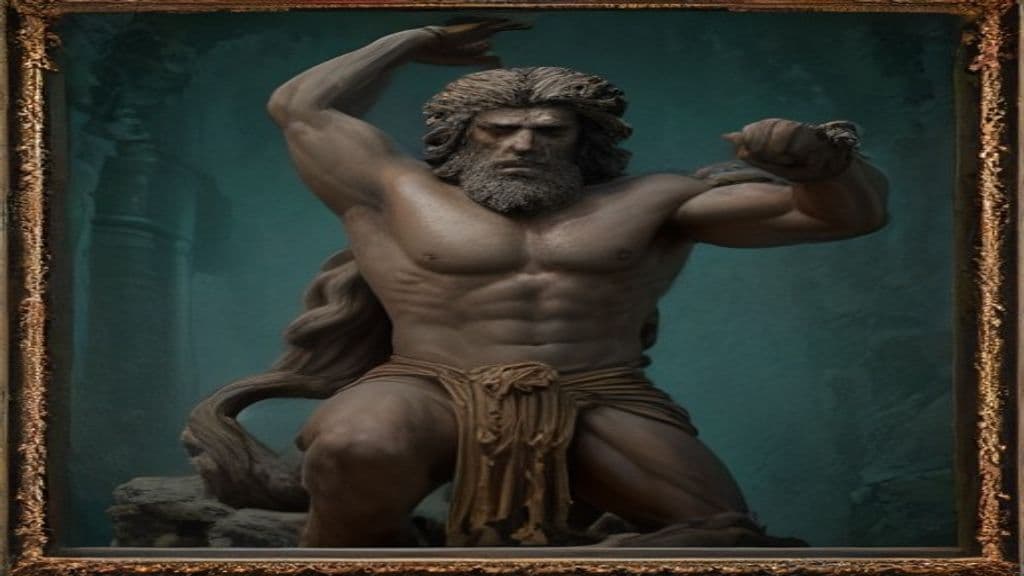
Heracles
Heracles is the greatest hero of Greek myth whose career bridges mortal hero-cult and full divinization. Celebrated for his Twelve Labours, martial prowess, and travels between the mortal world, the underworld, and Olympus, he functioned as a civic patron, ancestor of royal lines (the Heracleidae), and object of cult that treated him both as chthonic hero and as god.

Jann
The weakest class of djinn in Islamic tradition, associated with desert winds and taking the form of snakes or whirlwinds, dwelling in empty wilderness and posing little threat to those who know the proper invocations.
Community Record
- [1]The Nemean Odes (Pindar) — Nemean I. Pindar, Nemean Ode I; introduction and commentary in Archive LP0027literary
- [2]The Nemean Odes (Pindar) — Nemean I (alternate copy). Pindar, Nemean Ode I; archive copy with commentary notes referencing Chromios of Aitnaliterary
- [3]32726 Chromios (asteroid) entry. Asteroid 32726 Chromios: discovered 16 October 1977; described as a Jupiter Trojan and named for a Greek captainother
- [4]Wikidata: Q1100613 — 32726 Chromios. Wikidata entry for asteroid 32726 Chromios (modern astronomical nomenclature)other
- [5]Kiwi Hellenist blog: 'Who has the highest K/D in the Iliad?'. Discussion noting recurrent minor Homeric names (includes Chromios among characters cited as appearing multiple times in epic tradition)folk
- [6]ToposText: Chromios (person entry). ToposText entry linking the name Chromios to ancient geographic/historical traditions (includes reference to Argive survivor tradition)literary
- [7]Battle of the 300 Champions (contextual reference). Summary of the Argive tradition in which Chromios is named among survivors in some accounts (secondary compilation)wiki
- [8]Bryn Mawr Classical Review — commentary on Pindar. Review and commentary discussing Pindaric contexts that mention Chromios and related scholarly apparatusacademic