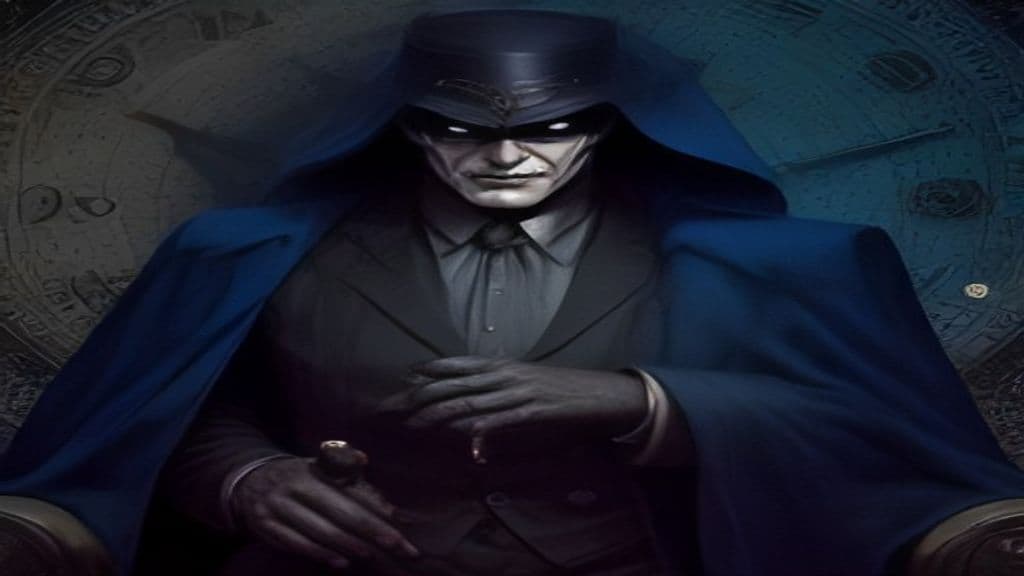
The Clock King identity has been used by several characters in DC Comics. The earliest and principal incarnation, William Tockman, debuted in World's Finest Comics #111 (August 1960); his backstory (per sources summarizing continuity) describes a man who, after being told he had months to live, timed a bank vault to rob it but was caught by Green Arrow; his sister later died while he believed he was terminally ill and he later discovered the diagnosis was erroneous, prompting a campaign of revenge and criminal activity (source: Wikipedia entry and related summaries). A later, widely circulated version—Temple 'Tem' Fugate—originated in Batman: The Animated Series and was later integrated into comics continuity; this incarnation is presented in some comics as possessing or accessing time-themed resources (noted in Terror Titans / Teen Titans storylines). A modern New 52-era take names Billy Tockman, an African-American crime boss operating in Seattle who runs a nightclub called the Midnight Lounge and a vintage clock repair shop called the Clock King as a front (source: Wikipedia and linked summaries).
Classic (World's Finest, 1960) Clock King: a human in costume wearing a clock-faced mask, a cape, and a blue suit patterned with clock imagery (source: Wikipedia summary of early appearance). Animated-series–derived/Tem versions follow similar clock-themed attire but with variations; one noted depiction uses clock faces on a tie and an outfit inspired by the Batman: The Animated Series costume (source: research notes citing animated-series influence and Terror Titans visual references). The New 52 Billy Tockman is presented as a crime boss without the mask in source excerpts; his presentation emphasizes occupation (nightclub owner, clock repair shop front) rather than a super-costume (source: Wikipedia/New 52 summary).
Abilities vary by incarnation. William Tockman is explicitly described as having no superpowers; his effectiveness rests on planning, timing, and clock-themed gadgetry (source: Wikipedia summary). Temple Fugate / Tem (originating on Batman: The Animated Series and later used in Teen Titans/Terror Titans comics) is depicted in some stories as employing extraordinary resources: for example, in Terror Titans–adjacent accounts he 'brings the Titans to his base of operations, a dimension outside of time' and operates the Dark Side Club to brainwash metahumans into a 'Martyr Militia'—indicating access to specialized temporal locations or technology and psychological manipulation rather than a broadly defined innate power to alter time (sources: Terror Titans / Teen Titans descriptions cited in research notes). The New 52 Billy Tockman functions as an organized-crime boss and planner, using fronts and criminal networks rather than supernatural abilities (source: New 52 summary). Across versions he commonly uses planning, timing, technology, gadgetry, organization, and manipulation as tools.
Weaknesses
- conditionNon-superpowered: vulnerable to being outmaneuvered or defeated by heroes through planning, combat, or counterintelligence
- otherDependence on planning, gadgets, and specific resources (e.g., bases, technology, or fronts); removal or disruption of those tools undermines schemes
Wards
None recorded.
Aryan Brigade
The Aryan Brigade is a fictional group of supervillains in DC Comics, depicted as a paramilitary white‑supremacist cell composed of powered individuals. Introduced in 1994, the Brigade functions in the comics as an organized extremist threat that engages in violent attacks and bioterror plots against the modern fictional world.
Captain Cold
Captain Cold (Leonard Snart) is a supervillain appearing in DC Comics who adopts an ice/cold-themed persona and employs a technologically engineered "cold gun" in criminal enterprises. He is a recurring antagonist of the Flash, leader of the Rogues in many continuities, and a character adapted into television media (Arrowverse).
Crazy‑Quilt
Crazy‑Quilt is a legacy supervillain identity from DC Comics adopted by multiple human individuals across publishing eras; the persona centers on a distinctive helmet that emits colorful flashing lights and beams and on gadget‑based criminal activity rather than any supernatural origin.
Doctor Poison
Doctor Poison is a recurring fictional antagonist in DC Comics' Wonder Woman stories, depicted as a human toxicologist and chemical-weapons specialist who conducts bioterror and espionage operations across multiple continuities. The character appears in several incarnations (notably Princess Maru in the Golden Age) and functions as a narrative personification of scientific villainy and wartime sabotage.
Doctor Polaris
Doctor Polaris is a fictional DC Comics supervillain identity, most prominently used by scientist Neal Emerson, who uses mastery of magnetism to menace heroes and infrastructure. The mantle has been borne by two comic-book characters (Neal Emerson and John Nichol) and recurs across DC shared-universe storylines and villain teams.
Clio
Clio is one of the nine Muses of ancient Greek myth, traditionally associated with history, the proclamation and celebration of great deeds, and sometimes with certain musical functions. Daughter of Zeus and Mnemosyne, she is portrayed in classical iconography with attributes of record‑keeping and proclamation.
Clitonymus
Clitonymus (also spelled Kleitonumos, Clysonymus, Clisonymus) is a mortal youth in Greek mythic tradition attested as the man killed by Patroclus in a quarrel — commonly given as over a game of dice — an episode that precipitates flight and refuge with Peleus. Variant and fragmentary accounts present divergent circumstances for his death.
Cloacina
Cloacina is a minor Roman divinity associated with the Cloaca Maxima (and the original Velabrum/Spinon stream), worshipped at a small public sacellum in the Roman Forum. She is linked to purification by moving water, civic sanitation, and rites of reconciliation, and is sometimes syncretized with Venus under the epithet Venus Cloacina.
Cloak and Dagger
Primarily an English idiom meaning situations of intrigue, secrecy, espionage, or mystery, and the proper name of multiple modern cultural properties — most prominently a Marvel Comics superhero duo. The phrase functions as a title across media (music, film, radio, television, video games, comics) rather than a traditional folkloric supernatural being.
Clonia
Clonia (Ancient Greek Κλονιη, Kloniê) is a Naiad — a freshwater nymph — associated with the spring or fountain of the town of Hyria in Boeotia. Mythographic sources present her primarily as the consort of the local founder-figure Hyrieus and as mother of Nycteus and Lycus, anchoring local genealogical and topographical identity.
Clonius
Clonius (Ancient Greek: Κλονίος, Kloníos) is a personal name used for several mortal characters in Greek and Roman epic narratives. Bearers of the name appear as a Boeotian Achaean captain in the Trojan War, as an illegitimate son of Priam, as companions of Aeneas killed in Italy, and as a defender of Thebes in the war of the Seven against Thebes.
Clootie Well
A Celtic tradition where individuals leave offerings of cloth or ribbons at holy wells, believed to possess healing properties. (Note: 1. Remove "Power tier: Ancient" as it contradicts the description of abilities (no classical powers) and origin story (not deity-level). 2. Add "Origin story: Based on ancient custom of leaving votive)
Community Record
- [1]Clock King (Wikipedia). Clock King. Wikipedia. Accessed via provided research notes (details on incarnations, appearances, origin stories, and abilities).wiki
- [2]Clock King (Wikidata). Wikidata entry for Clock King (used to corroborate identity and metadata about the comic-book character).other
- [3]Batman '66: The Clock King Gets Crowned (S02E012) - Archive listing. Archive listing for a Clock King episode derived from Batman '66 series (used as part of source pool noting animated-series derivation; research notes indicate Temple Fugate originated in animated media and influenced later comics).other