No mythic genealogy or narrative origin for Dea Dia is recorded in the supplied sources. Attestations rely on civic priesthood practice and festival evidence: the Fratres Arvales conducted her cult, and the Carmen Arvale and the three-day May festival (connected with Ambarvalia/Ceres rites) are the principal documentary traces. Modern summaries and scholarship treat her either as a distinct archaic fertility goddess preserved in this college or as an aspect/identification of the major grain goddess Ceres (and by extension the Greek Demeter).
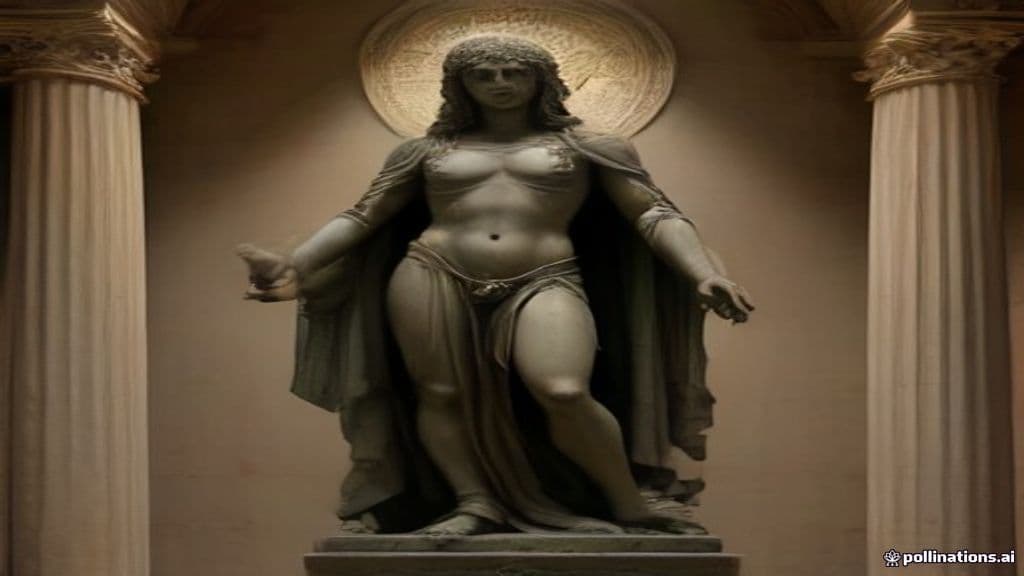
The provided sources contain no consistent iconographic or descriptive data for Dea Dia as a visual figure; no statues or standard attributes are described in the excerpts. Archaeological and topographical references (scholarship cited in source bibliographies) attest to a cultic location — a lucus (sacred grove) and a sanctuary referred to as ad Deam Diam — but do not supply a canonical physical depiction of the goddess.
Sources present Dea Dia's function through cultic role rather than narrative acts: she is a deity of fertility and growth whose favor was sought by ritual action. The Fratres Arvales offered sacrifices and chanted the Carmen Arvale at her lucus during a May festival to secure agricultural wellbeing. Ritual materials show invocation lists that included other protective/agricultural deities (Lares, and an agriculturally-aspectual Mars), indicating her role within a network of rites to promote crop success rather than individual, interventionist myths.
Community Record
- [1]Dea Dia — Wikipedia. Wikipedia: 'Dea Dia (Latin: 'Goddess of Daylight', or 'Bright Goddess') was a goddess of fertility and growth ... She was sometimes identified with Ceres, and sometimes with her Greek equivalent Demeter.'wiki
- [2]Fratres Arvales — NovaRoma. NovaRoma summary: 'Their task was the worship of Dea Dia, an old fertility goddess ... On the three days of her May festival, they offered sacrifices and chanted secretly inside the temple of the goddess at her lucus the Carmen...'other
- [3]Carmen Arvale — online summary. Carmen Arvale summary noting invocation of Lares and Mars during the festival and Mars' archaic agricultural names (Marmar, Marmor, Marspiter).other
- [4]Dia (mythology) — Wikipedia. Wikipedia: note that 'Dia' may refer to Dea Dia in Roman religion.wiki