
Deianira is presented in classical sources as a princess of Calydon, commonly named the daughter of King Oeneus (with Althaea sometimes noted among genealogical variants), and in alternative accounts as daughter of Dexamenus of Olenus. She becomes the wife of Heracles during the later phase of his life after his labors. A key episode locates them at the River Evenus where the centaur Nessus, while ferrying Deianira, attempts to abduct or assault her; Heracles fatally wounds Nessus with a Hydra‑poisoned arrow. As Nessus dies he persuades Deianira to take a sample of his blood, falsely claiming it will secure Heracles' fidelity; years later, fearing Heracles' desire for Iole, Deianira soaks a tunic in that blood and gives it to Heracles, precipitating his suffering and death. Variants in the tradition differ on details of parentage, the precise nature of the garment, and the mode of Deianira's suicide, but the core narrative of an unwittingly fatal gift is consistent across cited sources.
Classical sources do not provide a single consistent physical description of Deianira; she is primarily identified by social markers — a Calydonian princess, daughter of Oeneus (or in some traditions Dexamenus), wife of Heracles and mother to their children (including Hyllus). In literary and artistic reception she appears as a recognisable dramatic persona (for example, the tragic protagonist in Sophocles' Women of Trachis and as a role in operatic stagings such as Cavalli's Ercole amante), typically portrayed according to the needs of drama rather than fixed bodily attributes. Some later summaries attribute to her martial competence — driving a chariot and practicing the art of war — indicating occasional traditions that emphasize a more active, warlike aspect to her character alongside the domestic and tragic roles.
Deianira is depicted as a mortal with no supernatural powers; her agency rests in human decisions and social position. Her notable actions in the mythic cycle are: preserving a sample of Nessus's blood at his dying behest (believing it a love‑potion), using that substance to soak a tunic out of jealousy or fear of losing Heracles to Iole, and, upon realising the fatal consequences for Heracles when the garment burns him with the Hydra‑tainted venom, taking her own life (accounts vary between hanging or stabbing). Behaviorally she is shown as protective and possessive about her marriage, vulnerable to deception by a dying enemy, and tragic and remorseful when her error becomes clear.
Weaknesses
- conditionmortal susceptibility to deception and jealousy
- otherunwitting role in causing harm via Nessus's blood on a tunic
Wards
None recorded.
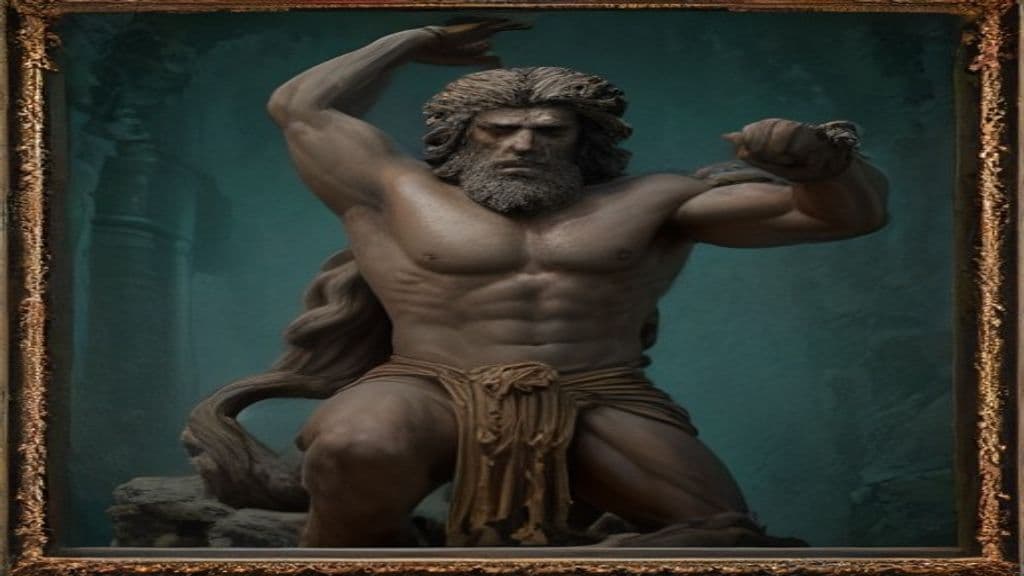
Heracles
Heracles is the greatest hero of Greek myth whose career bridges mortal hero-cult and full divinization. Celebrated for his Twelve Labours, martial prowess, and travels between the mortal world, the underworld, and Olympus, he functioned as a civic patron, ancestor of royal lines (the Heracleidae), and object of cult that treated him both as chthonic hero and as god.
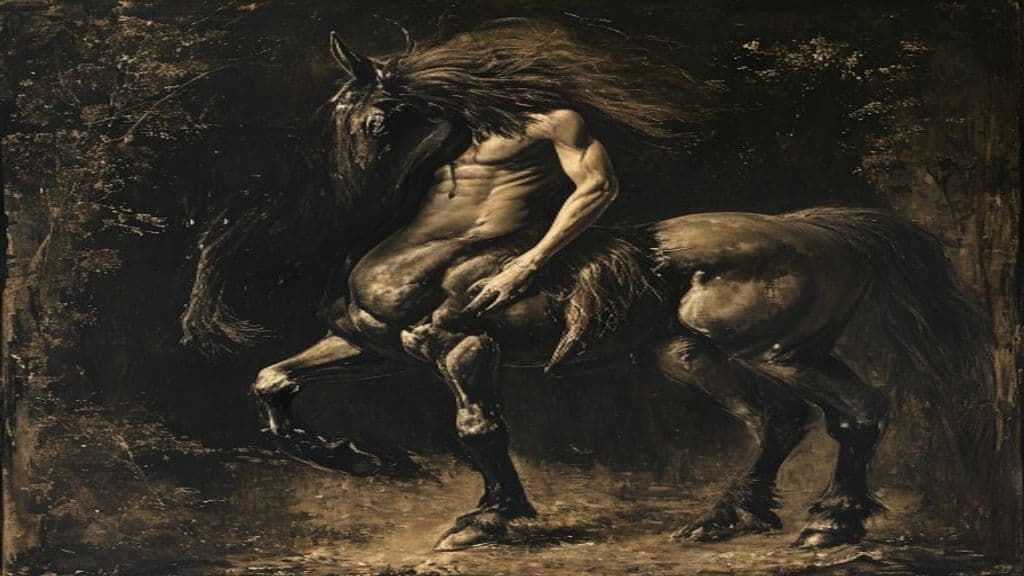
Nessus
Nessus is primarily recorded in the supplied sources as a name from Greek myth — most prominently a centaur identified in modern reference works as the figure who caused the death of Heracles — and as a widely reused name in modern literature, gaming, and technical products. The provided materials constitute a disambiguation-style set rather than a single coherent supernatural tradition.
Abderus
Abderus (Ancient Greek: Ἄβδηρος, romanized Ábdēros) is a mortal heroic figure in Greek myth closely associated with Heracles, remembered as the youth left in charge of the Mares of Diomedes who was killed by them. He functions as an eponymous local/divine-hero ancestor for the city of Abdera and received funerary commemoration and athletic agones at his tomb.
Acamas
Acamas (Ancient Greek: Ἀκάμας) is a personal name recurrent in ancient Greek narrative traditions applied to multiple human characters (warriors, princes, suitors), once to a Cyclops, and once as a hound's name. Rather than a single supernatural entity, bearers of the name appear episodically across the Trojan War, Theseid, and Theban cycles as mortal actors whose deeds intersect with gods and fate.
Acarnan
Acarnan (Ancient Greek: Ἀκαρνάν) is an anthroponym attested in Greek mythic and epic tradition as the name of at least two distinct mortal figures: a son of Alcmaeon and Callirrhoe, and a human suitor of Penelope from Dulichium. The lexical form also appears adjectivally/ethnically (Acarnanian), linking the word to the region Acarnania; etymologically the name is reported as derived from a Greek fish-name (akarnan).
Acastus
Acastus is a mortal heroic figure of ancient Greek tradition: son of Pelias who became king of Iolcus, an Argonaut who sailed with Jason, and an actor in the post-Argonautic cycle involving Medea, Peleus, and the aftermath of Pelias’s death. He is attested as performing civic and ritual actions (burying Pelias, instituting funeral games, purifying Peleus) and as a participant in vendetta episodes that end in violent reprisals.
Acmon
Acmon (Ancient Greek: Ἄκμων, 'anvil') is a polyvalent personal name in Greek myth borne by several distinct minor figures — a Dactyl (artisan), a Phrygian eponymous king, a mischievous woodland creature, companions in epic cycles (one companion of Diomedes transformed into a bird; an Aenead), and in some brief traditions an alleged father of Uranus. The name therefore functions across artisanal, topographical, trickster, and metamorphosis motifs rather than denoting a single unified supernatural species.
Acrisius
Acrisius (Ancient Greek: Ἀκρίσιος, Akrisios) is a mythic-historical king of Argos in Greek tradition whose narrative is defined by an oracular prophecy foretelling his death by his daughter's son. He is portrayed as a mortal ruler entangled with dynastic rivalry, oracular authority, and the eventual accidental fulfillment of fate.
Aeacidae
The Aeacidae are a dynastic lineage in Greek myth and historiography descended from the hero Aeacus, son of Zeus and the nymph Aegina. The name functions as a patronymic designation for those 'of Aeacus' and is used to claim genealogical legitimacy and political prestige in regions such as Aegina and Molossian Epirus.
Aegipan
Aegipan (Αἰγίπαν / Αἰγίπανος) is an ancient Greek mythological figure associated with goat attributes and with the sea‑goat imagery of the constellation Capricornus. He appears in classical myth as a semi‑divine helper (notably in the Typhon episode) and, in later natural‑history and medieval bestiary reception, the name is applied to satyr‑like or ape‑like wild men in distant lands.
Aegisthus
Aegisthus (Greek Αἴγισθος, Aigisthos) is a mortal member of the House of Atreus in Greek myth who, born of incestuous circumstances and raised by shepherds and a goat, participates in dynastic murder and usurpation — notably the slaying of Atreus in some accounts and the conspiracy (with Clytemnestra) that results in Agamemnon's death — and is later killed by Orestes, an episode that figures in narratives about inherited guilt, vengeance, and the transition from private retribution to public justice.
Aepytus
Aepytus (Ancient Greek: Αἴπυτος, Aíputos/Aípytos, lit. 'steep, high, lofty') is a personal name in Greek myth borne by several legendary kings tied to Arcadian and Heraclid genealogies. The figures named Aepytus function as ancestral/dynastic nodes in literary genealogies and later literary receptions rather than as supernatural beings.
Aeson
Aeson (Ancient Greek: Αἴσων) is a legendary mortal king of Iolcus in Thessaly in Greek myth, best known as the father of the hero Jason. His fate—imprisonment by his half-brother Pelias and either suicide or a miraculous restoration performed by Medea—provides the dynastic and moral background for the Argonautic cycle.
Aethalides
Aethalides is a personal name borne by two distinct figures in ancient Greek myth: one listed among the Argonauts as a son of Hermes and Eupolemeia, and another named among the Tyrrhenian sailors who attempted to deceive Dionysus and was transformed into a dolphin. The sources treat Aethalides as named human mythic personages appearing in separate narrative contexts rather than as a class of supernatural being.
Community Record
- [1]Deianira — Wikipedia. Wikipedia entry 'Deianira', summary of mythic narrative and receptionwiki
- [2]Wikidata: Deianira. Wikidata entry for Deianirawiki
- [3]Hyginus — Fabulae: DEIANIRA (Latin). Hyginus, Fabulae entry 'Deianira' (Latin mythographic compilation)literary
- [4]Cavalli: Ercole amante (archive recording, casting list). Archive entry for Cavalli's Ercole amante (example of dramatic/operatic reception listing Deianira as wife of Heracles)other
- [5]Deianira, Autumn (archive). Archive item referencing Deianira in modern reception/performance contextsother
- [6]Greek Legends and Myths — Deianira. Retelling and summary of Deianira's mythic narrativefolk