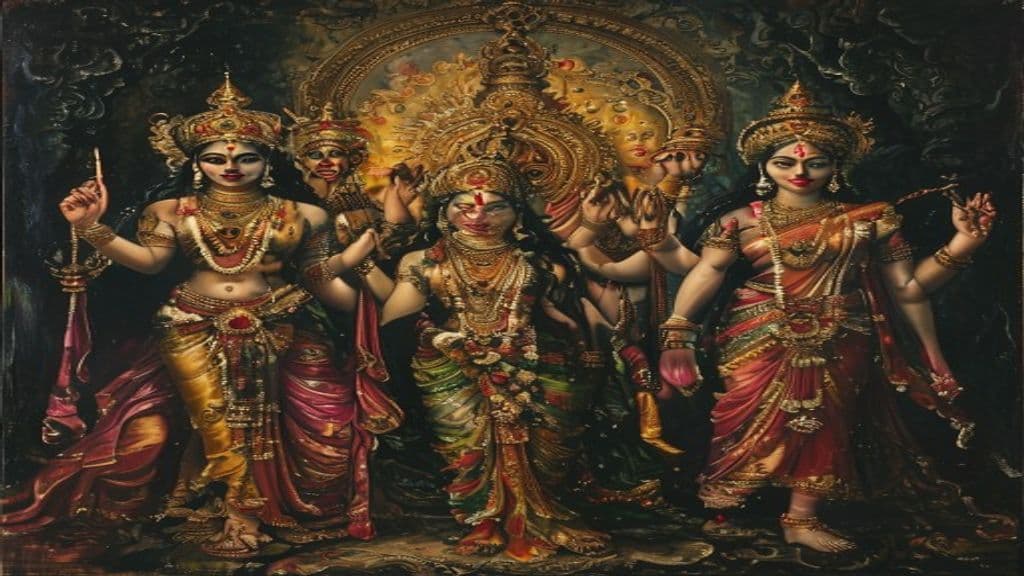
Devi does not have a single unitary birth narrative in the provided sources; rather, the concept develops across Vedic, Upanishadic, tantric and Puranic literature. Vedic hymns (for example the Devīsūkta of the Rigveda) present early formulations of the divine feminine and are among the oldest textual attestations; later Upanishads (e.g., the Devi Upanishad summaries cited) and medieval texts such as the Devi Mahatmya expand and sometimes elevate the goddess to the status of ultimate reality, identifying her with Shakti and Brahman. Thus the 'origin' of Devi in the textual record is plural and historical: a continuity from Vedic goddess hymns through philosophical Upanishadic identifications to medieval Shakta devotional literature, rather than a single cosmogonic birth tale (sources: Wikipedia: Devi; Wikidata: Devi; Wikipedia: Devi Mahatmya; Wikipedia: Devi Upanishad; Devīsūkta reference).
The supplied sources do not provide a single, standardized physical description for Devi as a class. Instead they name numerous individual goddesses—Parvati, Lakshmi, Saraswati, Durga, Kali, Radha, Sita, Rukmini, Gauri, Kumari and Vedic goddesses such as Prithvi, Aditi, Vāc, Nirṛti, Ratri and Aranyani—each of which carries its own iconographic and symbolic associations in broader literature. The available excerpts emphasize role, domain and metaphysical status (for example Parvati as goddess of love and devotion; Lakshmi of wealth; Saraswati of knowledge) rather than a unified corporeal form for 'Devi' as a category (sources: Wikipedia: Devi; Wikidata: Devi).
Across the cited texts Devi functions on multiple levels: as a named, localized goddess who grants blessings within specific domains (e.g., Lakshmi granting prosperity; Saraswati granting learning), as Shakti—the active, creative energy that gives rise to prakṛti (matter) and purusha (consciousness)—and in some traditions (notably Shaktism and in passages of the Devi Upanishad as summarized) as the supreme metaphysical reality identified with Brahman. She is thus attributed creative, sustaining and bestowing powers and is the object of devotional worship; these roles vary by sectarian context and scripture (sources: Wikipedia: Devi; Wikipedia: Devi Upanishad; Wikipedia: Devi Mahatmya; Wikidata: Devi; Devīsūkta reference).
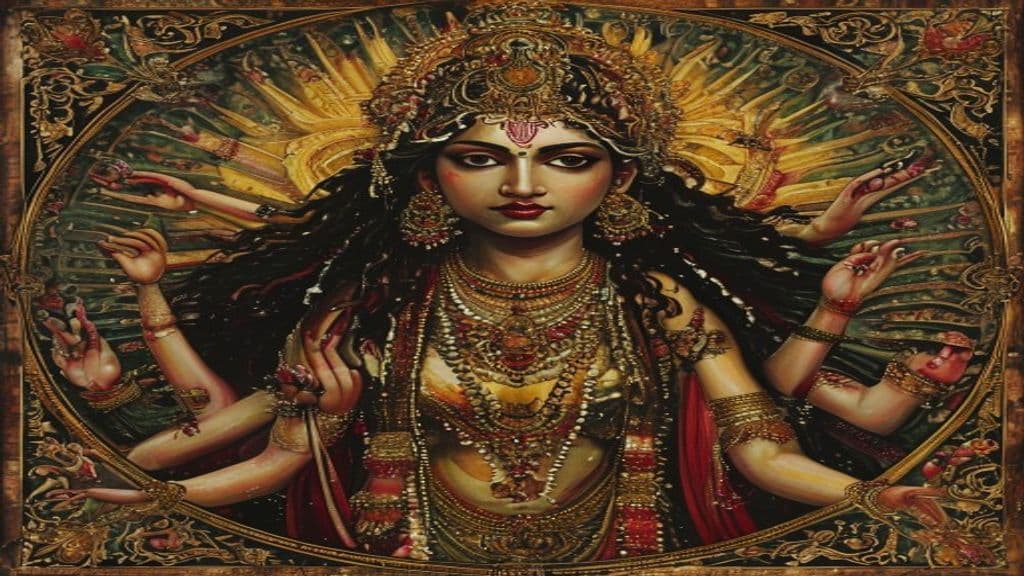
Parvati
Parvati is a principal goddess in Hindu tradition, worshipped as the consort of Shiva and as his shakti (divine power). She embodies a range of roles — devoted wife and mother, fertility and nourishment-giver, and in other manifestations a ferocious protector who destroys evil.
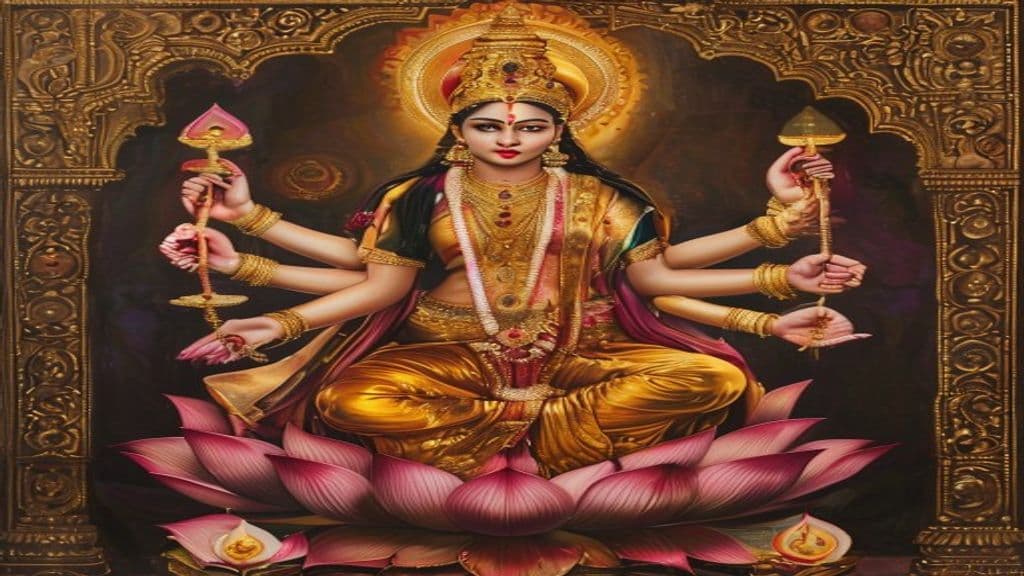
Lakshmi
Lakshmi is a principal Hindu goddess who personifies śrī (auspiciousness) and is revered as the giver of fortune, wealth, prosperity, beauty, fertility, sovereignty, and abundance. She is the consort and shakti of Vishnu in Vaishnavism, part of the Tridevi with Parvati and Sarasvati, and is the focus of popular devotional and festival practices such as Lakshmi Puja during Deepavali and Navaratri.

Saraswati
Saraswati is a principal Hindu goddess (Devi) whose portfolio encompasses knowledge, learning, speech (vac), the arts (poetry, music), language and purification. Originating in Vedic literature as a river goddess, later texts reframe her primarily as the divine personification and patron of speech, learning and creative/intellectual order; she is venerated across Hindu, Buddhist and Jain contexts.
Achyuta
Achyuta (Sanskrit: अच्युत, acyuta) is primarily an epithet/theonym in Vaishnava Hindu tradition applied to Vishnu and Krishna, signifying the divine quality of being 'not fallen' — immutable, infallible, and imperishable. It functions as a devotional name in scripture, liturgy, and Pancharatra lists of divine emanations rather than as an autonomous folkloric spirit.
Adi (asura)
Adi is attested in modern reference works as the name of an Asura who 'appears in the Matsya Purāṇa.' Beyond this single-line citation in secondary sources, no descriptive material about the figure is provided in the supplied research notes.
Adi Shakti
Adi Shakti (also Adi Parashakti, Mahadevi, Adya Shakti) is the primordial feminine power in Hindu/Shakta theology, regarded as the ultimate reality (Para Brahman) and the source from which all goddesses and gods manifest. She is both an impersonal cosmic principle (Mulaprakriti) and a focus of devotional invocation in temples, mantras, and pilgrimage sites such as Shakti Peethas.
Adi Vinayaka
Adi Vinayaka (Ādi Vināyaka; also called Nara Mukha Vinayaka) is a named iconographic and devotional form of the Hindu god Ganesha portraying the deity with a human head, described in sources as the form before the episode of decapitation by Shiva. It is rarely worshipped and appears in a small number of South Indian shrines and in devotional/musical repertoires.
Aditi
Aditi is a major Vedic goddess in Hindu tradition who personifies the boundless, infinite cosmic principle and functions as the maternal matrix from which many celestial deities (the Ādityas and other groups) are born. In the Vedic hymns she is invoked as a protective liberator who guards petitioners, provides wealth and safety, and frees devotees from hindrances such as sin and sickness.
Agni
Agni is the Vedic personification of fire in Hindu tradition: a sacred, mediating principle that manifests as terrestrial fire, atmospheric lightning, and celestial sun, and that receives and conveys sacrificial offerings. Prominent in the Rigvedic corpus, Agni functions as sanctifier, witness of rites of passage, and a transformational inner principle in later Upanishadic literature.
Ahalya
Ahalya is a mytho-legendary woman of South Asian (primarily Hindu) narrative tradition, described as created by the god Brahma, married to the sage Gautama, seduced (or tricked) by Indra, cursed by her husband, and ultimately redeemed by Rama. Her tale is a locus for themes of creation, desire, curse/penance, and redemption and she is counted among the ritual-mnemonic panchakanya.
Aindri (Indrani / Shachi / Paulomi)
Aindri (commonly rendered in sources as Indrani, also called Shachi or Paulomi) is a Hindu goddess presented as the queen-consort of Indra. She is depicted in the available material as a courtly queen associated with beauty, pride and kindness who also appears in at least one account as an active martial participant in the devas' battles with asuras.
Akhilandeswari
Akhilandeswari (Akhilandeshwari) is a major South Indian manifestation of the Hindu Goddess Adi Parashakti/Parvati, venerated as the presiding goddess of the Jambukeswarar Temple in Thiruvanaikaval. In temple tradition she is portrayed as a penitent/student of Shiva and figures in local legends, ritual schedules, and festivals that emphasize both maternal and fierce aspects.
Akshayavata
In Hindu mythology, Akshayavata is a sacred banyan tree and/or lake that symbolizes eternal life. It is mentioned in both Hindu and Jain traditions and associated with the Puranas. (Note: - The power tier should be "Greater" or at least "Ancient", as it is associated with the Puranas, which are considered ancient texts. - No specific physical description is provided, but that doesn't m)
Alakh Niranjan
A doctrinal and devotional formula in the Nath-yogi tradition denoting the unseen, unblemished ultimate reality (Nirguna Brahman/Atman). Used as a salutational invocation, theological name, and signifier of realised Self rather than a personified supernatural being.
Alakshmi
Alakshmi is an inauspicious female supernatural figure in Hindu tradition, presented as the negation or shadow-counterpart of the prosperity-goddess Lakshmi. She personifies poverty, grief, jealousy and social discord and is managed in domestic ritual and festival practice.
Community Record
- [1]Devi — Wikipedia. Wikipedia, 'Devi' article (accessed via provided research notes).wiki
- [2]Devi — Wikidata. Wikidata entry for 'Devi' (label and summary: 'goddess in Hinduism, supreme feminine principle').other
- [3]Devi Upanishad (summary references). Summaries in the 'Devi' Wikipedia article referencing the Devi Upanishad and its tantric vocabulary (yantra, bindu, bija, mantra, shakti, chakra).wiki
- [4]Devi Mahatmya (reference in Wikipedia). Reference to the Devi Mahatmya as medieval Purana-era text elevating the goddess (as cited in the Wikipedia summary).wiki
- [5]Devīsūkta of the Rigveda (reference in Wikipedia). Reference in the Wikipedia article to the Devīsūkta of the Rigveda as an important early hymn declaring the ultimate reality in feminine terms.wiki
- [6]Archival items mentioning 'Devi' as personal name (illustrative modern usage). Example of the term 'Devi' occurring in modern legal/personal-name contexts (Rajasthan High Court document cited in research notes).other