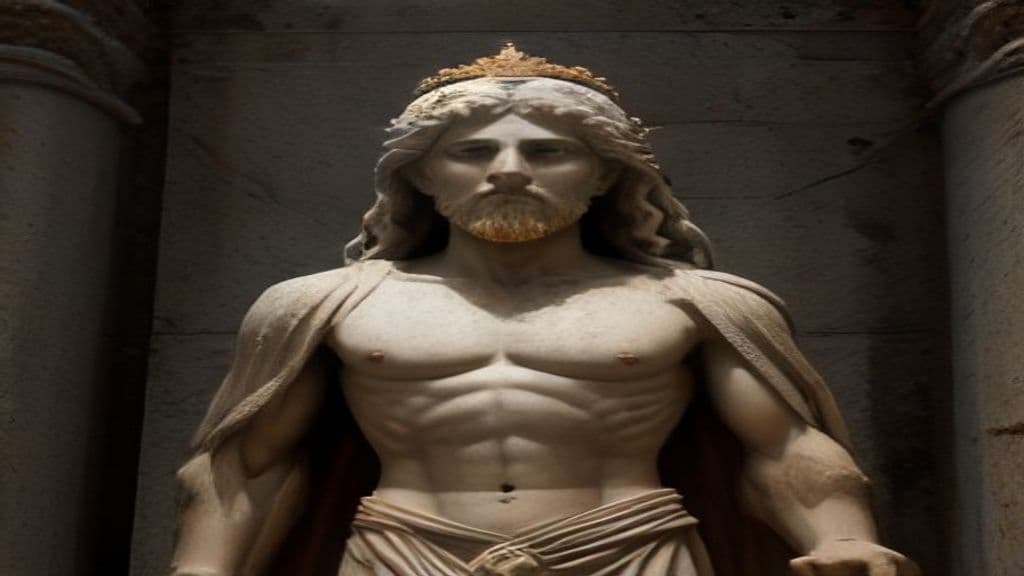
The literary and local-traditional record provides multiple distinct figures named Dexamenus rather than a single unified origin. One tradition presents Dexamenus as king of Olenus (son of Oeceus in some accounts), whose daughter (called Mnesimache, Deianira, or Hippolyte in variant tellings) was threatened by the centaur Eurytion and later rescued by Heracles. A second attestation names a Dexamenus as a son of Heracles and father of Ambrax, king of Ambracia. A third tradition makes Dexamenus the son of Mesolus and Ambracia (daughter of Phorbas), after whom a district of Ambracia was allegedly called Dexamenae. These distinct genealogical placements show the name operating as both a personal king-figure and an eponym used to explain local place-names and dynastic claims.
Classical summaries give no standardized physical description of Dexamenus as an individual; he appears in the sources as a king or paterfamilias rather than as a described visual type. Iconographic traces exist: vase-paintings (noted in classical-image collections) depict scenes with Mnesimache (or the daughter-figure), Heracles, the centaur Eurytion, and a man identified as Dexamenus (for example, cited amphora imagery in museum catalogues), but literary sources do not record distinctive supernatural attributes or a fixed visual formula. Overall the evidence treats him as an ordinary mortal leader in narrative scenes rather than a supernatural figure with consistent iconography.
Dexamenus possesses no supernatural powers in the attested sources; his capacities are those of a mortal king and head of household. Narratively he functions as host (reflecting the name's literal meaning 'hospitable' or 'receiver'), father, and local eponym. In mythic episodes he is vulnerable to coercion—most notably giving in, from fear, to the demand of the centaur Eurytion to claim his daughter—until the hero Heracles intervenes and kills the aggressor. Classical compilers (summaries of Apollodorus, Hyginus, and other mythographers) present him as an embedded human actor in Heracles' cycle rather than a supernatural agent.
Weaknesses
- conditionmortal vulnerability and susceptibility to coercion
Wards
None recorded.
Heracles
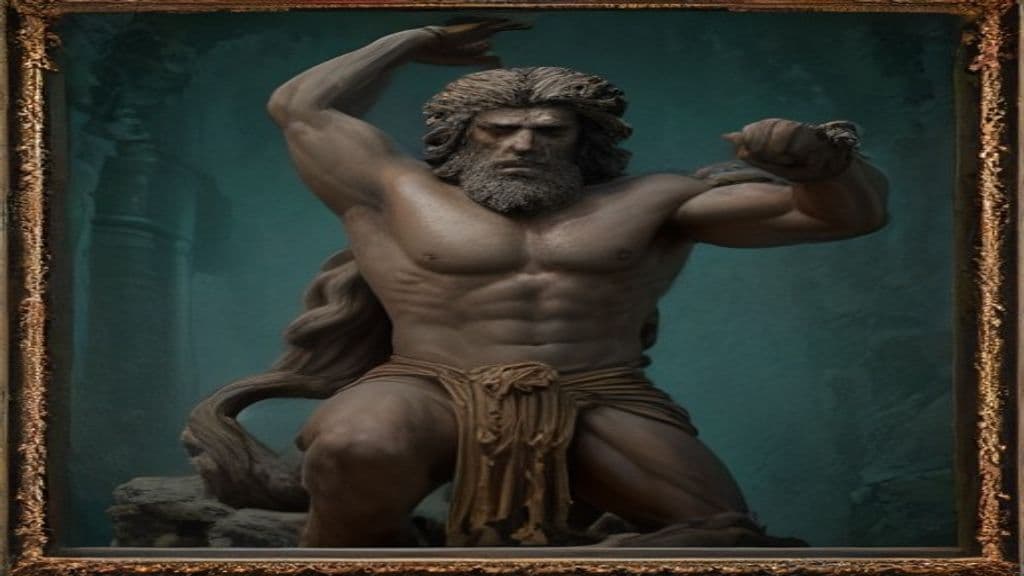
Heracles is the greatest hero of Greek myth whose career bridges mortal hero-cult and full divinization. Celebrated for his Twelve Labours, martial prowess, and travels between the mortal world, the underworld, and Olympus, he functioned as a civic patron, ancestor of royal lines (the Heracleidae), and object of cult that treated him both as chthonic hero and as god.
Eurytion
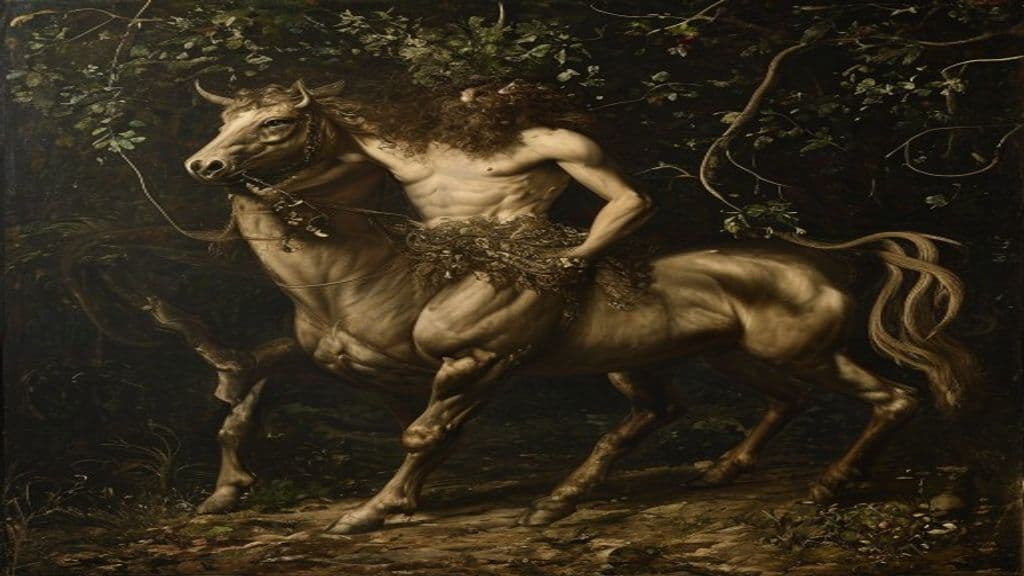
Eurytion is an ancient Greek personal name borne by several distinct mythic figures—centaurs, a herdsman guarding Geryon's cattle, a Trojan archer, a defender of Thebes, and in some accounts a Gigas. The name recurs across mythic cycles rather than denoting a single uniform being.
Abderus
Abderus (Ancient Greek: Ἄβδηρος, romanized Ábdēros) is a mortal heroic figure in Greek myth closely associated with Heracles, remembered as the youth left in charge of the Mares of Diomedes who was killed by them. He functions as an eponymous local/divine-hero ancestor for the city of Abdera and received funerary commemoration and athletic agones at his tomb.
Acamas
Acamas (Ancient Greek: Ἀκάμας) is a personal name recurrent in ancient Greek narrative traditions applied to multiple human characters (warriors, princes, suitors), once to a Cyclops, and once as a hound's name. Rather than a single supernatural entity, bearers of the name appear episodically across the Trojan War, Theseid, and Theban cycles as mortal actors whose deeds intersect with gods and fate.
Acarnan
Acarnan (Ancient Greek: Ἀκαρνάν) is an anthroponym attested in Greek mythic and epic tradition as the name of at least two distinct mortal figures: a son of Alcmaeon and Callirrhoe, and a human suitor of Penelope from Dulichium. The lexical form also appears adjectivally/ethnically (Acarnanian), linking the word to the region Acarnania; etymologically the name is reported as derived from a Greek fish-name (akarnan).
Acastus
Acastus is a mortal heroic figure of ancient Greek tradition: son of Pelias who became king of Iolcus, an Argonaut who sailed with Jason, and an actor in the post-Argonautic cycle involving Medea, Peleus, and the aftermath of Pelias’s death. He is attested as performing civic and ritual actions (burying Pelias, instituting funeral games, purifying Peleus) and as a participant in vendetta episodes that end in violent reprisals.
Acmon
Acmon (Ancient Greek: Ἄκμων, 'anvil') is a polyvalent personal name in Greek myth borne by several distinct minor figures — a Dactyl (artisan), a Phrygian eponymous king, a mischievous woodland creature, companions in epic cycles (one companion of Diomedes transformed into a bird; an Aenead), and in some brief traditions an alleged father of Uranus. The name therefore functions across artisanal, topographical, trickster, and metamorphosis motifs rather than denoting a single unified supernatural species.
Acrisius
Acrisius (Ancient Greek: Ἀκρίσιος, Akrisios) is a mythic-historical king of Argos in Greek tradition whose narrative is defined by an oracular prophecy foretelling his death by his daughter's son. He is portrayed as a mortal ruler entangled with dynastic rivalry, oracular authority, and the eventual accidental fulfillment of fate.
Aeacidae
The Aeacidae are a dynastic lineage in Greek myth and historiography descended from the hero Aeacus, son of Zeus and the nymph Aegina. The name functions as a patronymic designation for those 'of Aeacus' and is used to claim genealogical legitimacy and political prestige in regions such as Aegina and Molossian Epirus.
Aegipan
Aegipan (Αἰγίπαν / Αἰγίπανος) is an ancient Greek mythological figure associated with goat attributes and with the sea‑goat imagery of the constellation Capricornus. He appears in classical myth as a semi‑divine helper (notably in the Typhon episode) and, in later natural‑history and medieval bestiary reception, the name is applied to satyr‑like or ape‑like wild men in distant lands.
Aegisthus
Aegisthus (Greek Αἴγισθος, Aigisthos) is a mortal member of the House of Atreus in Greek myth who, born of incestuous circumstances and raised by shepherds and a goat, participates in dynastic murder and usurpation — notably the slaying of Atreus in some accounts and the conspiracy (with Clytemnestra) that results in Agamemnon's death — and is later killed by Orestes, an episode that figures in narratives about inherited guilt, vengeance, and the transition from private retribution to public justice.
Aepytus
Aepytus (Ancient Greek: Αἴπυτος, Aíputos/Aípytos, lit. 'steep, high, lofty') is a personal name in Greek myth borne by several legendary kings tied to Arcadian and Heraclid genealogies. The figures named Aepytus function as ancestral/dynastic nodes in literary genealogies and later literary receptions rather than as supernatural beings.
Aeson
Aeson (Ancient Greek: Αἴσων) is a legendary mortal king of Iolcus in Thessaly in Greek myth, best known as the father of the hero Jason. His fate—imprisonment by his half-brother Pelias and either suicide or a miraculous restoration performed by Medea—provides the dynastic and moral background for the Argonautic cycle.
Aethalides
Aethalides is a personal name borne by two distinct figures in ancient Greek myth: one listed among the Argonauts as a son of Hermes and Eupolemeia, and another named among the Tyrrhenian sailors who attempted to deceive Dionysus and was transformed into a dolphin. The sources treat Aethalides as named human mythic personages appearing in separate narrative contexts rather than as a class of supernatural being.
Community Record
- [1]Dexamenus - Wikipedia. Wikipedia, 'Dexamenus' (entry summarizing classical attestations and meanings)wiki
- [2]Dexamenos - Theoi Greek Mythology. Theoi Project entry on Dexamenos (summarizing classical references and mythic episodes)other
- [3]LP0055 The Fables of Hercules (archive summary of Hyginus episodes). Archive LP0055 (summary of Hyginus' account of Heracles, Deianira/Dejanira/Deianira-Dexamenus episode)literary
- [4]LP0052 The Kingdom of Elis (archive context collections). Archive LP0052 (contextual material situating regional king-lists and local traditions)other
- [5]LP0005 The Labors of Hercules (archive). Archive LP0005 (collection contextualizing Heracles' wanderings and associated local kings)other
- [6]Dexamenus in Greek Mythology - Greek Legends and Myths. Compilatory retelling summarizing variant names of Dexamenus' daughter and the Olenus episodefolk
- [7]Eurytion (Arcadian centaur) - Greek Legends and Myths. Related entry on Eurytion describing his desire for Dexamenus' daughter and death by Heraclesfolk