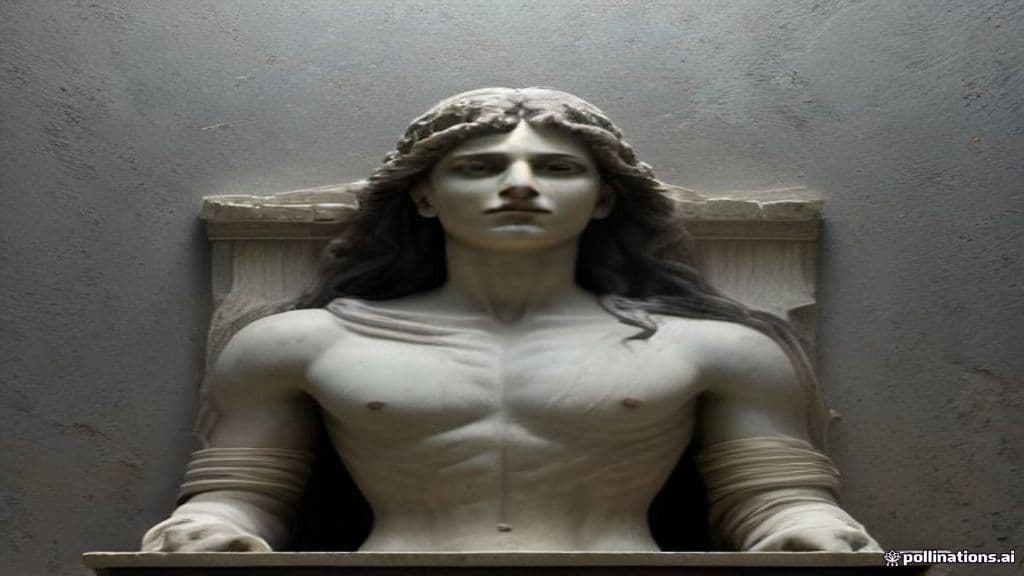
In the Roman literary-religious framework reflected in the supplied sources, Dies is presented as the personification of the daytime period and is explicitly equated with the Greek Hemera. Reference material names Dies as the Roman counterpart of Hemera and places her within genealogical schemes that relate elemental temporal forces: the short encyclopedic summary identifies Nox (Night) and Erebus (Darkness) as her parents, situating Dies in a family of personified cosmic forces rather than as an anonymous physical process.
The supplied sources do not provide any specific iconography or physical description of Dies. The attestations in the consulted material are lexical and genealogical (naming and family relations) rather than visual; no detailed artistic or sculptural descriptions are reported in the provided sources.
The sources treat Dies as the personified concept of Day: by definition she represents daylight/the daytime portion of the natural cycle. The supplied material does not record mythic narratives of actions, powers, or interventions performed by Dies; assertions about active deeds beyond her conceptual role are interpretive and not attested in the provided excerpts.
Community Record
- [1]Dies (deity) — Wikipedia. Wikipedia, 'Dies (deity)': 'Dies (deity), the Roman counterpart of the Greek goddess Hemera, the personification of day, daughter of Nox (Night) and Erebus (Darkness).' wiki
- [2]Dies natalis — Wikipedia. Wikipedia, 'Dies natalis': entry describing the Latin phrase dies natalis ('birthday, anniversary') and its use in Roman calendrical and commemorative contexts (e.g., the birthday of Sol Invictus and anniversaries of Christian martyrs).wiki