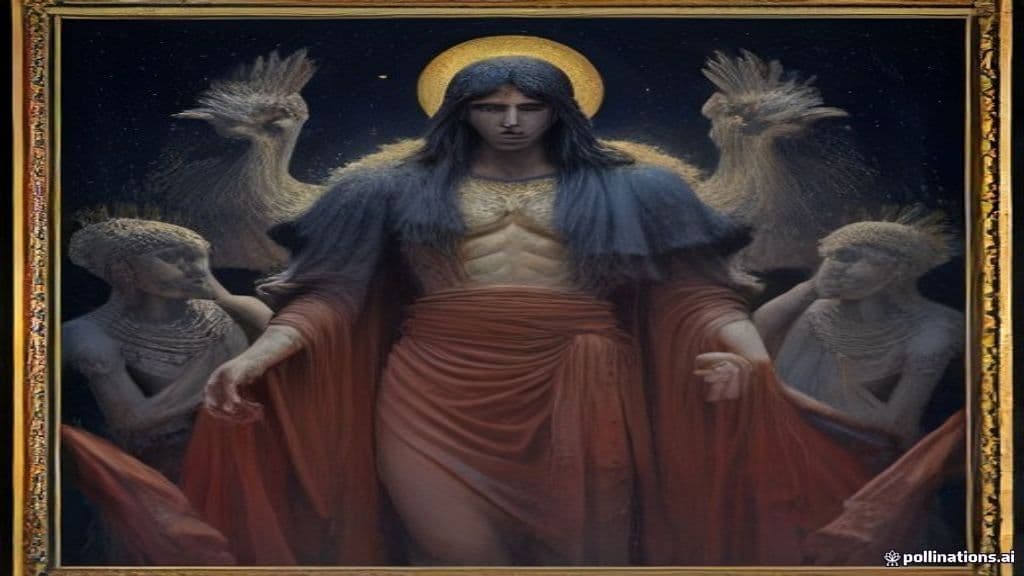
In the Parthenius account (attributed to Phylarchus), Dimoetes is placed within the Pelopid/Trojan-age genealogical world: he is the brother of Troezen and takes Troezen's daughter Evopis as his wife. Evopis secretly conducts an affair with her brother; when Dimoetes discovers the liaison he reports it to Troezen. Ashamed and disgraced, Evopis hangs herself after cursing Dimoetes as responsible for her misery. Some time after this, Dimoetes finds an exceptionally beautiful dead woman washed ashore. Overcome with passion for the corpse, he keeps it and repeatedly has intercourse with it for a period. When the body decays, he erects a magnificent tomb and buries her, and subsequently kills himself at her tomb. The account is presented as a singular tragic episode within Hellenistic collections of sensational love stories.
Extant summaries of the account provide no physical description of Dimoetes himself; the narrative emphasis is on his familial relations, emotional states, and actions rather than on corporeal appearance. What is described in visual terms is the 'outstandingly beautiful' dead woman washed ashore, but Dimoetes' own looks, age, stature, or attire are not recorded in the surviving summary.
No supernatural powers or magical abilities are attributed to Dimoetes in the sources. His significance in the narrative derives from human behaviors and psychological states: marital and familial relations, rage at discovering an illicit affair, reporting that affair, obsessive sexual desire directed at a corpse (necrophilia), provision of a tomb and burial, and eventual suicide. These are presented as human actions within a tragic literary episode rather than manifestations of uncanny power.
Community Record
- [1]Dimoetes. Wikipedia contributors, 'Dimoetes,' Wikipedia, The Free Encyclopedia.wiki
- [2]Wikidata entry for Dimoetes (Q3707741). Wikidata: Q3707741other