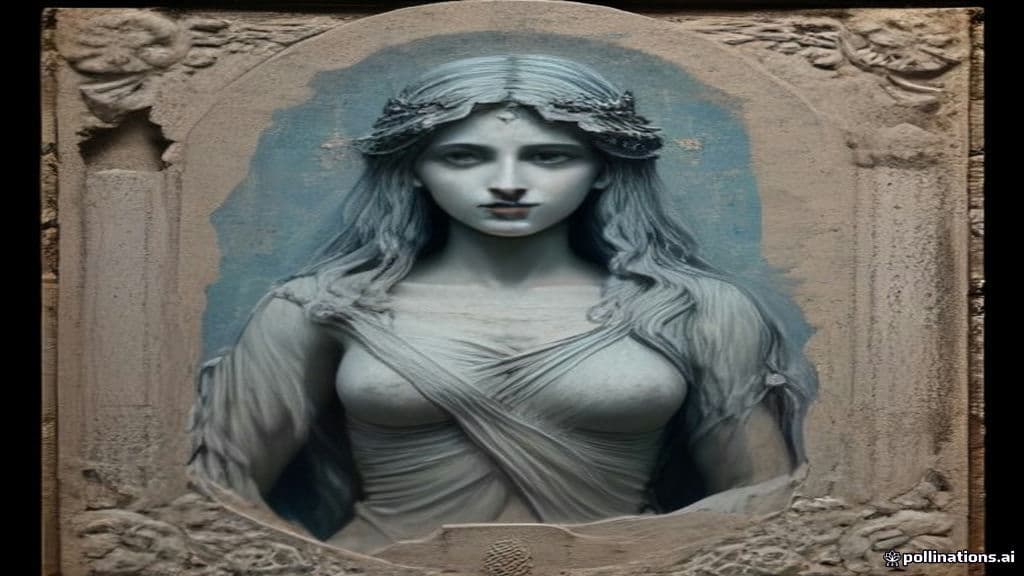
In the surviving classical record Dotia functions as an eponymous ancestress: sources record her as the person after whom the Dotian plain and city Dotion (Dotium) in Thessaly were named. Genealogically she is placed within wider mythic kinship networks — some summaries record her as a daughter of King Elatus of the Lapiths and, by Ares, the mother of Phlegyas (described as infamous in later summaries). Ancient lexical and geographic compendia (principally the material preserved in Stephanus of Byzantium and later reference works summarized in modern encyclopedias and prosopographies such as Pauly‑Wissowa) register Dotia among alternative eponymous explanations for the same locality; other traditions name Dotius (son of Asterius and Amphictyone) or Dotus (son of Pelasgus or of Neonus, son of Hellen) as competing eponyms for the Dotian plain.
There are no surviving descriptive or iconographic accounts of Dotia in the cited sources. She is attested only in lexica, geographical entries, and genealogical lists as a name-source; no physical appearance, attributes, or representations are recorded in the provided material.
No supernatural powers, cultic functions, habitual behaviors, or episodic actions are attributed to Dotia in the sources consulted. Her role is strictly etiological and genealogical: she appears in mythographic tradition as an ancestor/eponym and, in some reports, as mother to a notable descendant (Phlegyas). There is no evidence in the cited material of independent agency, miracles, or ritual practice associated with her.
Community Record
- [1]Dotia — Wikipedia. Wikipedia, 'Dotia' (entry summarizing ancient sources and prosopographical information)wiki
- [2]Stephanus of Byzantium (entry on Dotion / Dotium) — as summarized in modern references. Stephanus of Byzantium, entry on Dotion/Dotium (summary preserved in later lexica and cited in modern reference works such as Pauly‑Wissowa); cited in the modern summaries referenced by the Wikipedia entryliterary
- [3]Wikidata: Dotia (Pauly‑Wissowa). Wikidata item referencing Pauly‑Wissowa and classical prosopographical sources for Dotiaother