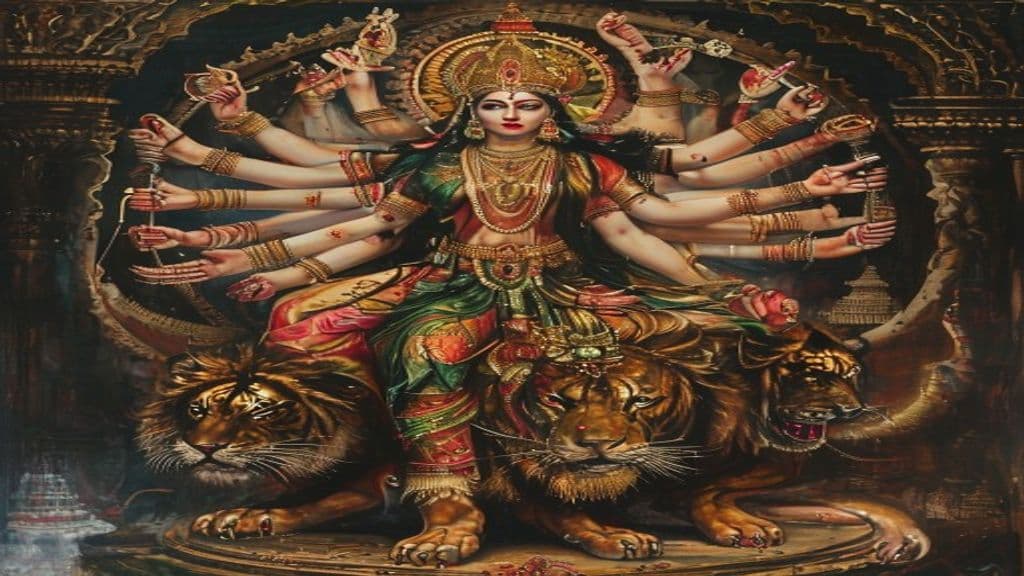
Durga appears in Vedic and post-Vedic strata and is elaborated in later Shakta texts and Puranic layers. In Shakta theology she is identified as the Mahadevi whose shakti (divine energy) unifies powers of the gods; later narrative traditions describe her as formed from the energies of multiple gods in order to fight cosmic threats (one recorded retelling describes energies coalescing into a young woman with attributes drawn from Shiva, Vishnu and Brahma). These composite origin motifs function to synthesize her authority across sectarian traditions.
Durga is typically depicted as a warrior goddess mounted on a lion or tiger and shown with multiple arms, each bearing weapons or attributes lent by the gods; older and secondary summaries commonly describe her with ten arms, though arm-count and iconographic detail vary by text and region. Regional epithets and forms (including the Navadurga) reflect diverse local iconographies rather than a single canonical image.
Theological sources identify Durga with shakti and attribute to her the roles of creation, preservation and destruction in the framework of Mahadevi doctrine; she is chiefly celebrated for martial action—combating and slaying demons (most famously Mahishasura) to restore dharma. Texts and summaries emphasize that she possesses the distinctive attributes or weapons of many gods, can manifest fierce aspects (for example Kali) and is associated with attendant warrior goddesses (the Matrikas).
Weaknesses
None recorded.
Wards
- ritualAshtottarshat Namavali (recitation of 108 names)
- ritualNavaratri / Durga Puja festival observance
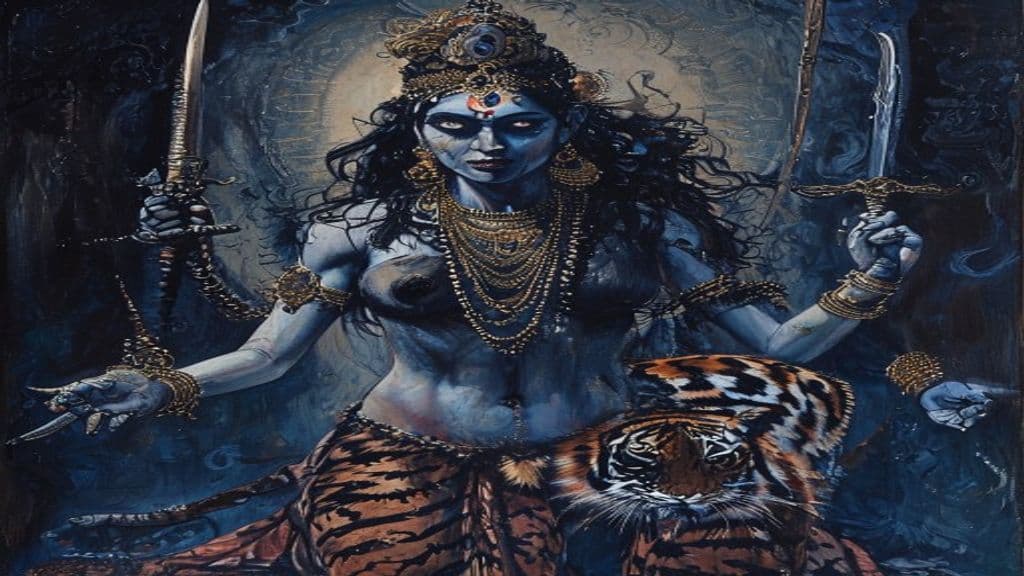
Kali
Kali is a major Hindu goddess associated with time (kāla), death, destruction, and also with liberating knowledge; she appears in Puranic and Tantric texts as a fierce battlefield power and as a protective Divine Mother (Kali Mātā).
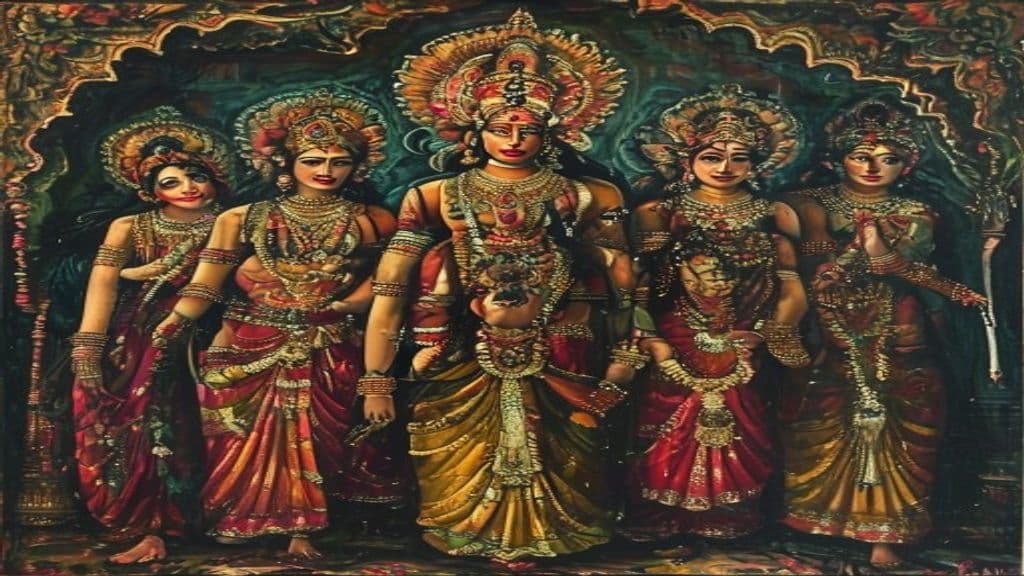
Matrikas
Matrikas (Sanskrit: mātṛkā, 'mothers') are a group of related mother-goddess figures in Hindu tradition, commonly rendered as seven (Saptamatrikas) or eight (Ashtamatrikas). They function ambivalently as protectors and as dangerous female powers tied to fertility, child mortality, disease, and martial activity, and were incorporated into temple and tantric/Shakta practice by the Kushana–Gupta and early medieval periods.

Mahishasura
Mahishasura (Sanskrit: महिषासुर, IAST: Mahiṣāsura) is a bovine asura in Hindu tradition, commonly described as a shape‑shifting buffalo‑demon who wages war against the devas and is ultimately slain by a manifested goddess (Durga/Mahishasuramardini). The episode is narrated in the Devi Mahatmya (part of the Markandeya Purana) and is commemorated in festival cycles such as Navaratri and Durga Puja.
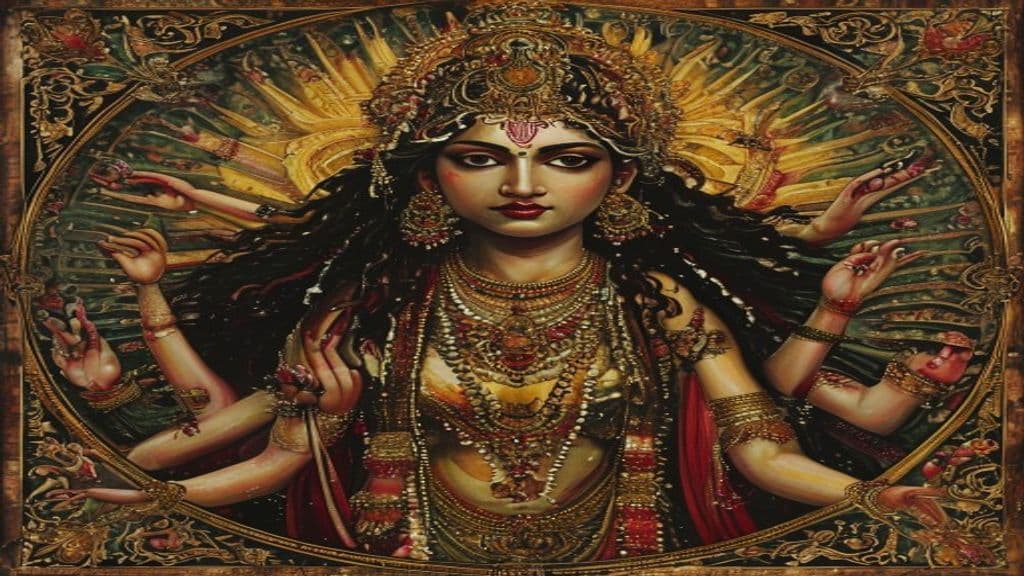
Parvati
Parvati is a principal goddess in Hindu tradition, worshipped as the consort of Shiva and as his shakti (divine power). She embodies a range of roles — devoted wife and mother, fertility and nourishment-giver, and in other manifestations a ferocious protector who destroys evil.
Adi Shakti
Adi Shakti (also Adi Parashakti, Mahadevi, Adya Shakti) is the primordial feminine power in Hindu/Shakta theology, regarded as the ultimate reality (Para Brahman) and the source from which all goddesses and gods manifest. She is both an impersonal cosmic principle (Mulaprakriti) and a focus of devotional invocation in temples, mantras, and pilgrimage sites such as Shakti Peethas.
Akhilandeswari
Akhilandeswari (Akhilandeshwari) is a major South Indian manifestation of the Hindu Goddess Adi Parashakti/Parvati, venerated as the presiding goddess of the Jambukeswarar Temple in Thiruvanaikaval. In temple tradition she is portrayed as a penitent/student of Shiva and figures in local legends, ritual schedules, and festivals that emphasize both maternal and fierce aspects.
Ardhanārīśvara
Ardhanārīśvara is an androgynous iconographic form in Hindu tradition combining Shiva and his consort Pārvatī into a single deity split vertically as male and female, symbolizing the inseparability and synthesis of masculine and feminine cosmic principles.
Avatar (avatāra)
In classical Hindu theology, an avatāra is a divine 'descent' — the event or fact of a superhuman being or deity making a material appearance in the temporal world to accomplish a purpose (commonly to restore dharma). The term (Sanskrit अवतार, avatāra) emphasizes crossing down from the unconditioned into conditioned existence and is central to Vaishnava theology of Vishnu's incarnations while also appearing in other Indian religious contexts.
Bhavānī
Bhavānī (भवानी) is an aspect/epithet of the Hindu Mother Goddess (Devī/Shakti) revered as a giver of life and a warrior who defeats demons; she is both a cultic tutelary deity (notably at Tulja Bhavani, Tuljapur) and a pan-Indian manifestation identified with forms such as Durgā, Katyayani and Mahalakshmi in the cited sources.
Bhuvaneśvarī
Bhuvaneśvarī (also spelled Bhuvaneshvari) is a Hindu goddess identified in Shaktism as the fourth of the ten Mahavidya goddesses and described in sources as an aspect of the supreme feminine principle (Mahadevi/Adi Parashakti). She is theologically regarded as a sovereign cosmic goddess—summarized in linked data as the 'Queen of the Universe'—and is the subject of devotional stotras preserved in modern published collections.
Devi
Devi (Sanskrit: Devī) is the general term for goddess in Indian religious thought, signifying the divine feminine or Shakti; in different texts and traditions she appears as individual goddesses (e.g., Parvati, Lakshmi, Saraswati) or as the supreme reality (notably in Shaktism and certain Upanishads). Sources treat Devi both as a class/category of female divinities and as a philosophical identification with ultimate reality.
Dhūmāvatī
Dhūmāvatī (Dhumavati) is one of the ten Mahavidyas in Tantric Shakta traditions, a fearsome aspect of the Great Goddess associated with widowhood, inauspiciousness, cremation grounds, and desolation. She is represented as an old crone figure and figures in Tantric iconographic and devotional material as the embodiment of loss and marginality.
Hindu deities
Hindu deities (Deva/Devi) are the diverse gods and goddesses recognized across Hindu traditions, ranging from Vedic forces of nature to later personalized major gods and goddesses. They function as patrons of rites, embodiments of moral and cosmic principles, and focal points for temple cults, festivals, and devotional traditions while often also being interpreted as aspects of a single Ultimate Reality (Brahman).
Kali
Kali is a major Hindu goddess associated with time (kāla), death, destruction, and also with liberating knowledge; she appears in Puranic and Tantric texts as a fierce battlefield power and as a protective Divine Mother (Kali Mātā).
Lakshmi
Lakshmi is a principal Hindu goddess who personifies śrī (auspiciousness) and is revered as the giver of fortune, wealth, prosperity, beauty, fertility, sovereignty, and abundance. She is the consort and shakti of Vishnu in Vaishnavism, part of the Tridevi with Parvati and Sarasvati, and is the focus of popular devotional and festival practices such as Lakshmi Puja during Deepavali and Navaratri.
Mahavidya (the Ten Great Wisdoms)
The Mahavidya (Sanskrit: Mahāvidyā, "Great Wisdoms") are a canonical group of ten distinct goddesses or facets of the Divine Mother in post‑Puranic Shakta/Tantric traditions. They function as salvific, often paradoxical modes of Adi Parashakti (variously Mahākālī or Tripura Sundarī) and are central to Tantric sādhanā, yogini worship, and cross‑currents with Shaiva, Vaiṣṇava and Vajrayāna Buddhist practices.
Community Record
- [1]Durga — Wikipedia. Wikipedia article 'Durga' (summarizes Durga's identity, epithets, iconography, festivals and theological role in Shaktism, Shaivism and Vaishnava contexts).wiki
- [2]Durga — Biblical Cyclopedia (entry). Biblical Cyclopedia entry noting Durga's iconography and power (e.g., representation with ten arms and attributes of the gods).other
- [3]Durga Pujah — Biblical Cyclopedia (entry). Biblical Cyclopedia entry describing Durga Puja as an annual festival in eastern India lasting fifteen days with preparations and worship of images.other
- [4]Durga formation passage (archive/secondary source). Secondary retelling referencing a mythic account in which energies of multiple gods coalesce to form Durga (noted in the supplied research as 'At a single point, the energy of all the fires coalesced...' )other