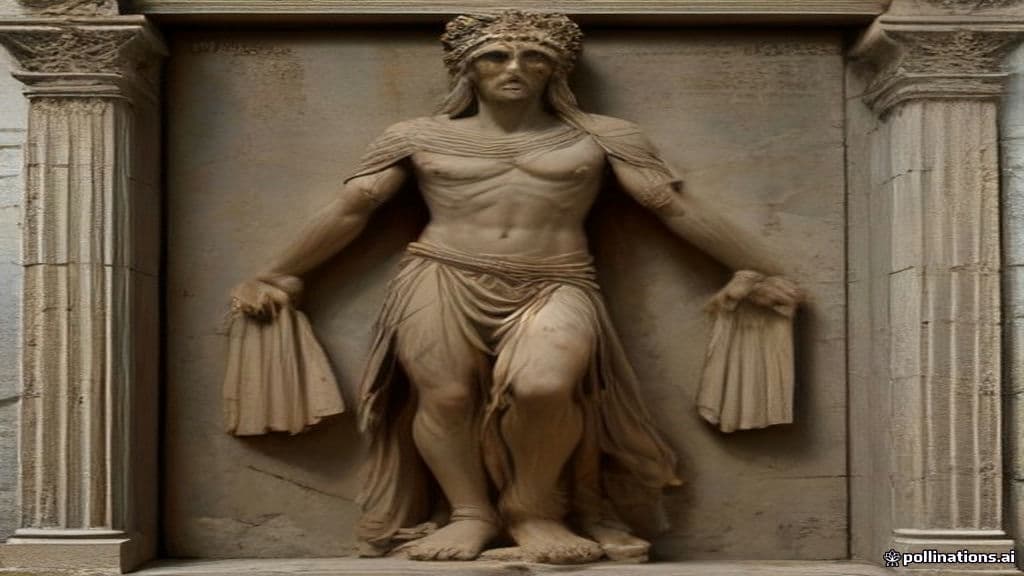
Echemus is presented in Tegean and pan-Hellenic accounts as a king of Tegea placed in the Heroic Age and the generation associated with the Heracleidae and the alleged Dorian arrival. Genealogical traditions recorded in the sources present him as son of Aeropus (son of Cepheus); Pausanias also preserves an alternative claim linking Echemus as descended from Ares. He is husband of Timandra and father of Ladocus in the genealogies cited in local tradition. His defining narrative act is offering himself as champion of the Arcadian defenders and killing Hyllus (leader/son of the Heracleidae) in single combat, an episode used by Tegeans to assert their precedence and to explain local historical-political outcomes.
Literary sources provide no detailed physical description of Echemus as a living man beyond his status as king and champion. Iconographic and monumental evidence cited by Pausanias includes a tomb at Tegea and a relief depicting his victory over Hyllus; a late Classical relief inscribed 'Echemus' is conserved in the Archaeological Museum of Tegea, attesting to visual representations of the hero without preserving a fixed, textual portrait.
Echemus's notable capacities are his martial and athletic excellence as reported in the tradition: he defeated Hyllus in single combat, forcing the Heracleidae to withdraw in the Tegean account, and he is recorded as victor in wrestling at the first Olympic games said to have been established by Heracles. Rather than supernatural powers, these attributes function to mark him as an exemplar of civic martial virtue and to underpin Tegean claims about lineage and territorial precedence.
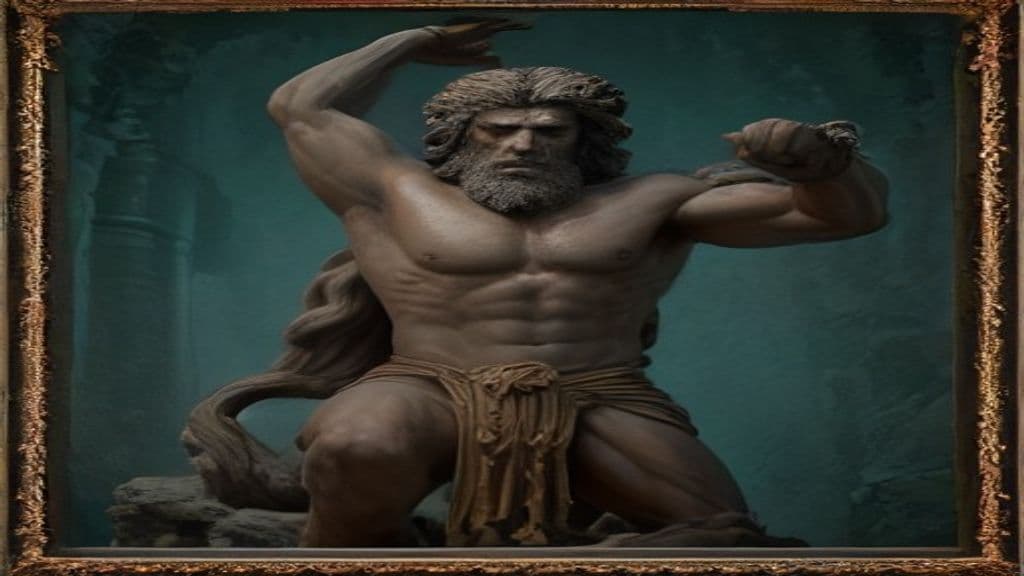
Heracles
Heracles is the greatest hero of Greek myth whose career bridges mortal hero-cult and full divinization. Celebrated for his Twelve Labours, martial prowess, and travels between the mortal world, the underworld, and Olympus, he functioned as a civic patron, ancestor of royal lines (the Heracleidae), and object of cult that treated him both as chthonic hero and as god.
Community Record
- [1]Echemus — Wikipedia. Wikipedia, entry 'Echemus'.wiki
- [2]Wikidata: Echemus. Wikidata entry for Echemus (notes modern taxonomic homonym).other
- [3]Pausanias, Description of Greece (report on Tegea). Pausanias, account of Tegea (noted in the provided summaries): reports showing the tomb of Echemus and a relief depicting his victory over Hyllus.literary
- [4]Herodotus, The Histories, Book 9 (Tegean claim at Plataea). Herodotus, Histories 9: records Tegean use of the Echemus episode in a debate about army positioning at the Battle of Plataea.literary
- [5]Diodorus / Theseus archive (contextual mythic milieu). Archive items cited in the research notes providing broader mytho-historical context for Heracleidae and related traditions.other
- [6]Revision of the neotropical spider genus Echemoides (note on homonym). Modern taxonomic work cited in the notes to indicate the name's reuse as a spider genus; unrelated to the ancient hero.other